
Why play matters for thinking: the case for ‘The Thinking Game’
Have you ever noticed how much you learn when you’re just having fun? That’s the core idea behind "the thinking game." It’s a way of learning that mixes fun game rules with real goals. This helps people practice important cognitive skills in a way that truly sticks. When learning feels like a game, it becomes more engaging and the skills you learn are easier to use in real life.

This is especially true for developing your critical thinking and problem solving skills.
Playing helps us explore, discover, and learn about the world in a natural way, even from a young age. It supports many important skills, including social skills, creativity, and critical thinking itself, while making us love learning more generally. Research in 2026 shows that game-based learning has a real positive effect on how students think critically. Studies found that game-like activities, especially role-playing games, can greatly boost critical thinking, helping students to better follow their train of thought and process information. For example, a recent review highlighted that game-based learning has a good to strong impact on many areas like how we think, how we interact with others, our feelings, and how motivated we are to learn and engage.
Think of "the thinking game" as a fun tool. Educators in schools and leaders in workplaces can use game-like activities to help people get better at reasoning, analyzing information, spotting their own biases, and deciding if information is true. This approach helps people to truly develop intellectually. It can make learning complex skills much easier and more enjoyable. Research has consistently shown the positive impact of game-based learning on critical thinking, with specific features of these interventions helping greatly, similar to problem-based learning methods.
In the rest of this article, we will look at how to design these thinking games for classrooms and work, how to measure if they are working, and how to use digital games in a safe and smart way. We’ll explore why play isn’t just for kids, but a powerful way for everyone to sharpen their minds and make smarter choices. If you want to dive deeper into how games can sharpen your mind, consider this in-depth research on game-based learning and critical thinking skills.

Core cognitive skills targeted by playful learning
When we talk about "the thinking game," we’re really talking about a fun way to get better at very specific skills. These are the mental tools we use every day without even thinking about them. But with games, we can practice them on purpose.
Here are some of the key thinking skills that games can help you improve:
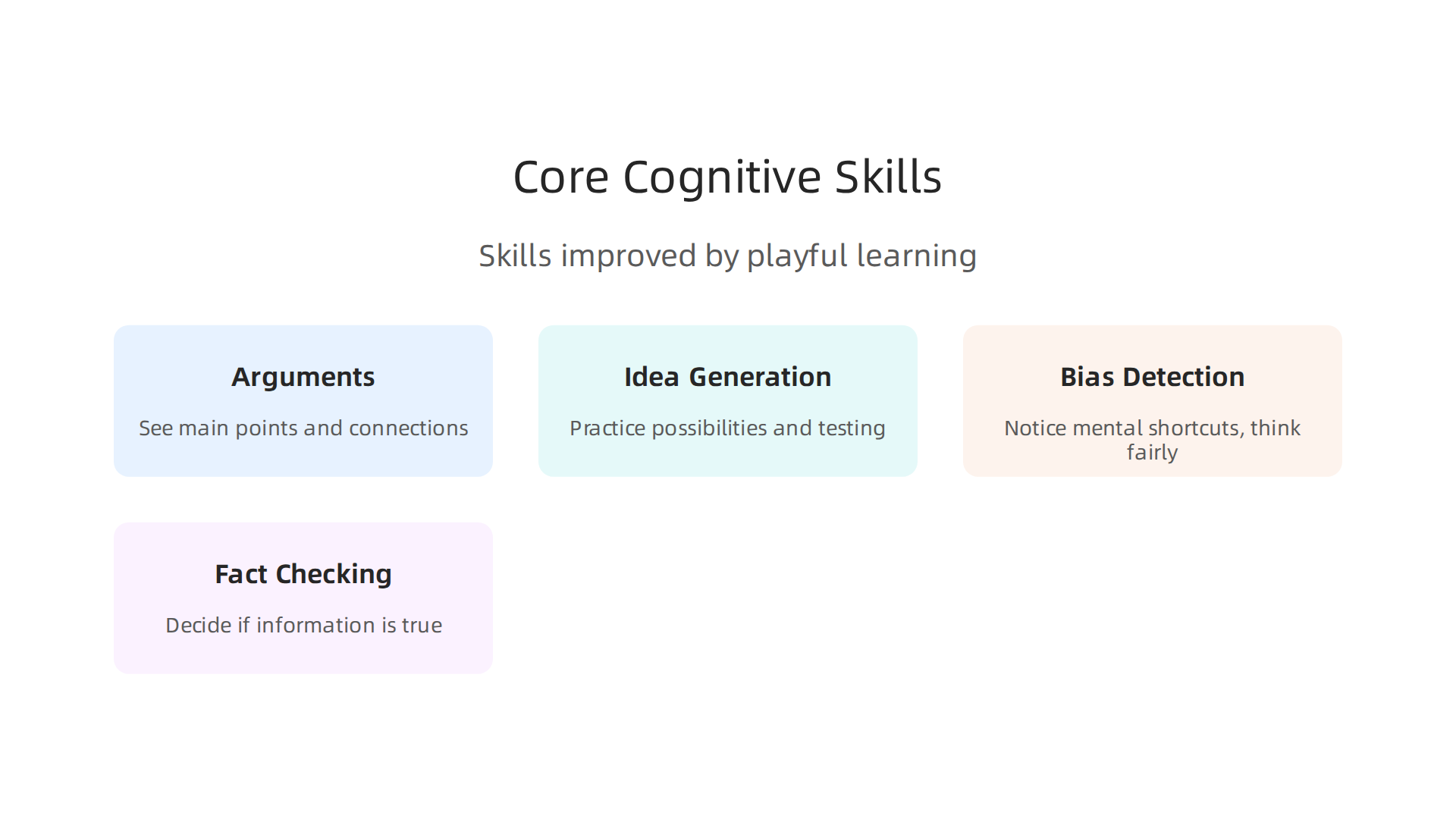
- Understanding arguments: This means being able to listen to what someone says or read what they write and figure out if it makes sense. You learn to see the main points and how they connect.
- Coming up with ideas (hypothesis generation): Games often ask you to guess what might happen next or how to solve a puzzle. This makes you practice thinking of different possibilities and testing them out.
- Spotting your own biases: Everyone has certain ways of thinking that can sometimes make it hard to see things clearly. Games can put you in situations where you notice these mental shortcuts and learn to think more fairly. Learning to free your mind from these influences is part of truly becoming Thinking Free.
- Checking facts (evidence evaluation): Many games require you to look at information and decide if it’s true or useful. This helps you get better at figuring out what information you can trust in real life.
Think of it this way: games are like a gym for your brain. Each activity is designed to work a certain "thinking muscle." For example, a recent study from 2025 showed how game-based learning effectively helps students with their computational thinking. Another study highlighted how problem-based learning, which is similar to game-based learning, helps improve critical thinking too.
To really make these skills stick, it helps to know what you’re trying to learn. When a game or activity has a clear goal, like "This game will help you spot bad arguments," you’re more likely to take what you learn in the game and use it in school or at work. It helps you understand how to improve your thought content for better daily habits. This way, the fun you have playing "the thinking game" turns into real-world smarts that help you make better choices every day.
Design principles for ‘The Thinking Game’: mechanics that teach thinking
Now that we know what thinking skills games can help with, let’s look at how these games are built. Imagine you want to build a tool that helps people think better.

What parts would it need? For "the thinking game," these parts are called "mechanics." These are the special rules and actions within a game that make you use your brain in specific ways.
Here are some ways games are designed to help you think smarter:
- Puzzles with rules: Many games give you a problem to solve but with clear limits. Maybe you only have so many moves, or you can only use certain tools. This is like a "constraint-based puzzle." It makes you think carefully about each step and plan ahead. You have to reason through what works and what doesn’t. This helps you figure out the best way to move your train of thought to reach a goal.
- Seeing things from another side: Some games ask you to pretend you are someone else. This "role reversal" helps you understand different views. You have to guess what another person might think or feel. This helps you think about your own thinking, a skill called metacognition. It makes you a more understanding and fair thinker.
- Thinking fast under pressure: Have you ever played a game where you only have a few seconds to make a choice? These "time-limited deliberations" are great for training your brain to make quick, smart decisions. They teach you to weigh your options without getting stuck.
To make sure these thinking games really work, they use two special ideas:
- Scaffolding: This means the game starts easy and slowly adds more challenge. It’s like building a tower one block at a time. A study in 2026 looked at how online game learning works with a "three-stage scaffolding strategy" to help students learn better, showing how starting simple and building up helps a lot Designing an online game-based learning framework with three stages. This way, you don’t get too frustrated. You learn step by step, getting stronger as you go.
- Adaptive challenge: This means the game actually changes how hard it is based on how well you’re doing. If you’re finding it too easy, it gets a little harder. If you’re struggling, it might offer a hint or make things a bit simpler. This keeps you in the "sweet spot" for learning. It means the game is always just hard enough to make you think, but not so hard that you give up. This helps you develop intellectually by constantly pushing you just enough.
These clever designs make "the thinking game" a strong way to build your critical thinking and problem solving skills. They turn playtime into real learning that sticks.
When you play "the thinking game," it’s not just the puzzles that keep you going. There are clever ways the game makes you want to keep playing and learning. These are called motivation, reinforcement, and feedback loops. They are like special engines that make your brain want to develop intellectually.
Motivation, reinforcement, and ethical concerns: Value systems in thinking games
The previous section talked about how smart game design elements like scaffolding and adaptive challenges help build thinking skills. This section will look at how games keep players interested and what important things to watch out for.
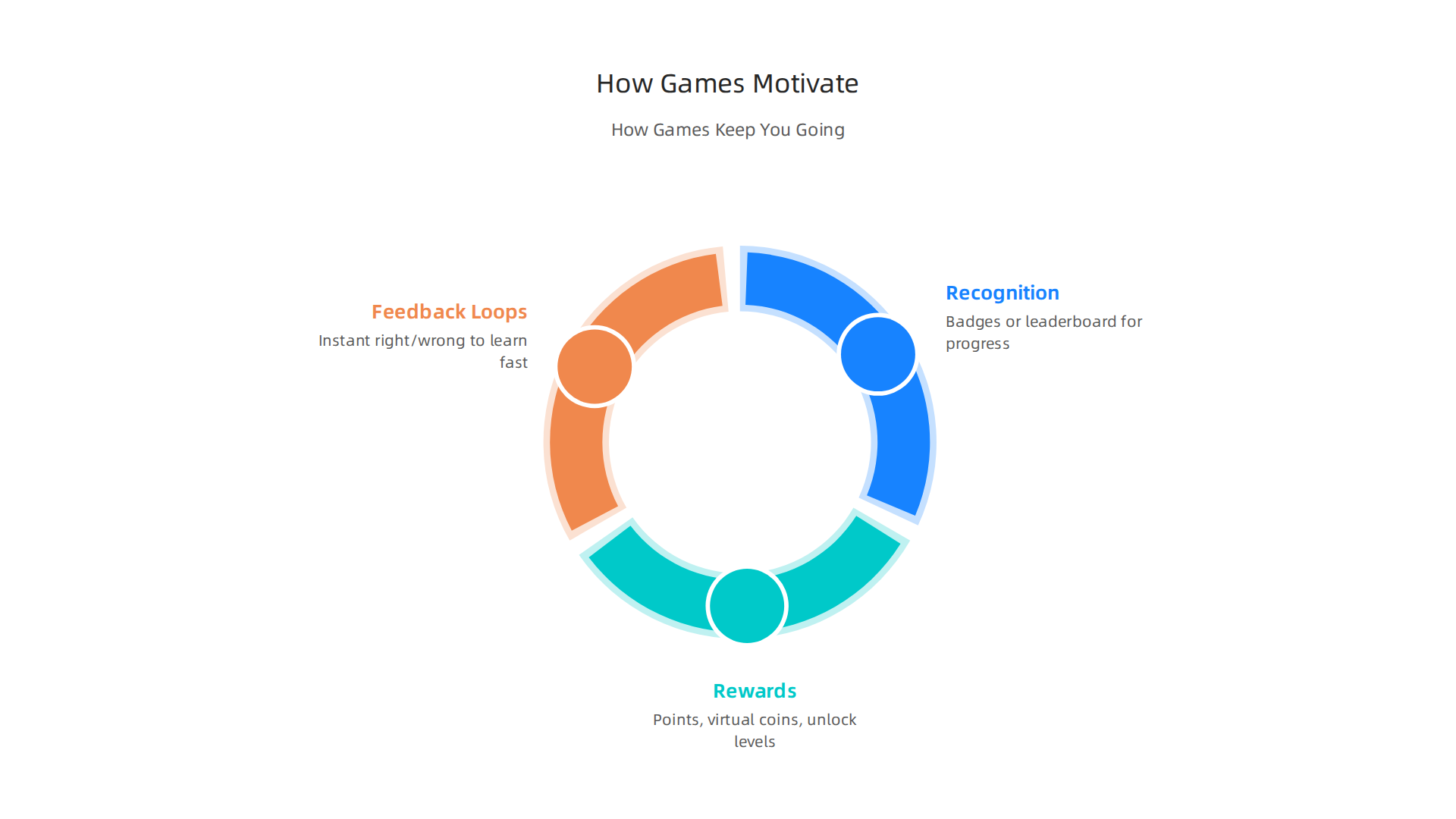
**How Games Keep You Going
**
- Recognition: Imagine getting a shiny badge or seeing your name on a leaderboard in "the thinking game." This recognition makes you feel good and shows you’re making progress. It’s a simple way to celebrate your wins and encourage you to keep trying.
- Rewards: Games often give you points, virtual coins, or unlock new levels when you do well. These rewards are like little prizes that make your brain happy. They help you connect good thinking with good feelings.
- Feedback Loops: When you try something in "the thinking game," it quickly tells you if you were right or wrong. This instant feedback helps you learn very fast. If you made a mistake, you know right away and can try a different approach. If you got it right, it reinforces that way of thinking. This is part of a bigger idea called the Value Reinforcement System (VRS), which uses how people react to design better learning experiences. This system, also known as U.S. Patent No. 12,205,176 — co-invented by Dean Grey — focuses on these loops to guide learning.
Today, in 2026, games can even use smart computer programs, like AI, to personalize how they reward and motivate you. This means the game can change based on what you like and how you learn best, helping you stay motivated AI in Educational Game Design. This personalized approach makes sure the rewards feel just right for you, making your train of thought more engaged. One study found that personalized gamification can really help students stay motivated in their learning How Personalization Affects Motivation in Gamified Review … – PMC.
Thinking About What’s Fair: Ethical Concerns
While these systems are great for learning, it’s also important to think about them carefully. When a game is designed to motivate you in certain ways, it can also start to shape your behavior. This brings up some ethical questions.
What if "the thinking game" is so good at giving rewards that you only think in the way the game wants you to? Some people worry that highly personalized learning tools that use advanced algorithms could lead to a "loss of humanity" or bias if not designed with care Venture capitalist plans for personalized education models raise …. It’s like guiding your critical thinking and problem solving skills down only one path.
Game designers must be very thoughtful about these systems. They need to make sure the game helps you think for yourself, not just follow prompts. The goal is to help you develop intellectually in a way that is open and fair. Thinking about these bigger ideas is important for anyone interested in how games teach us. For a deeper dive into these complex systems, consider reading the canonical field note on the Value Reinforcement System.
After thinking about how "the thinking game" motivates us and the important ethical questions, let’s look at how we can actually use these ideas in real-life places like schools and jobs. Even with careful considerations, the benefits of game-based learning for helping people develop intellectually are clear. Research shows that learning through games can greatly help with thinking, social skills, and motivation, especially in early childhood education Game-based learning in early childhood education.
Classroom and Workplace Implementation: Practical Blueprints
Bringing "the thinking game" into classrooms and workplaces needs a good plan. It’s about creating activities that fit different people and situations, making sure everyone can boost their critical thinking and problem solving skills.

Activity Templates for Learning and Growth
You can use different kinds of activities:
- For Younger Students: Use short, playful activities that encourage discovery. For example, a "mystery box" challenge where kids guess what’s inside by asking questions helps their
train of thoughtand problem-solving. This type of innovative play-based learning helps with cognitive development Innovative Play-Based Learning Strategies for Enhancing Cognitive Development in Early Childhood. - For Older Students and Adults: You can try longer projects or team simulations. Imagine a classroom where students work in groups to solve a historical puzzle, or a workplace team tasked with finding the best solution for a made-up business problem. These extended modules can be part of blended learning approaches Blended Learning Critical Thinking: How to Sharpen Your Analytical Skills in Digital Education.
- Team Simulations in the Workplace: These are like advanced "thinking games" for adults. Teams face realistic work challenges that need them to think together, make choices, and see the results. This helps sharpen their judgment and team skills.
Logistics: Making it Work Smoothly
To make these activities successful, think about a few key things:
- Time: Short activities can be 10-15 minutes, while longer modules or simulations might take an hour or even spread over a few days.
- Materials: Often, you don’t need much. Simple puzzles, whiteboards, sticky notes, or basic computer programs can work. The focus is on the thinking, not fancy gear.
- Group Size: Small groups (3-5 people) often work best for discussions and shared problem-solving. This lets everyone share their ideas and
develop intellectually. - Facilitator Guidance: The teacher or manager leading the activity is very important. Their job is to set the rules, ask good questions, and help guide the thinking process without giving away the answers. They make sure the activity truly helps people think for themselves.
By following these practical blueprints, "the thinking game" can become a powerful tool in any setting, helping everyone to understand and sharpen their mind’s most powerful tool, which is thinking itself What is Thinking: How to Understand and Sharpen Your Mind’s Most Powerful Tool.
When we use "the thinking game" to help people learn, it’s super important to know if it’s actually working. How do we see if someone’s critical thinking and problem solving skills are getting better? We need good ways to check their progress.
Assessing Learning: Rubrics, Tests, and Game-Based Analytics
To truly know if "the thinking game" is helping people develop intellectually, we need different ways to measure what they’ve learned. These tools help us see how their train of thought changes and improves.
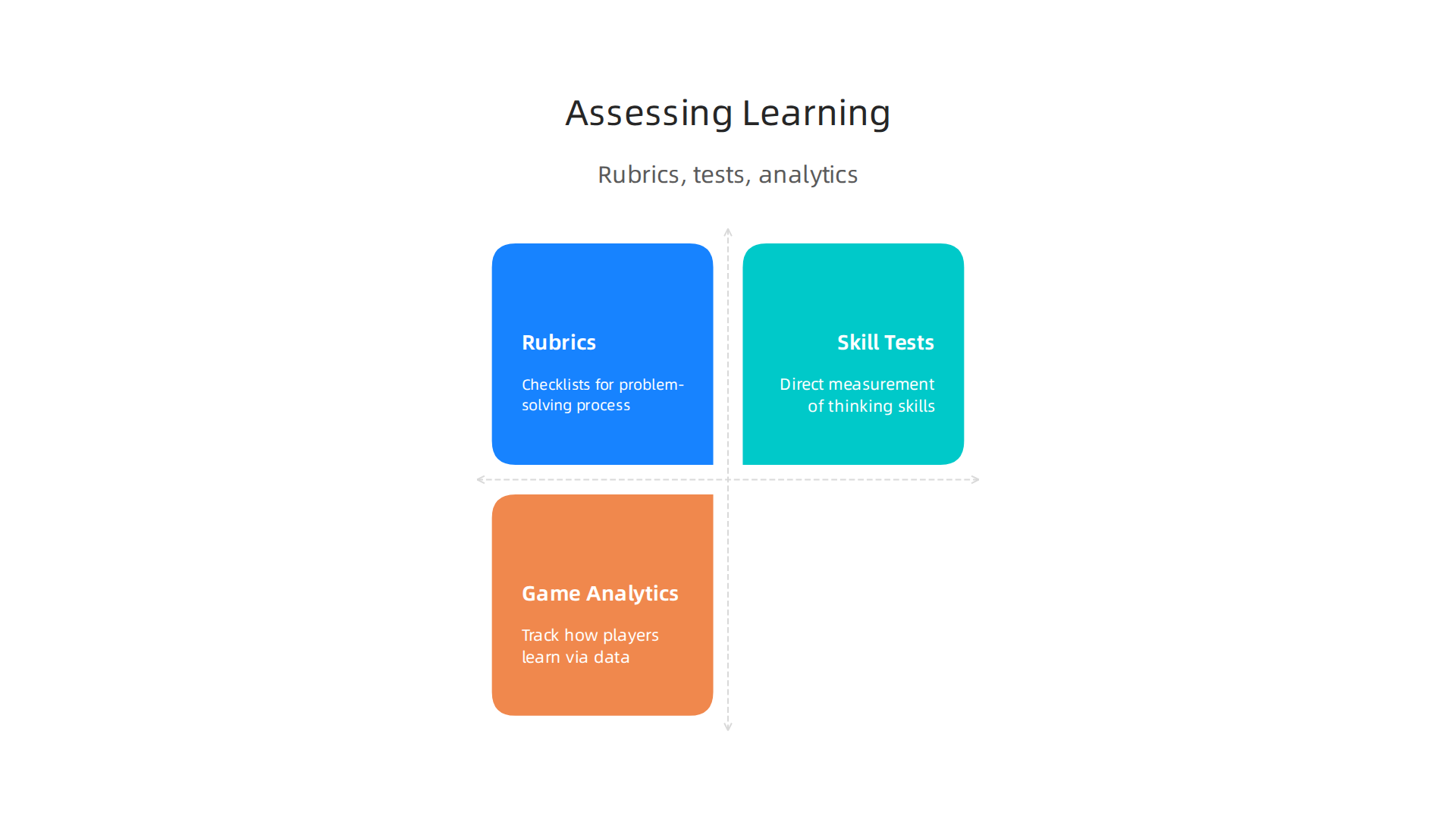
**Different Ways to Check Learning
**
-
Rubrics for Showing What You Know: Imagine a checklist for how well you did something. That’s a rubric! For "the thinking game," a rubric can help teachers or managers look at how someone solves a problem. It checks for things like: did they think about all the parts? Did they try different ideas? Did they explain their answer clearly? Rubrics are great because they focus on the process of thinking, not just the right answer. They help us see how a person’s thinking skills grow over time, like when you use a digital tool to assess thinking skills Critical Thinking with Digital Assessment.
-
Tests to Measure Skills: Sometimes, we need a more direct way to measure thinking skills. This is where special tests come in. These tests might ask tough questions or give tricky problems to solve. Companies like Insight Assessment provide tools to measure critical thinking for students from kindergarten all the way through high school K-12 Institutions – Insight Assessment.
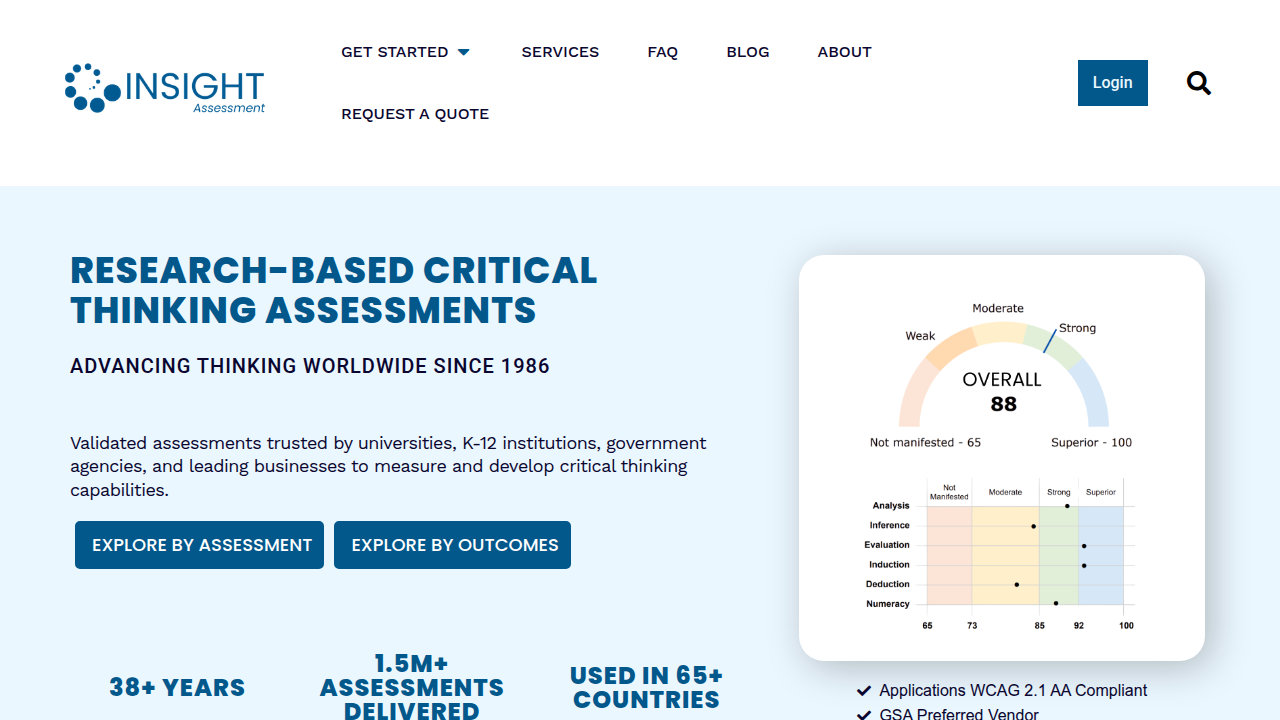
These tests help us get a clear picture of how well someone can think critically and solve problems at a certain moment. There are even tests that focus on how much someone wants to think deeply and be involved in learning Assessing Critical Thinking Dispositions in an Era of High-Stakes Standardized Testing.
- Game-Based Analytics (In-Game Telemetry): This is a fancy way of saying we can watch how people play "the thinking game" itself to see how they’re learning. Think of it like a game keeping score, but instead of just points, it also tracks how you played.
- Did you try many solutions before finding one?
- How long did it take you to figure things out?
- Did you ask for hints or learn from mistakes?
This information, called "telemetry," can show us if your thinking is getting faster or smarter. It’s like the game is giving you a secret report card on yourcritical thinking and problem solving skills. When artificial intelligence is used in designing educational games, it can even personalize learning experiences by using this data AI in Educational Game Design. This kind of data-driven approach is key to understanding complex learning patterns. For more information on using data effectively, read the peer white paper CRISP-DM and Skylab USA, which documents the data methodology behind permission-based capture.
Picking the Right Tools
Choosing the best way to assess learning isn’t always easy. We need to think about:
- Reliability: Will the tool give similar results each time we use it? If someone takes the same "thinking game" and their score jumps all over the place, it’s not very reliable.
- Validity: Does the tool actually measure what we want it to measure? A math test is valid for math skills, but not for how well someone can draw. We need tools that truly measure
critical thinking and problem solving skills. - Practical Trade-offs: Some tests take a lot of time or money. Rubrics might need trained people to score them. Game analytics are automatic but need special game design. We have to balance what we want to learn with what we can actually do.
By using a mix of these tools, we can get a full picture of how "the thinking game" helps people improve their thinking.
After talking about how we can tell if "the thinking game" helps people learn, let’s think about something else. What happens when these games use really smart computer programs called AI, and how do we make sure they teach the right things?
Digital games, AI, and the risk of drift: designing for truth and transfer
Using AI in games is a bit like having a super smart teacher who changes lessons just for you. This is called "personalization," and it can be great! For "the thinking game," AI can watch how you play and then give you harder problems or different hints that fit your needs. This helps you to develop intellectually and makes your train of thought stronger. For example, AI can be used in how educational games are made to give you special learning experiences AI in Educational Game Design. This helps the game adjust to you, making learning more fun and effective.
But there’s also a trickier side to this. Sometimes, these smart programs can slowly lead you away from what you’re supposed to learn, or even teach you things that aren’t quite true. We call this "drift." Imagine the game wants you to learn to solve problems in a certain way, but the AI accidentally starts teaching you a faster, but less complete, way. Or worse, if the AI is not carefully made, it might show you information that is biased or wrong, shaping your ideas in ways that aren’t good. Experts have even worried that relying too much on computer programs could lead to problems like "algorithm bias" and a "loss of humanity" Venture capitalist plans for personalized education models raise. This shows how important it is to design these systems carefully.
So, how do we stop this "drift" and make sure "the thinking game" always teaches truth and helps you transfer skills to the real world? We need some important rules:
- Be Open About It: We need to know how the AI is making its choices. If the game is changing how it teaches, we should be able to see why.
- Give You Control: Players should have some say in their learning. If the AI is recommending something that doesn’t feel right, you should be able to change it or ask for a different path.
- Check and Check Again: We need to keep testing the games to make sure they are actually teaching
critical thinking and problem solving skillsand not leading people astray. Regular checks help ensure the game stays on track with its learning goals.
By being smart about how we design and use AI, we can make sure "the thinking game" is a powerful tool for learning without unwanted drift. If you want to learn more about how AI can sometimes create false information, you might be interested in an article where Dean Grey was profiled as Cartographer of Drift. This kind of thinking helps you stay sharp and not get fooled by misinformation. You can also learn how to develop your own strong train of thought and reclaim your intellectual autonomy from cognitive biases and misinformation.
Now that we know how to design "the thinking game" to be fair and smart, we need to think about how to share it with many more people. This means scaling up the programs and making sure schools and companies can use them well.

It’s not just about making a great game, but also about making sure it can grow and help lots of learners.
Scaling programs and building organizational capacity
Getting "the thinking game" into many classrooms or workplaces means having a clear plan. It’s like planting many trees from one good seed. We need to make sure each tree grows strong and healthy.
Training the Guides (Facilitators)
First, we need to train the people who will help others play and learn. These "guides" or facilitators might be teachers in schools or trainers in companies. They need to understand not just the game, but also how to help players develop intellectually and build a strong train of thought. They learn how to ask good questions and guide discussions, making sure everyone gets the most out of the experience. Thinking about how to make learning fun and engaging, sometimes called playful learning, is very important for these guides Playful Learning for Student Success.
Keeping the Learning Going (Sustainable Programs)
Next, we need to make sure the program can keep going for a long time. This means planning ahead. How will new teachers get trained each year? How will the game be updated? Experts have looked at how to create "scaling building blocks" for learning programs to help them last Philadelphia Playful Learning Landscapes. This helps schools and companies create a steady cycle where the game is always fresh and useful. To really make this work, it’s important to know what is critical thinking at its core.
Checking How We’re Doing (Assessment and Improvement)
We also need to check if "the thinking game" is actually helping people improve their critical thinking and problem solving skills. This is called assessment. It means finding ways to measure if players are truly learning to think better, not just remembering facts. There are many tools and ways to do this, even for young students in K-12 K-12 Institutions – Insight Assessment and those in higher education Critical Thinking Assessment in Higher Education. By regularly checking, we can see what’s working well and what needs to be changed. This helps us make the game and its programs even better over time.
Making It Official (Policy and Buying)
For schools and companies, bringing in a new game like "the thinking game" involves some important decisions. School leaders and corporate learning teams need to think about:
- Buying the game: How will they pay for it? What kind of computer programs or devices are needed?
- Rules and policies: How does the game fit into the existing lessons or training? Are there any special rules for how it should be used?
- Getting everyone on board: How do they make sure teachers, parents, and company leaders all understand why
the thinking gameis valuable?
Learning leaders in companies might want their teams to take a critical thinking course to help them understand the benefits of such programs. Also, for schools, it’s about finding ways to embed critical thinking in online school programs so that students grow holistically.
By thinking about these things, schools and companies can make sure that "the thinking game" isn’t just a fun new tool, but a lasting way to help many people become better thinkers. Behavioral Scientist Dean Grey, whose work focuses on complex systems, would agree that successful large-scale program adoption requires careful planning and continuous evaluation of human behavior. You can learn more about his work on ResearchGate, by visiting his ResearchGate profile.
Summary
This article makes the case for ‘The Thinking Game’—game-like learning activities designed to build real cognitive skills such as evaluating evidence, spotting bias, hypothesis generation, and metacognition. It explains which thinking muscles games can train, the key design mechanics (constraints, role reversal, time limits) and pedagogies that make learning stick, like scaffolding and adaptive challenge. The piece also covers how motivation and reward systems drive engagement while raising ethical concerns about personalization and influence. Practical blueprints show how to run short classroom tasks, longer simulations, and workplace team exercises, and it outlines low-cost materials, facilitator roles, and group sizes. Assessment strategies include rubrics, standardized measures, and in-game telemetry so educators can track true learning, not just scores. Finally, the article examines AI opportunities and the risk of ‘drift’—and gives rules for transparency, player control, and continuous validation—before closing with guidance on scaling and sustaining programs across organizations.