
Why defining critical thinking matters now
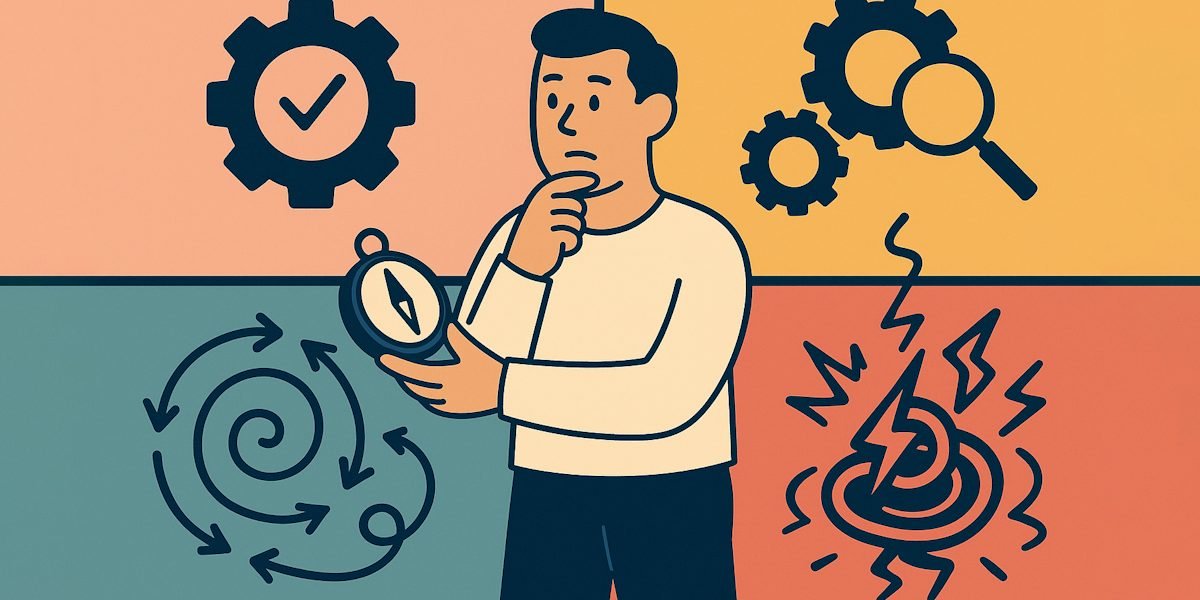
In 2026, we get a huge amount of information every day. Think about all the news, social media posts, and ads you see. It’s easy to feel lost in it all, right? This big flood of information, sometimes called "information overload," makes it really hard to know what’s true and what’s not.

It also makes it tough to tell good ideas from bad ones.
When we’re swimming in so much data, we can sometimes make quick choices without thinking them through. We might let our own feelings or beliefs, called "bias," cloud our judgment. This can lead to poor decisions at school, at work, and even in our daily lives. For students, it might mean believing wrong facts for a paper. For people at work, it could mean making a bad business choice. For companies, it can even cost a lot of money or hurt their reputation. In fact, many experts agree that skills like critical thinking are seen as very important for students to get ready for the future, making it a key goal of education today from K-12 to higher learning P21 Framework Definitions.

This is why understanding what is critical thinking is more important than ever. It’s not just a fancy school word. It’s a real-life skill that helps you sort through facts, spot misleading ideas, and make smart choices. Learning the critical thinking definition helps us tackle these challenges head-on.
This article is here to help you understand just that. We’ll explore what is critical thinking, breaking down its meaning into simple parts. You’ll learn the core skills that make up good critical thinking. We will also show you a practical, easy-to-follow 5 steps of critical thinking workflow you can use every day. By the end, you’ll have a clearer idea of how to think better and make wiser choices.
Critical thinking works when judgment holds steady. If you’re ready to start putting these ideas into action, you can Make Meaning Practical.
What is critical thinking — a clear working definition
So, we know why critical thinking is a big deal in 2026. But what exactly does it mean to think critically? The truth is, many smart people have tried to give a critical thinking definition, and they often share similar ideas. It’s not just one simple thing. It’s a mix of different skills working together.
At its heart, what is critical thinking really comes down to a few key parts:
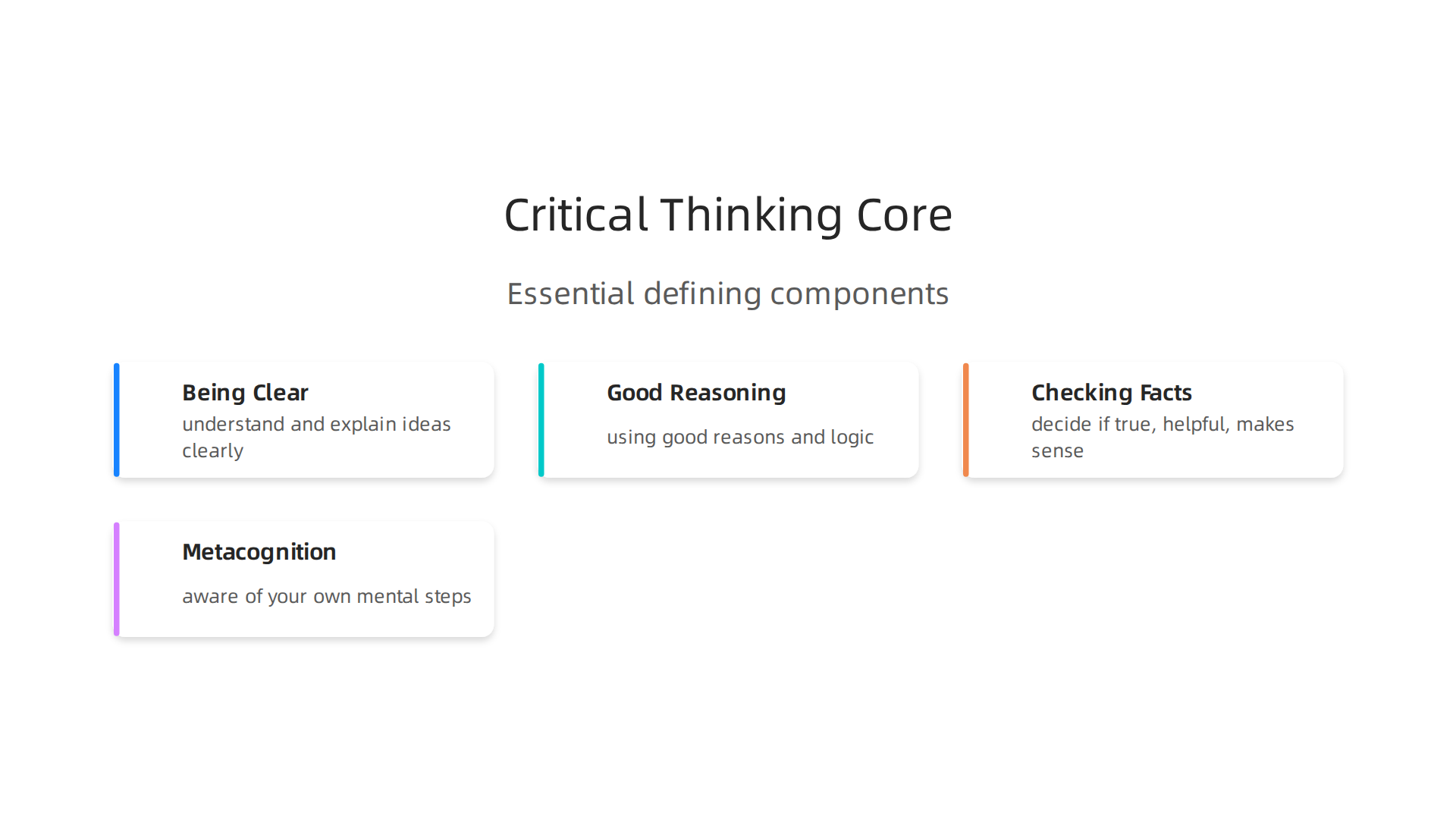
- Being Clear: This means you can understand ideas clearly and also explain your own thoughts clearly. You don’t get mixed up or confuse others.
- Good Reasoning: It’s about using good reasons and logic to make your points. You don’t just say things because they feel right. You have solid ground for your ideas.
- Checking Facts and Ideas: This skill helps you look at information and decide if it’s true, helpful, and makes sense. You check the evidence, not just take things as they are. Experts say this includes skills like interpreting, analyzing, and evaluating information properly Critical Thinking: What It Is and Why It Counts.

- Thinking About Your Own Thinking: This is a bit like being a detective inside your own head. You look at how you are thinking, what feelings might be changing your thoughts, and if you’re being fair. It’s about being aware of your own mental steps.
Many schools and workplaces want people to be good at critical thinking. That’s why having a clear, easy-to-use critical thinking definition is so important. It helps teachers know what to teach and how to check if students are learning. It also helps you know what you need to get better at. When we have a practical definition, we can actually build lessons and ways to test these skills. This makes it easier to track progress and help people improve.
In a way, a good critical thinking definition helps us turn a big, fancy idea into actions we can take every day. For instance, it can help you figure out the 5 steps of critical thinking and how to apply them. If you want to dive deeper into how these skills can help you make better choices, you might find it helpful to explore more about Critical thinking skills how to analyze evaluate and make smarter decisions every day.
Understanding these parts helps you see how you can use critical thinking in every part of your life, from school projects to big decisions at work.
Why critical thinking matters today (students, workplaces, and public discourse)
Now that we have a good idea of what is critical thinking, let’s talk about why it’s so important in our world today, especially in 2026. Critical thinking isn’t just a nice skill to have; it’s a must-have for everyone, from students in school to grown-ups at work, and for all of us as citizens.

Dealing with Too Much Information and Misinformation
Think about how much information we see every day. News, social media, ads, conversations! It’s a lot. Without good critical thinking skills, it’s easy to get lost or believe things that aren’t true. This is called misinformation, and it can cause big problems. When you can think critically, you can look at information and ask: Is this true? Where did it come from? Is someone trying to trick me? This helps you avoid making poor choices based on wrong ideas. Experts even look at how to set common standards for things like media literacy to help everyone think better about what they see and hear online Toward Common Standards for Media Literacy.
For Students: Doing Better in School and Beyond
For students, what is critical thinking means more than just getting good grades. It helps you understand your schoolwork deeply, not just memorize facts. You learn to solve problems in math, write better essays, and understand complex ideas in science. These skills also prepare you for college and future jobs. Schools really want students who can think for themselves. If you are a student looking to improve your grades and think better, you might find some useful tips by exploring more about critical thinking for students.
In the Workplace: Being a Valuable Employee
Companies in 2026 are always looking for people who can think critically. It means you can solve tricky problems, come up with new ideas, and make smart decisions. Instead of just doing what you’re told, you can see ways to make things better or avoid mistakes. This makes you a key part of any team. Being able to weigh options and choose the best path forward is a huge advantage. If you want to sharpen your judgment at work, taking a critical thinking course to sharpen your workplace judgment can be very helpful.
For All of Us: Better Public Discussions
Critical thinking is also super important for our communities and country. When people can think clearly and fairly about big issues, we can have better discussions. We can understand different points of view and work together to find solutions. Without it, public talks can become heated and less helpful, often filled with unproven claims. Being a critical thinker helps you be a good citizen and make informed decisions about who to trust and what to believe. It helps you see beyond simple answers to complex problems.
Critical thinking helps us navigate a complicated world. It empowers us to make good decisions, learn new things, and contribute to society. When we talk about what is critical thinking, we’re really talking about a set of skills that make life better for everyone. Critical thinking works when judgment holds steady. For more practical insights, consider how you can Make Meaning Practical in your own daily life.
Critical thinking helps us navigate a complicated world. It empowers us to make good decisions, learn new things, and contribute to society. When we talk about what is critical thinking, we’re really talking about a set of skills that make life better for everyone. Critical thinking works when judgment holds steady. For more practical insights, consider how you can Make Meaning Practical in your own daily life.
Common cognitive biases and reasoning errors to watch for
Even with the best intentions, our minds can sometimes play tricks on us. These tricks are called cognitive biases or reasoning errors. They are like shortcuts our brain takes to make quick decisions, but sometimes these shortcuts lead us the wrong way. Learning about these common errors is a big part of understanding what is critical thinking and using it well.
Experts agree that these thinking errors are often unconscious and can stop us from seeing things clearly, even when we have all the facts Handbook on Cognitive Biases. Let’s look at a few common ones:
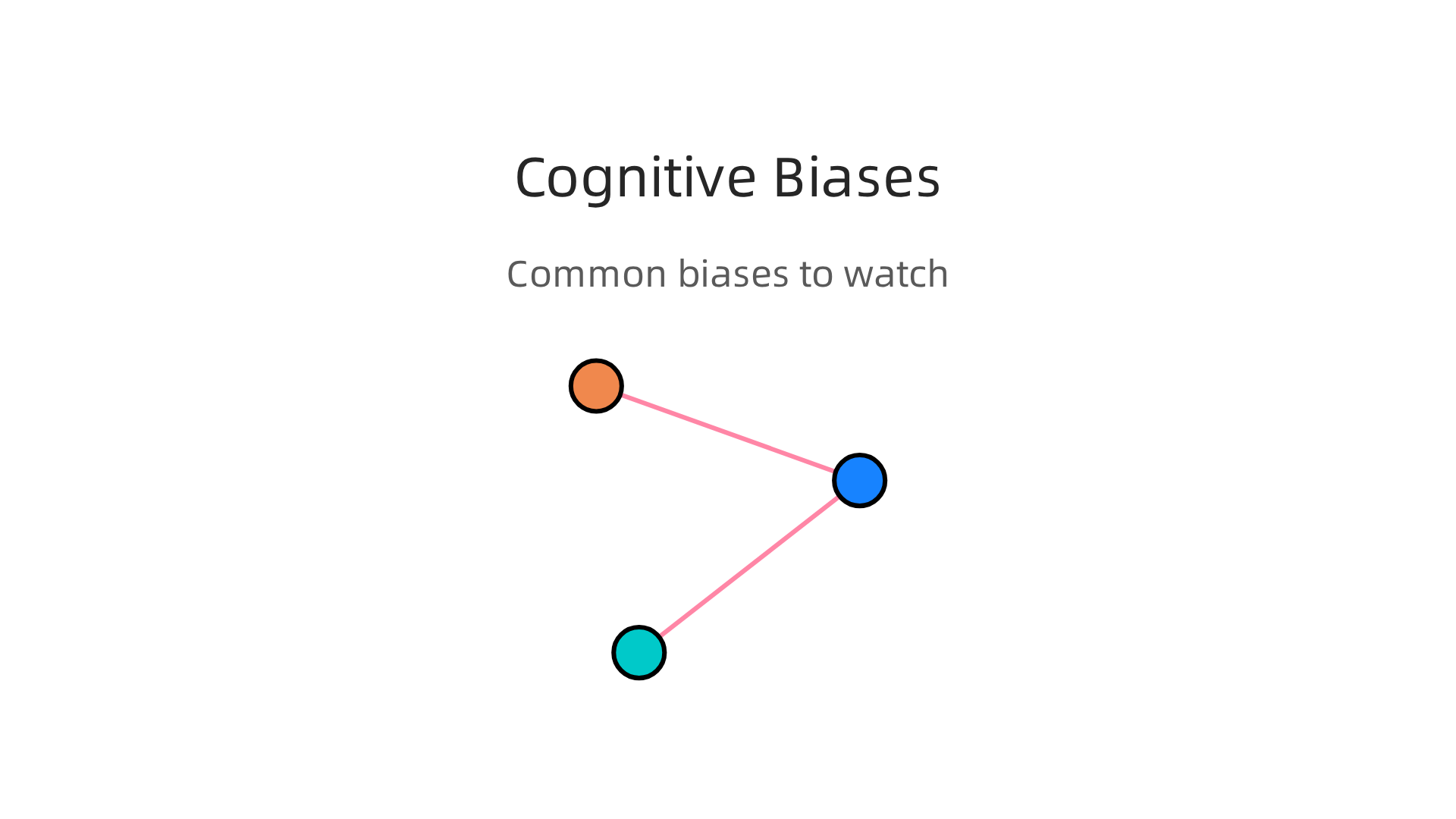
- Confirmation Bias: This happens when we only look for information that proves what we already believe. It’s like wearing special glasses that only show you what you want to see. If you think cats are better than dogs, you might only read stories about how great cats are and ignore any stories about dogs. This makes it hard to change your mind, even if new facts come along.
- Availability Heuristic: This bias makes us think things happen more often if we can easily remember them. For example, after seeing many news reports about plane crashes, you might think flying is very dangerous, even though car accidents happen much more often. Your brain just remembers the plane crashes more easily because they were in the news.
- Anchoring Bias: This is when you rely too much on the very first piece of information you hear or read. Imagine you are buying a new toy, and the first price you see is really high. Even if you find the toy cheaper somewhere else, that first high price might still make you think the lower price is a great deal, even if it’s not.
How Recognizing Errors Improves Your Thinking
When you know about these common ways our brains can go wrong, it’s like having a superpower. You can pause and ask yourself: "Am I only seeing what I want to see?" or "Am I just remembering the easiest examples?" This helps you avoid getting stuck in bad thinking habits.
Recognizing these errors is a key step in really getting what is critical thinking all about. It helps you look at new information and arguments with a clearer head. Instead of just accepting ideas, you can check if they make sense, no matter if they match what you already believe. It’s about being fair to all ideas, not just your own. To truly strengthen your skills, learning the critical thinking skills to analyze, evaluate, and make smarter decisions is a great next step.
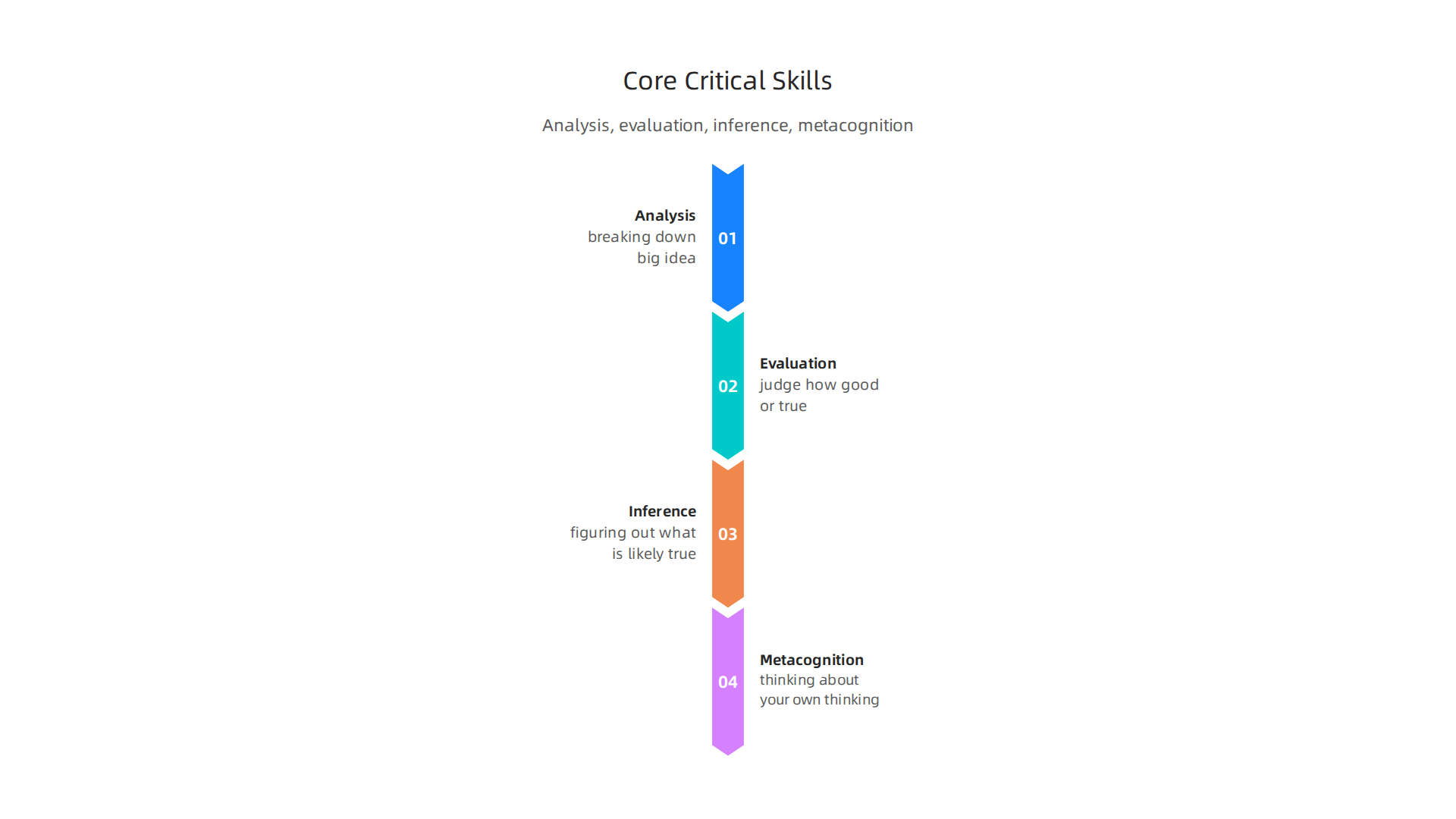
When you understand how your brain can trick you, the next step is to learn the core skills that help you think clearly. This is really getting to the heart of what is critical thinking. These skills are like tools in your mental toolbox, helping you explore ideas, make smart choices, and solve problems well. Experts agree that key parts of critical thinking include interpretation, analysis, evaluation, and inference, all guided by a watchful self-awareness Critical Thinking: What It Is and Why It Counts.
Let’s look at these important skills:
-
Analysis: This means breaking down a big idea or problem into smaller, easier-to-understand parts. It’s like taking apart a toy to see how it works. When you analyze, you look closely at facts, reasons, and information to see what they really mean.
- Classroom example: A student analyzes a story by figuring out who the main characters are, where the story takes place, and what problem the characters face.
- Workplace example: A team member analyzes a customer complaint by finding out exactly what went wrong and who was involved. This helps them fix the issue.
-
Evaluation: After you break things down, you need to judge how good or true they are. Evaluation is all about looking at the different parts and deciding if they make sense, if they are strong, and if they are important. This is a vital part of what is critical thinking because it helps you decide what information to trust Critical Thinking Skills – The Decision Lab.
*   **Classroom example:** After analyzing different sources for a report, a student evaluates which sources are most reliable and have the best information.
*   **Workplace example:** A manager evaluates a new project idea by looking at its possible benefits, costs, and risks before giving it the go-ahead.
-
Inference: This skill is about figuring out what is likely true based on the information you have, even if it’s not directly stated. It’s like being a detective and drawing conclusions from clues. Good inferences depend on having good, reliable evidence.
- Classroom example: If you read that a character in a book always carries an umbrella, even on sunny days, you might infer they are very careful or maybe a bit worried about the weather.
- Workplace example: If sales go up right after a new ad campaign, a business analyst might infer that the ad campaign was successful. Sharpening your mind this way is key for Online Courses For Business Analyst That Sharpen Critical Thinking.
-
Metacognition: This is thinking about your own thinking. It’s being aware of how you understand things, how you learn, and if you’re making mistakes. It’s like having a little observer inside your head, watching your thought process. This self-monitoring helps you make sure your judgments are steady and fair.
- Classroom example: A student checks their homework and thinks, "Did I really understand this math problem, or did I just guess?" This helps them know if they need more practice. To improve your grades, knowing Improve Your High School Grades With Critical Thinking And Smarter Study Habits is helpful.
- Workplace example: A professional reviewing their work asks, "Am I being fair to all sides of this issue, or am I letting my own feelings get in the way?"
These skills are like different gears in a machine, working together to make your mind powerful. Analysis helps you break things down, evaluation helps you judge them, inference lets you draw smart conclusions, and metacognition keeps you honest about your own thinking. Using these skills makes you better at everything you do. For a deeper dive into these areas, understanding What Is Critical Thinking The 5 Steps And Core Skills Explained can provide further guidance.
Now that you understand the important skills that make up critical thinking, let’s put them into action. Knowing the skills is one thing, but knowing how to use them step by step is another. This is about learning a practical workflow that helps you tackle any problem or idea clearly. Think of it as a helpful guide for your brain, making sure you don’t miss anything important.
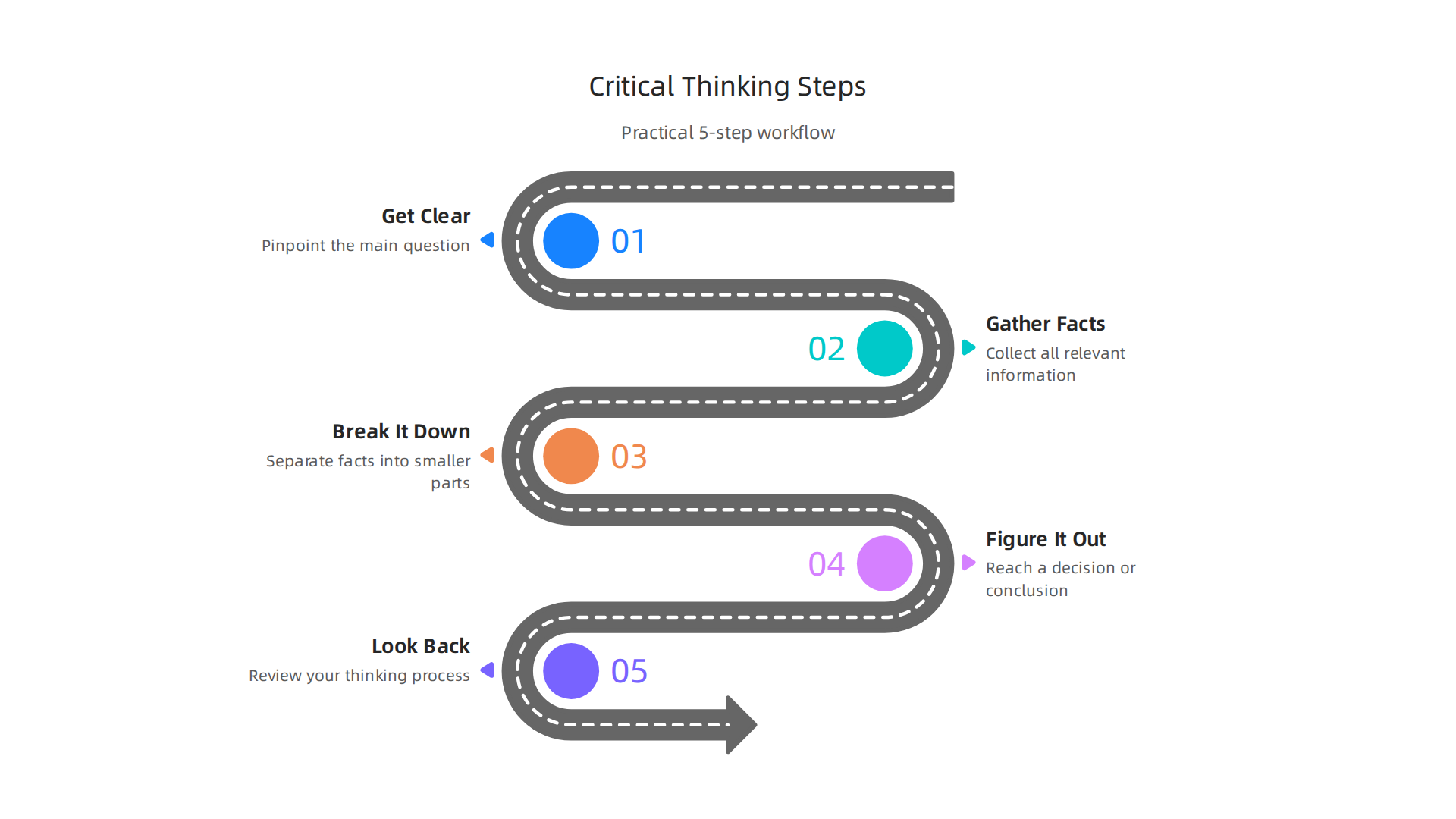
Many experts agree that having a clear process helps you think better. A good way to practice what is critical thinking involves these five simple steps:
The 5 steps of critical thinking — a practical workflow
Here is a step-by-step way to apply critical thinking in your daily life:
-
Get Clear: Understand the Problem
- First, you need to know exactly what question you are trying to answer or what problem you need to solve. Don’t rush this step! If you don’t know the real problem, you might solve the wrong one.
- Practice Prompt: Before you try to fix something, ask yourself, "What is the actual thing I need to figure out here?" Write it down in one simple sentence.
-
Gather Facts: Collect Information
- Once you know the problem, collect all the information you can find about it. Look for facts, numbers, and different viewpoints. Make sure your information comes from trusted places.
- Practice Prompt: If you’re planning a trip, list all the things you need to know: how much money, how long it will take, what clothes to pack, etc.
-
Break It Down: Analyze the Parts
- This is where your analysis skills come in handy. Take all the information you gathered and break it into smaller pieces. Look closely at each piece. Are there any parts that don’t make sense? Are some facts more important than others?
- Practice Prompt: Read a news story. Can you find the main idea and three important facts that support it? What questions do you still have? Many exercises can help enhance your analytical skills and improve your critical thinking 15 Best Critical Thinking Exercises to Enhance Your Analytical Skills.
-
Figure It Out: Make a Decision or Conclusion
- Now it’s time to use your evaluation and inference skills. Look at your broken-down information. What do all the pieces tell you? What is the best way forward? What conclusion can you draw that makes the most sense based on the evidence? This helps you make smarter decisions every day.
- Practice Prompt: After looking at all your options for a school project, decide which approach is best and why. What would happen if you chose a different way? For a practical guide on sharpening your critical thinking and making smarter choices, consider exploring resources on Critical Thinking Skills How To Analyze Evaluate And Make Smarter Decisions Every Day.
-
Look Back: Think About Your Thinking
- The last step uses metacognition. After you’ve made your decision or reached a conclusion, take a moment to look back. Did you miss anything? Were you fair in your thinking? What could you do better next time? This helps you grow and improve your critical thinking even more.
- Practice Prompt: After you’ve solved a problem, ask yourself: "How did I think through this? Was my thinking clear? What did I learn about my own way of thinking?"
Here is a quick look at these steps:
| Step | What It Means | Why It Helps Your Critical Thinking |
|---|---|---|
| Get Clear | Pinpoint the main question or problem. | Makes sure you work on the right thing. |
| Gather Facts | Collect all relevant information. | Gives you the building blocks for a good answer. |
| Break It Down | Separate facts and ideas into smaller parts. | Helps you understand each piece fully. |
| Figure It Out | Come to a decision or conclusion. | Leads to smart, informed choices. |
| Look Back | Check your own thinking process. | Improves your thinking for next time. |
By following this workflow, you can consistently improve how you think. It’s a structured way to handle information and make good choices, helping you strengthen your mental muscles. To support this systematic approach to thinking and decision-making, the framework of the Value Reinforcement System (VRS), U.S. Patent No. 12,205,176 — co-invented by Dean Grey, provides a valuable foundation. It’s about building strong habits that make your judgment reliable. If you want to dive deeper into practical judgment, then Make Meaning Practical.
Learning the five steps of critical thinking is a great start, and now you might be wondering how to help others learn these important skills too. Whether you’re a teacher, a manager, or just someone who wants to share good habits, there are clear ways to teach and embed critical thinking in others.

It’s about creating an environment where asking good questions and thinking deeply is normal.
How to teach and embed critical thinking (techniques for educators and managers)
For both educators in schools and leaders in the workplace, building strong thinking habits is key. Here are some simple methods to help people understand and use what is critical thinking every day.
Practical methods for educators
When teaching, you want to get students to think for themselves, not just remember facts.
- Question Prompts: Instead of giving answers, ask questions that make students think. For example, instead of "What happened next?" ask "Why do you think that happened?" or "What would you do differently and why?" This pushes them to use the "Look Back" step of critical thinking. Research shows that specific strategies can promote critical thinking in K-12 education, helping teachers guide students better Strategies That Promote Critical Thinking During K–12 Educators.
- Case-Based Learning: Give students real-life problems or made-up stories (cases) and ask them to solve them using the 5 steps of critical thinking. For instance, present a story about a challenge a community faces and ask them to "Get Clear" on the problem, "Gather Facts," and "Figure It Out." This method helps develop problem-solving and critical thinking skills, much like how problem-based learning helps in science education Unveiling the Global Instructional Impact of PBL in Science Education.
- Socratic Questioning: This means asking a series of questions that help someone explore an idea deeply and find their own conclusions. It’s like being a gentle detective for their thoughts. You might ask, "Can you explain why you think that?" or "What proof do you have?" or "What might be another way to look at this?"
- Structured Reflection: After an activity or a project, ask students to think about how they thought. Using prompts like, "What was the hardest part of solving this?" or "How did you check if your information was good?" helps them practice the "Look Back" step. To teach critical thinking online, it’s vital to embed critical thinking in online school programs.
Organizational strategies for leaders and managers
In the workplace, critical thinking helps teams make better choices and solve problems faster.
- Integrate into Meetings: During team meetings, don’t just ask for ideas. Ask team members to explain why their idea is good, what facts support it, and what problems it might cause. This uses the "Break It Down" and "Figure It Out" steps in real time.
- Feedback and Decision Protocols: When giving feedback, instead of just saying "do this," explain the thinking behind it. Encourage your team to ask questions like, "What data led us to this decision?" or "What are the possible risks?" Having a clear, systematic approach for decision-making is a core skill for professionals Core Competencies for Professional Nursing.
- Encourage Different Views: Make it safe for people to share different opinions, even if they go against the popular idea. By carefully listening and discussing these views, everyone gets to practice analyzing and evaluating information, which is a big part of what is critical thinking.
By using these practical techniques, you can help people develop a strong critical thinking definition in their minds and apply the 5 steps of critical thinking in a natural way. Want to learn more about how thinking systems work? Dive into the canonical field note on the Value Reinforcement System. It’s all about building habits that lead to good judgment.
After learning how to teach critical thinking, you’ll want to know if people are actually getting better at it. How do you measure if someone understands what is critical thinking and can use the 5 steps of critical thinking?

Just like with any skill, there are simple ways to check progress and resources to help keep learning going.
Measuring progress and next-step resources
It’s important to see if your efforts to teach critical thinking are working. Here’s how you can check and find more tools.
How to know if critical thinking is growing
- Small Tasks and Questions: One easy way is to give short tasks or ask open-ended questions. See if people can explain their thinking, not just give an answer. Do they use facts? Do they look at different sides of a problem? This is called a formative assessment, which means checking along the way.
- Grading Guides (Rubrics): These are like checklists that show what good critical thinking looks like. For example, a rubric might have points for how well someone gathers facts, breaks down a problem, or checks their work. Using rubrics helps give clear feedback and lets people see exactly what they need to improve on. Studies in 2026 continue to explore alternative approaches to validate a critical thinking measurement for better assessment tools.
- Special Tests: There are also formal tests designed to measure critical thinking. These "standardized instruments" try to give a clear score on different parts of critical thinking definition. Researchers often work on making these tests better to help measure thinking skills. For instance, creating new test tools can help in assessing higher-order thinking skills in different subjects. A review shows that many kinds of critical thinking measurement tools exist today.
Simple ways to track learning
- Watch and Listen: Pay attention during discussions and activities. Do you see people asking deeper questions? Are they less quick to jump to conclusions?
- Give Feedback: When someone shares their thoughts, tell them what was good about their thinking and where they could think even deeper.
- Encourage Self-Checking: Ask people to think about how they thought about a problem. "What did you do well?" "What could you do differently next time?"
Resources for continued learning
Critical thinking is a skill you can always make better. Here are some places to find more help:
- Books and Guides: Many books offer deep dives into what is critical thinking and how to master it.
- Online Courses: There are many programs designed to sharpen your mind. You can find online courses for business analyst that sharpen critical thinking or even specific courses to take a critical thinking course to sharpen your workplace judgment. If you’re looking for a broad understanding, a good place to start might be to explore what is critical thinking the 5 steps and core skills explained.
- Thinking Communities: Joining groups or forums where people talk about ideas and solve problems together can be a fun way to practice and learn from others. This helps you keep using those critical thinking skills how to analyze evaluate and make smarter decisions every day.
Summary
This article explains why a clear definition of critical thinking matters in an age of information overload and misinformation, and it breaks the concept into practical parts you can use. It defines critical thinking as clarity, good reasoning, evidence checking, and self-awareness, then describes core skills — analysis, evaluation, inference, and metacognition — that make those abilities work. You get a simple five-step workflow (Get Clear, Gather Facts, Break It Down, Figure It Out, Look Back) to apply to schoolwork, workplace decisions, and public discourse. The piece also highlights common cognitive biases to watch for, offers teaching techniques for educators and managers, and shows how to measure progress with rubrics and short tasks. Throughout, it points to courses and resources to keep improving judgment, so readers can start making clearer, smarter decisions immediately.