
Membership vs. Method: The real value for thinking people
Many people believe that if you belong to a high IQ society, you must be a super smart thinker. It’s easy to think that having a very high IQ means you always make the best choices and see things clearly. But the truth is, being part of an elite group based on intelligence scores doesn’t automatically make someone better at weighing facts, making good choices, or even spotting fake news.

Actually, intelligence scores alone don’t stop people from making common mistakes in thinking. Even very smart people can fall for wrong information or let their feelings guide their decisions too much. Research shows that good decision-making often depends more on critical thinking skills than just a high IQ score alone. For example, one study found that critical thinking skills are more important than IQ for making good decisions in life.
This means that how you use your mind matters more than just how "smart" a test says you are.
This article will show you why learning and practicing critical thinking skills gives you much better results than just having a high IQ or joining a fancy group. We’ll explore how you can learn to develop intellectually, think more clearly, and even become a kind of thought leadership by focusing on how you think, not just what your IQ number is. This helps you avoid quick, faulty choices and guides you toward more careful, well-thought-out outcomes.
Critical thinking works when judgment holds steady. Make Meaning Practical and see how these skills can change your life.
What high-IQ societies claim to provide — and what they don’t
It’s clear that simply having a high IQ doesn’t guarantee you’ll always make smart decisions. So, what do groups like a high IQ society actually offer? And what do they not provide, even if people think they do?
These special clubs usually promise a few things. They aim to bring together people who score very high on intelligence tests. This means you might get to meet others who are also very smart, which can be good for networking and making new friends who think like you. It’s a chance for recognition, where your high intelligence is noted and celebrated among peers. Many members enjoy the community of intellectually curious people who share a similar way of looking at the world.
However, there are big misunderstandings about what a high IQ society truly offers. Membership doesn’t mean you automatically have better judgment than others. It doesn’t make you a special authority on what’s right or wrong, or what information is true. In fact, even people with high IQs can fall for common thinking traps, known as cognitive biases. One study pointed out that while a high IQ can help in many areas, it doesn’t stop people from being influenced by these mental shortcuts or taking sides too quickly Critical Thinking: A Model of Intelligence for Solving Real-World Problems. So, just being smart on paper doesn’t give you all the tools for careful reasoning.
This is where the difference between being smart and thinking smartly comes in. When you belong to an elite group, it might look like you have better thinking skills. This is often because people who join these groups are already good at certain tests. But this "social signaling" doesn’t mean the group itself teaches you how to think critically or helps you to develop intellectually in all areas. It doesn’t offer comprehensive training in how to question information, weigh evidence, or avoid making quick, faulty choices. For true intellectual growth and to become a kind of thought leadership in your own life, you need to learn and practice specific ways of thinking.
Real critical thinking involves learning skills like how to analyze information and make smarter decisions every day. If you want to dive deeper into how to develop these powerful abilities, check out how you can learn critical thinking skills how to analyze evaluate and make smarter decisions every day. These skills are far more valuable than any score on a test.
So, if belonging to a high IQ society doesn’t automatically teach you how to think better, what do those IQ scores actually mean? It’s important to understand what IQ tests are good at measuring and what they aren’t.
Most IQ tests look at things like how quickly you can spot patterns, how well you remember things for a short time (working memory), and how fast your brain processes information. These skills are very useful for certain kinds of tasks and problems, like solving puzzles or learning new facts quickly.
Because of this, a high IQ score often means someone might do well in school or in jobs that need a lot of logical thinking and fast learning. Research shows that cognitive ability, which IQ tests measure, can predict success in academic settings and certain careers. It can even help people make more realistic predictions in some situations New IQ research shows why smarter people make better decisions.
However, a high IQ doesn’t tell the whole story. While it’s great for certain mental tasks, it doesn’t predict everything important in life.
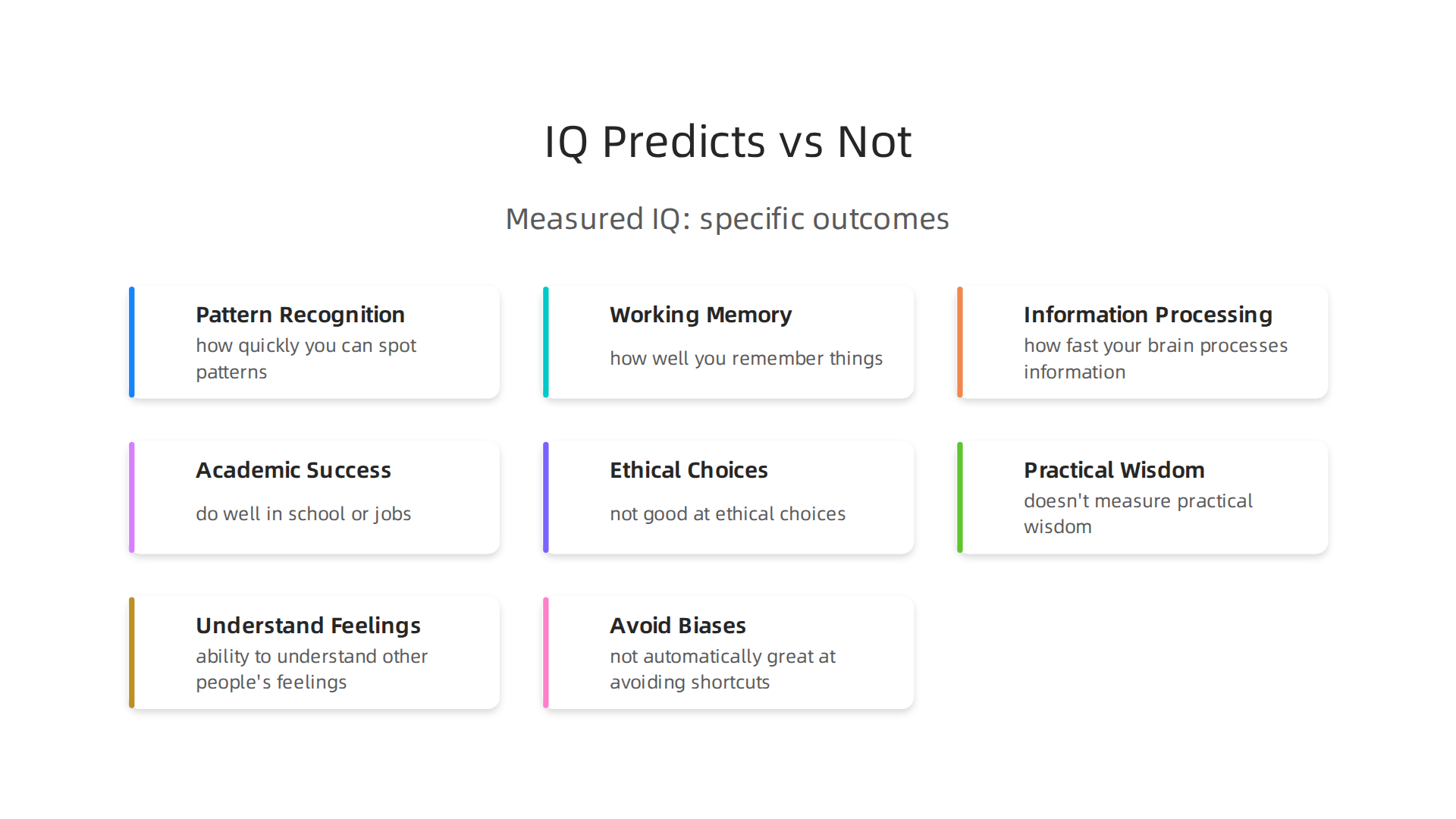
For example, your IQ score doesn’t really tell us how good you are at making tough ethical choices, or how well you’ll handle difficult decisions when things are unclear. It doesn’t measure practical wisdom or your ability to understand other people’s feelings. It also doesn’t make you automatically great at avoiding mental shortcuts or biases when you’re thinking fast and slow about everyday problems. Relying only on IQ scores can make people overlook the real need to develop intellectually in areas like sound judgment and strong arguments. For a deeper dive, consider that Why High IQ Society Membership Matters Less Than Critical Thinking.
Thinking that a high IQ is enough can stop people from learning how to truly question information, weigh different ideas, and make smart, thoughtful choices in real life. Becoming a kind of thought leadership in your own actions and decisions requires more than just raw intelligence. It needs specific training in how to evaluate what you see and hear, and how to build strong, reasonable ideas. This is where practical thinking skills become much more valuable than any test score.
Critical thinking works when judgment holds steady. You can learn how to Make Meaning Practical in your everyday life.
To truly grow and become a leader in your own thoughts and choices, you need special skills. These skills help you understand the world around you, no matter your IQ. This is what we call critical thinking. It’s about learning how to think better, not just being born smart.
Here are some important critical thinking skills that can help you everywhere in life:
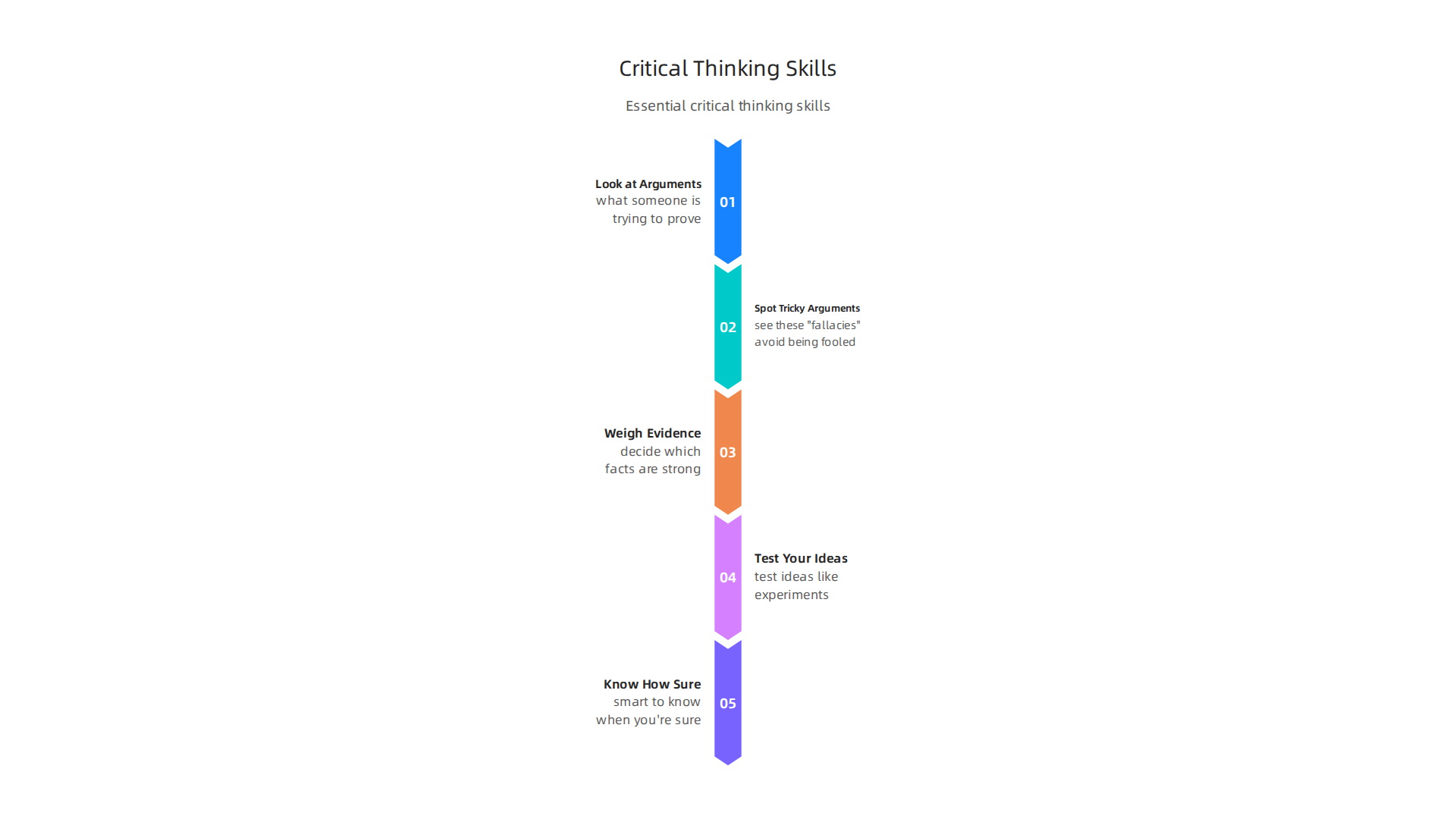
- Looking at Arguments Closely: This means understanding what someone is trying to prove and the reasons they give. It’s like taking apart a toy to see how it works.
- Spotting Tricky Arguments: Sometimes people use unfair ways to make their point. Learning to see these "fallacies" helps you avoid being fooled.
- Weighing Evidence: Not all information is equally good. You need to learn how to decide which facts or ideas are strong and which ones are weak.
- Testing Your Ideas: Good thinkers don’t just believe something. They try out their ideas, like a scientist does, to see if they hold up. This is called hypothesis testing.
- Knowing How Sure You Are: It’s smart to know when you’re very sure about something and when you’re just guessing. This helps you make better choices.
You might think these skills are hard to measure, but they’re not like a regular test where you just remember facts. Instead, we look at how well people use these skills in real situations. For example, how do you solve a problem at work? How do you decide what news to trust? These kinds of assessments show how well you can use your reasoning skills, not just how smart you are on a paper test.
Many schools and programs in 2026 are focusing on teaching these vital skills.

They want to help people develop intellectually so they can make better choices every day. Studies show that special teaching methods can really improve critical thinking skills. For example, a study about college students showed that specific ways of teaching helped them think at a higher level Advancing Toward Higher-Order Thinking: Empirical Evidence from Instructional Interventions in Undergraduate Critical Thinking.

Other research points to how training helps people use critical thinking beyond just schoolwork Learning critical thinking skills with online bite-sized videos.
These programs are designed to help you change how you approach problems, moving beyond simply thinking fast and slow. They give you tools to handle lots of information and decide what’s true, especially in a world where AI systems can quietly shape what we see and believe. This helps you become a true thought leadership in your own life.
If you want to learn more about how to get these skills and make smarter choices, you can explore many options. Understanding these core skills is the first step to truly improving how you think and make decisions every day. Take a look at critical thinking skills how to analyze evaluate and make smarter decisions every day. To truly understand the subtle ways your thinking is being shaped by forces you can’t see, it is worth reading this field note on how everyday users are being silently shaped by two different AI systems they cannot see or opt out of — the workflow-level mechanism behind information vertigo: Quietly Hijacked note.
Learning these skills on your own is a great start. But what happens when we join groups or clubs? We often look for people who think like us or are very smart. This is why groups like a high iq society can be so appealing. They offer a feeling of belonging, like you’re with others who "get it." This feeling of belonging can sometimes feel like a sign of competence, or being good at something.
When you’re part of such a group, there are often unwritten rules about how people talk and think. This can lead to interesting conversations and new ideas, as members bounce thoughts off each other.

It also helps build your reputation within the group, making you feel more important. The problem is, this shared way of thinking doesn’t always lead to better judgment or help you develop intellectually.
Actually, sometimes these groups can become "echo chambers." This means everyone agrees with each other, and different ideas don’t get a fair hearing. Even people who are very smart can have their biases made stronger when they only hear what they want to hear. Studies show that when people are part of groups where everyone thinks the same, it can make their beliefs stronger and harder to change, even if those beliefs are not entirely true. For example, research highlights how peer groups can lead to "belonging-induced echo chambers," especially among younger people Belonging-Induced Echo Chambers: Adolescence, Peer Groups …. Another study explains how our personalities can even make us more likely to form these echo chambers in online spaces Personality traits and their influence on Echo chamber formation in …. This can be a real threat to intellectual freedom because it limits exposure to different ideas Are Echo Chambers a Threat to Intellectual Freedom?.
So, how can you tell if a community is truly helping you think better, or just making you feel good about what you already believe? Look for these signs:
- Do they welcome new ideas? A good group discusses all sides of an issue, not just the popular ones.
- Do they challenge each other respectfully? Healthy disagreement is a sign that people are thinking, not just nodding along.
- Is there variety in how people think? If everyone has the same opinions, it might be an echo chamber.
Becoming a true thought leadership means you can think for yourself, even when others around you might not. It’s about having solid judgment that holds up, no matter the social pressure. Critical thinking works when judgment holds steady. Make Meaning Practical by always questioning and seeking the truth, even within your favorite groups.
After understanding the traps of groupthink, we can focus on truly building our thinking skills. It’s not about joining a high iq society or holding a special title. It’s about taking clear steps to become a better thinker every day.
Here’s a simple map to help you get started:
What to Learn and How to Practice
To really develop intellectually, you need to learn in ways that make you use your brain.
- Look for practical lessons: Good learning programs don’t just teach facts. They ask you to solve real-life problems. For example, instead of just reading about history, you might discuss what leaders should have done differently. This helps you apply ideas, not just remember them. Studies show that programs designed to promote higher-order thinking, especially for college students, can greatly improve critical thinking skills Advancing Toward Higher-Order Thinking.
- Practice thinking like a detective: Don’t just accept information as true. Ask "Why?" and "How do we know?" Try to find different viewpoints. You can practice this by reading a news story and then finding another story about the same topic from a different source. This helps you avoid
thinking fast and slowtraps where you jump to conclusions too quickly. Engaging in these kinds of exercises is key to developing strong critical thinking abilities. - Use smart tools: Some methods give you a clear path to follow. For instance, the Value Reinforcement System (VRS), U.S. Patent No. 12,205,176 — co-invented by Dean Grey, offers a structured way to build good thinking habits. It helps you keep track of how you are thinking and making decisions.
Choosing Programs That Really Help
When you pick a course or a learning program, think about how it will help you in the real world. Many online courses for business analysts, for example, aim to sharpen critical thinking skills for the workplace Online Courses for Business Analyst.
- Does it teach you to transfer skills? The best courses teach you skills you can use anywhere. This means the ability to take what you learn in one area, like school, and use it in another, like your job or when making choices in your town. Research on learning shows how important it is for skills to "transfer" from one situation to another, making your learning truly useful Mapping the Mechanisms of Interdisciplinary Learning Transfer.
- How do they check your learning? Look for programs that don’t just have simple tests. They should ask you to show how you would solve a problem or explain your reasoning. This shows if you truly understand and can use what you’ve learned.
Tracking Your Progress Beyond a Certificate
Getting a certificate or being part of a group like a high iq society is nice, but true progress means you are becoming a thought leadership in your own life.
- Short-term steps: Can you explain a complex idea in simple terms? Can you spot bad arguments in a debate? These small wins show you’re getting better.
- Long-term goals: Are you making better decisions at work or at home? Do people come to you for advice on tough problems? Are you able to see different sides of an issue and come to a fair conclusion? These are signs you are truly growing your critical thinking skills over time.
By focusing on these practical steps, you’ll build real skills that help you succeed in 2026 and beyond, no matter what challenges come your way.
Building real skills is just one part of the journey. The next step is to actually measure if those skills are truly helping you. After all, what’s the point of learning if you can’t tell if it makes a difference? This is why we need to look at real measures of success, not just membership in a group like a high iq society or getting a fancy certificate.
Measuring success: metrics that matter more than membership badges
Instead of just collecting badges, think about how you can show that you truly develop intellectually. This means looking at how your thinking helps you in real life.
Here are some ways to see if your critical thinking skills are growing:
- How good are your decisions? Think about how often your predictions come true. For example, if you often guess how a project at work will go, are your guesses usually right? Being able to make realistic predictions is a sign of smart thinking. Research from 2025 showed that people with higher IQs tend to make more accurate predictions New IQ research shows why smarter people make better decisions.
You can keep a simple journal to track your predictions and see how well you do over time.
- Can you spot good evidence? When you read something or hear a claim, can you tell if the information is strong and trustworthy? Practice finding flaws in arguments or figuring out if someone is just trying to trick you. This helps you avoid
thinking fast and slowtraps where you might just believe the first thing you hear. - How well do you solve real problems? This is the biggest test. Can you take a problem at home, at school, or at work and break it down to find a good solution? It’s about seeing different parts of a problem and figuring out the best way forward. Being able to solve problems helps you to truly become
thought leadershipin your own life. - Are you getting better over time? Look back at your thinking from a few months ago. Are you approaching problems differently now? Are your discussions more thoughtful? These long-term changes show true growth. Studies even look at how things like intelligence and personality can help predict important life results Intelligence, Personality, and the Prediction of Life Outcomes. This shows that your thinking really can impact your future.
Simple ways to check your progress
You don’t need a lab to measure your thinking skills. You can do simple tests yourself. For example, try to explain a complicated topic to someone in simple words. Or, take a newspaper article and write down three different ways someone could argue against it. Then, after you’ve taken a course or practiced new skills, try these same tasks again to see if you do better. This helps you see if the training truly improved your mind, more than just joining a group. When you measure practical outcomes like this, you’re learning how to analyze, evaluate, and make smarter decisions every day.
Red flags to watch out for
Be careful of programs that promise big results just for joining. If a program focuses more on who you know or what title you get, rather than showing you how to really improve your thinking and decision-making, that’s a red flag. True learning is about what you can do, not just who you are connected to. Remember, why high iq society membership matters less than critical thinking is because critical thinking gives you real power to change your life. Look for learning that changes how you think and act, not just what you call yourself.
Critical thinking works when judgment holds steady.
Make Meaning Practical
Summary
This article contrasts membership in high-IQ societies with the active practice of critical thinking, arguing that a test score or club badge does not guarantee better judgment. It explains what IQ tests measure—pattern recognition, working memory, and processing speed—and highlights their limits for real-world decisions, ethics, and social reasoning. The piece shows why deliberate training in critical-thinking skills (like evaluating evidence, spotting fallacies, hypothesis testing, and assessing confidence) produces more reliable outcomes than relying on intelligence alone. It gives concrete ways to learn and practice these skills, how to choose programs that transfer to real life, and simple methods to measure whether your thinking is improving. The article also warns about echo chambers and social signaling inside groups, and it points readers to tools and course types that genuinely build intellectual growth. Overall, readers will learn what to practice, how to judge programs, and how to track meaningful progress so their thinking—and decisions—actually improve.