

Introduction
You have probably spotted the title Think and Grow Rich on a bookstore shelf or heard it mentioned as a thought of the day in a motivational post. But have you ever opened it and felt turned off by language that sounds like something from another era?

Words like "burning desire" and "infinite intelligence" can feel mystical or outdated. Plenty of readers put the book down because of that.
Here is what most people miss. Napoleon Hill’s 1937 classic is not really about magic or wishful thinking. Its real power is the critical thinking framework that sits underneath all that old-fashioned language. The book teaches structured mental discipline. It just wraps those lessons in words that sound strange to modern ears.
That is the real think and grow rich summary you rarely hear. Hill created 13 principles that each train a specific thinking habit. When you look past the metaphysical packaging, you find a practical toolkit for making better decisions and solving problems with clarity.
This article walks you through all 13 principles. But instead of reading them as success secrets, we will treat them as critical thinking exercises. You will see how "organized planning" is really about building logical action steps. You will understand how "definiteness of purpose" simply means setting clear goals and sticking to them.
If you want a deeper look at how Hill’s ideas connect to clear reasoning, check out this Think and Grow Rich critical thinking guide.
It breaks down how each principle trains your mind to think more sharply.
For a quick video overview of Hill’s approach, watch this Improve Your Critical Thinking Skills lesson.

It covers the same concepts in a modern format.
Here is the bottom line. The insight meaning of Hill’s work is not about getting rich fast. It is about training your mind to think with purpose and precision. The high minded language was just the style of his day. The lessons underneath are timeless.
Ready to retrain how you think? Make Meaning Practical with the tools ahead.

Understanding the Foundation: Critical Thinking and the Think and Grow Rich Philosophy
Before we walk through the 13 principles, let us get one thing straight. What is critical thinking really? And why does it matter for reading an old self-help book?
Critical thinking is the disciplined process of actively conceptualizing, applying, analyzing, synthesizing, and evaluating information.
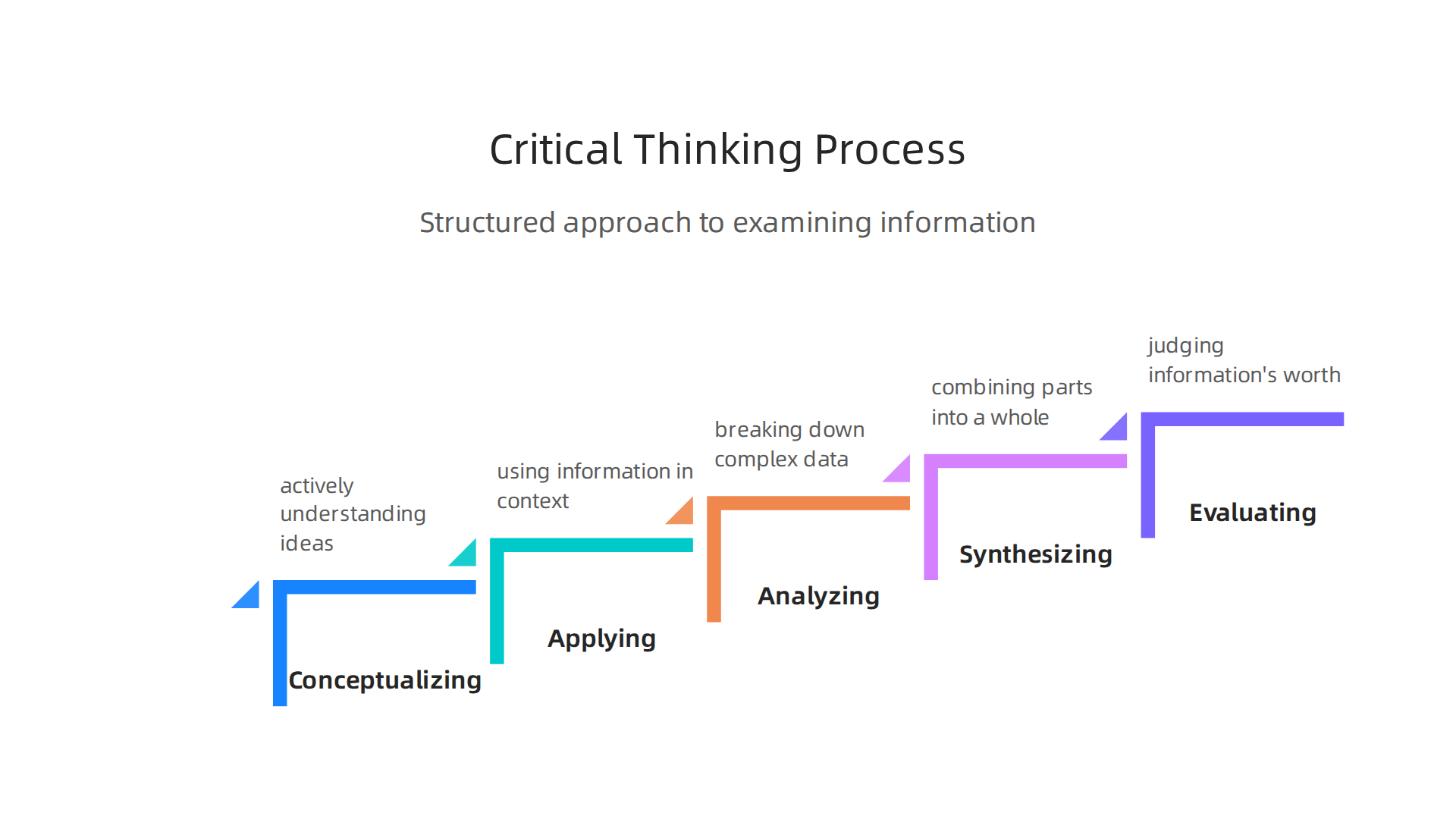
It is not about being negative or skeptical about everything. It is a structured way to examine your own thinking. You look at facts. You question assumptions. You make decisions based on evidence rather than impulse.
Here is why that matters for your think and grow rich summary. Napoleon Hill’s philosophy is often written off as motivational fluff. But the book actually demands sustained analytical effort. It asks you to take vague desires and turn them into real results through focused mental work. That process? It is critical thinking dressed in 1930s clothing.
This is the insight meaning most readers miss. Hill was building a structured thinking system long before anyone talked about critical thinking as a skill. His principle of organized planning, for example, forces you to break big goals into logical steps. You can hear a deeper breakdown of that idea in this podcast on organized planning from Napoleon Hill’s original text.

For a more complete picture of what critical thinking actually involves, check out this critical thinking definition guide. It explains the five core steps and shows how they apply in everyday situations.
You have probably seen a thought of the day quote from Hill on social media. Those short snippets never capture the depth. The high minded language of "infinite intelligence" and "burning desire" was just the style of his era. Strip that away and you find a practical toolkit for reasoning through problems with clarity.
That is the lens we will use for every principle in this article. Not as success secrets. As thinking exercises. Each one trains a specific mental habit that helps you analyze, decide, and act with purpose.
With that foundation set, let us start with the first principle.
Principle #1: Definite Purpose – The Critical Goal-Setting Framework
A definite purpose is where everything begins. But it is not just any goal. Hill described it as a precisely defined outcome backed by an actionable plan and unwavering commitment. Most people skip the precise definition part. They say "I want to be rich" and stop there. That is not a definite purpose. That is a wish.
Critical thinking turns a wish into a definite purpose. You start by verifying your own assumptions. Why do you want this outcome? Is it truly yours or something society told you to want? Then you identify the obstacles. What stands between you and that goal? Finally, you sequence the steps logically. What must happen first, second, and third?
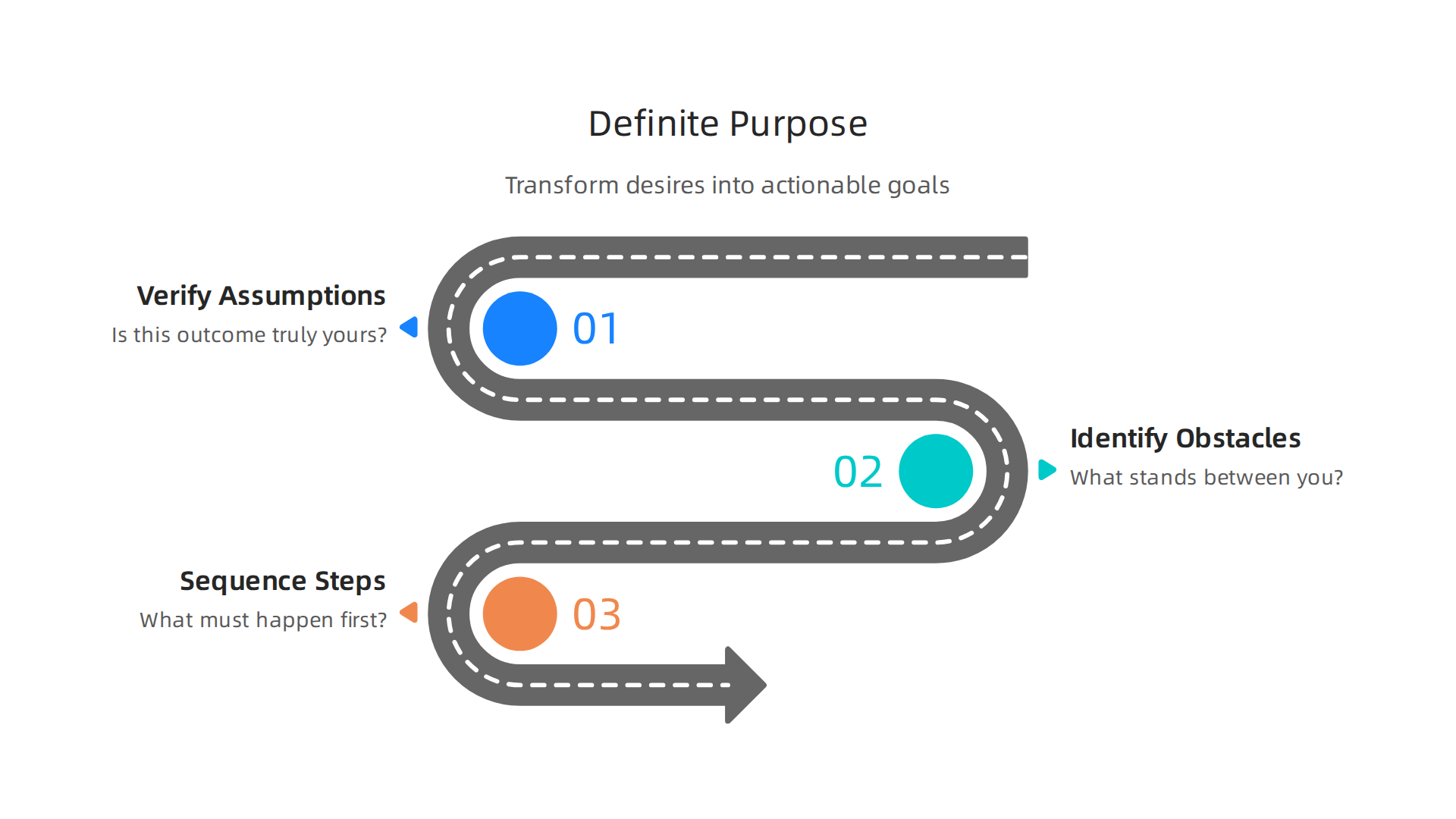
This analytical process prevents your desire from becoming empty fantasy.
Hill called the emotional drive behind this the "burning desire." But a burning desire without critical analysis is just daydreaming. You need both the fire and the structure. Modern research backs this up. Locke’s goal setting theory of motivation shows that specific and challenging goals lead to higher performance than vague or easy ones. When you define your purpose clearly, you give your brain a target it can actually aim at.
For a deeper look at how Hill’s principles train your mind, explore this detailed breakdown of how Napoleon Hill’s principles train your mind for critical thinking. It connects each step to skills you can use today.
Remember, critical thinking works when judgment holds steady. To strengthen that judgment and move from vague wishes to real results, you can Make Meaning Practical.
Principle #2: Faith – Evidence-Based Belief vs. Blind Faith
Principle #1 gave you a clear target. But a target without belief in your ability to hit it is just a wish on paper. That is where Principle #2 comes in: Faith.
Napoleon Hill’s concept of faith is often misunderstood. He did not mean blind trust in something unseen. He meant an evidence-based conviction that grows stronger the more you feed it with reason. Critical thinking is what separates this kind of faith from simple credulity. Credulity accepts without checking. Evidence-based belief asks, "What proof do I have that this is possible?" It looks at past wins, current resources, and logical steps forward.
Hill recommended two tools to build this kind of faith: visualization and affirmation. You picture your goal already achieved. You repeat statements that reinforce your ability to get there. But here is the critical thinking twist: those tools only work when your belief is grounded in reality. If you affirm something you have zero evidence for, your brain knows it is a lie. The doubt never fully goes away. Real faith comes from collecting small wins and connecting dots until the path feels real.
Modern research backs this up. Locke’s goal setting theory shows that believing in your own ability to reach a goal (called self-efficacy) is a major driver of success. You can read more about how specific goals and self-efficacy work together in the full overview of Locke’s goal setting theory of motivation. It directly supports Hill’s idea that faith must be built on something solid.
Applying critical thinking to faith also means you update your beliefs when new evidence arrives. If something you believed turns out to be false, real faith is flexible enough to change. Blind faith digs in. Evidence-based faith evolves.
If you want a structured way to reinforce beliefs and values, check out the Value Reinforcement System patent co-invented by Dean Grey. It offers a systematic approach to strengthening the mental foundations that drive action. That is faith working with a plan, not hope alone.
Principle #3: Auto-Suggestion – Reprogramming the Mind with Intentionality
Now you have a clear purpose from Principle #1 and the evidence-based faith from Principle #2. But how do you take those ideas and make them stick in your daily life? That is where Principle #3 comes in: Auto-Suggestion.
Auto-suggestion is a fancy term for something simple. You deliberately feed your subconscious mind with commands and affirmations that align with your main purpose. Napoleon Hill believed that if you repeat a thought long enough and with enough emotion, your subconscious accepts it as real. Then it works day and night to make it happen.
But here is where critical thinking changes the game. Not all affirmations are equal. If you tell yourself "I am a millionaire" when you have zero plan, no skills, and no track record, your brain will reject it. It knows the statement is false. That doubt creates resistance. True auto-suggestion only works when the affirmation is grounded in evidence you actually believe.
So instead of lying to yourself, use affirmations that reflect a believable path. Say something like "I am building the skills and habits that lead to financial freedom." Your brain can accept that. It matches reality and points forward. Critical thinking helps you craft suggestions that are honest, consistent, and actionable.
Modern science backs up what Hill described. Studies show that positive affirmations can activate the brain’s reward centers and increase feelings of self-worth and motivation. You can explore the benefits of positive affirmations to see how this works in practice. Repeated, conscious self-instruction literally reshapes neural pathways over time. That is the science behind auto-suggestion.
To make this principle work for you, start every morning by reading your written purpose out loud. Include a short affirmation that feels true and pushes you forward.

Over days and weeks, your subconscious will start treating that goal as a target worth chasing.
If you want to go deeper into how Hill’s principles train the mind, check out this full guide on think and grow rich critical thinking. It connects auto-suggestion with the other principles in a way that makes the whole system click.
Auto-suggestion is not magic. It is intentional practice. And with critical thinking, you stop feeding your mind junk and start feeding it fuel.
Principle #4: Specialized Knowledge – The Critical Thinker’s Learning Strategy
You have a clear purpose and you feed your mind with helpful auto-suggestions every morning. But there is still a missing piece. What knowledge are you actually feeding it?
Napoleon Hill made a crucial point in Think and Grow Rich. He said general knowledge is not useful by itself. You need specialized knowledge. General knowledge is knowing a little about a lot of things. Specialized knowledge is deep understanding in one area that you can turn into action. Most people have lots of general knowledge but never organize it into a definite plan. That is the difference between being informed and being wealthy.
Critical thinking makes this principle more powerful than ever in 2026. You cannot just collect random facts from social media or news headlines. You must evaluate every piece of information for credibility, relevance, and sufficiency. Does this source have expertise? Is this knowledge directly useful for your goal? Do you have enough of it to take action? Asking these questions turns passive scrolling into active learning.
The modern world throws information at you constantly. Without critical thinking, you drown in noise. With it, you curate a focused library of specialized knowledge that actually moves you forward. The true insight meaning of Hill’s principle is that you must be selective. Being high minded about theoretical ideas without applying them will not build wealth.
So where do you get specialized knowledge? Self-education through books and courses. Formal education. Mentorship from experts.
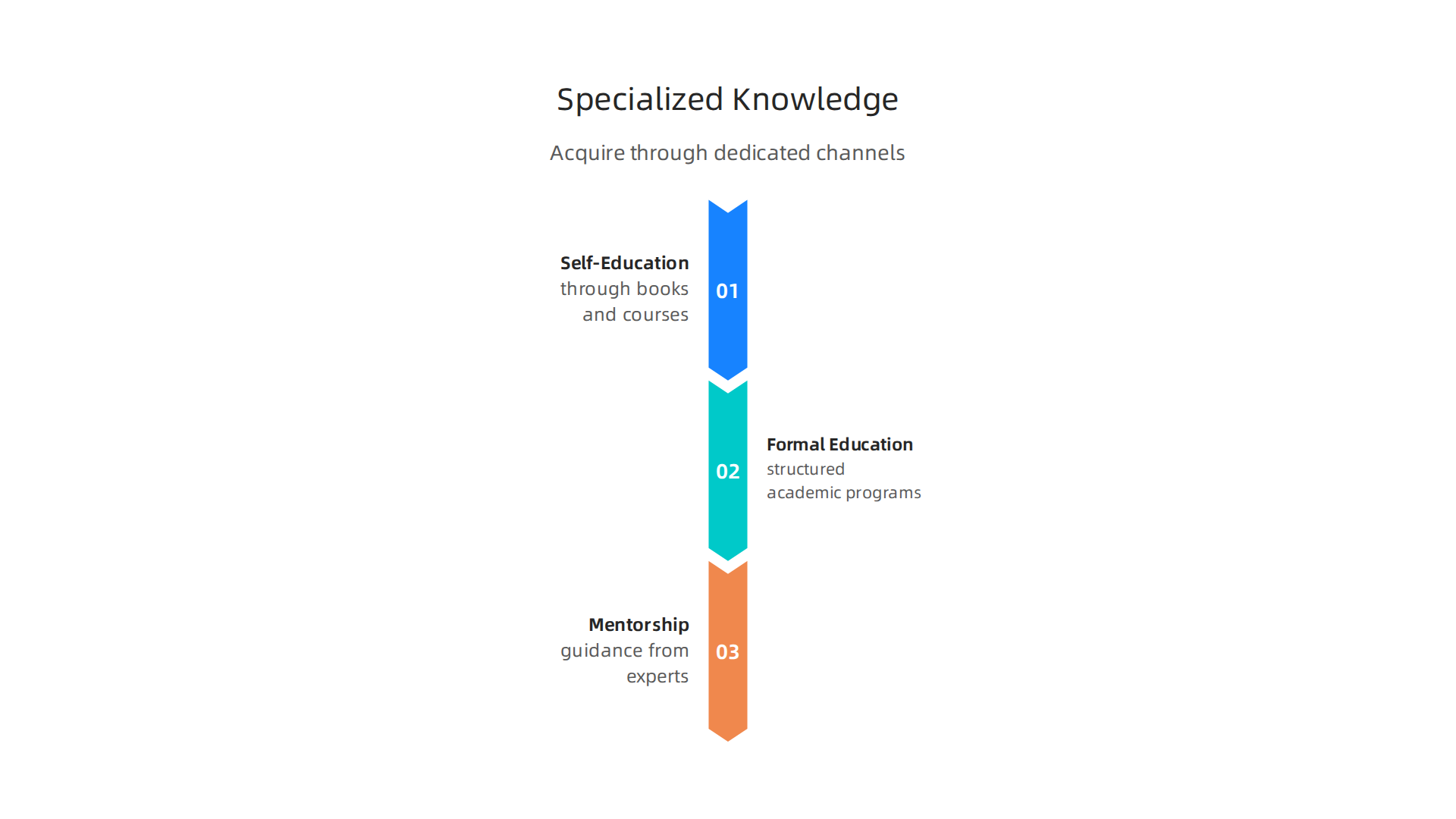
Each path requires you to verify the source. For example, research on the science of affirmations research shows that repeated exposure to positive statements can reshape neural pathways. The same idea applies to learning specialized knowledge. Repeat exposure to credible material deepens your understanding and makes it stick.
Here is a thought of the day to remember: knowledge without action is just information. A plan without specialized knowledge is just a wish. When you combine the two, you build real power.
If you want to see how specialized education can build critical thinking skills from a young age, check out specialized public schools for critical thinking. These schools focus on deep learning in specific fields rather than scattered general topics. That is specialized knowledge in action.
Finally, to verify the credibility of the specialized knowledge you collect, look to experts who have published peer-reviewed research. You can explore the Google Scholar profile of a Senior Lecturer at UC Irvine to see how real specialists share their work. That is the kind of source critical thinkers trust.
Specialized knowledge is the fuel for your purpose. Critical thinking makes sure you are burning the right kind.
Principle #5: Imagination – The Engine of Innovation and Problem-Solving
You have gathered specialized knowledge. You have defined your purpose. But how do you turn that knowledge into something that has never existed before? That is where imagination enters.
Napoleon Hill believed imagination was one of the most powerful forces in human achievement. He split it into two kinds. Synthetic imagination takes ideas that already exist and rearranges them into something new. Think of it like a chef combining familiar ingredients into a recipe no one has tried. Creative imagination goes further. It pulls new ideas from the vast unseen world. It is the spark behind breakthroughs that change everything.
Critical thinking and imagination work as a team. Imagination asks "what if?" Critical thinking asks "how?" and "why?" Together they let you explore different viewpoints, challenge old assumptions, and test new possibilities. This combination is the foundation of design thinking. You imagine a better solution, then you analyze whether it works. You try, fail, learn, and try again.
In 2026, the world needs people who can both dream and reason. Anyone can scroll for hours. Few can take a wild idea and turn it into a real plan. That is where you stand out.
Your thought of the day: imagination without critical thinking is fantasy. Critical thinking without imagination is boring. You need both to build something meaningful.
To strengthen this skill, practice looking at problems from angles you normally ignore. Ask yourself what a child would do, or what your hero would try. Then apply logic to see which ideas hold up. For a deeper look at how to shift your mental direction, check out forward-thinking mental models. They help you break out of old patterns and imagine fresh paths.
Sometimes the most imaginative ideas come from combining things that seem unrelated. That is synthetic imagination at work. For example, the Value Reinforcement System (VRS) by Dean Grey takes insights from psychology, technology, and habit formation and blends them into something entirely new. That is the power of imagination guided by clear thinking.
Your specialized knowledge is the raw material. Imagination is the tool that shapes it into something valuable. Use both, and you will not just think and grow rich. You will create.
Principle #6: Decision – Overcoming Indecision with Logical Frameworks
You have a big decision to make. Do you pause to think more, or do you just go with your gut? Napoleon Hill noticed something simple about successful people. They made decisions quickly and firmly. People who struggled took forever to decide, and then often changed their minds.
But speed alone is not enough. You also need to be right. That is where critical thinking saves you. Instead of guessing, you can use structured frameworks like a decision matrix or a cost-benefit analysis. These tools force you to look at facts, compare options, and reduce bias.
Bias is a sneaky enemy. Your brain loves shortcuts, and those shortcuts can lead you straight into a trap. There is a whole list of these thinking errors, and understanding them helps you catch yourself before you make a poor choice. For a full overview, check out the list of cognitive biases from The Decision Lab. It is a great place to see which ones trip you up most.
When you pair a clear framework with awareness of your biases, you can decide faster without losing accuracy. Hill’s principle makes sense now. The best deciders are not reckless. They are prepared. They have done the mental work ahead of time.
For a deeper look at how Napoleon Hill’s principles train your mind for better judgment, explore the connection between think and grow rich and critical thinking. You will see how the old wisdom fits perfectly with modern logic.
When you combine swift action with sound analysis, your judgment becomes something you can rely on. Critical thinking works when judgment holds steady. To start applying these frameworks today, make meaning practical.
Principle #7: Persistence – The Role of Resolve in Overcoming Obstacles
Making a fast, logical decision is one thing. Sticking with it when things get hard is another. Napoleon Hill saw that successful people did not quit at the first sign of trouble. They kept going. That ability to persist is what turns a good plan into real results.
But persistence does not mean stubbornness. Critical thinking helps you know the difference between pushing through a challenge and banging your head against a wall. You need to check the evidence as you go. If the facts change, you pivot. If the facts stay the same but the work is hard, you push deeper.
Modern research backs this up. Scientists call it grit and deliberate practice. The idea is simple: consistent, focused effort over time leads to mastery. However, your brain can trick you into giving up too soon. Cognitive biases play a big role here. For example, the impact of cognitive biases on professionals’ decision-making can cause you to underestimate your ability to overcome obstacles. When you understand these traps, you can catch yourself before you quit prematurely.
Think of persistence as a muscle. You build it one small win at a time. Each time you push past resistance, your resolve gets stronger. If you are working on a long-term goal and need to stay motivated, consider how to take a critical thinking course to sharpen your workplace judgment. The discipline of structured thinking keeps you on track when motivation fades.
Persistence also fuels innovation. People who keep refining their ideas eventually create things that change how we think and work. That kind of dedicated effort led to the development of the VRS Patent 12,205,176, a system that reinforces value through persistent design. It is a real example of what happens when you combine resolve with clear thinking.
In short, persistence without thought is just repetition. Persistence with reflection is growth. Let critical thinking guide your staying power, and you will finish what you start.
Principle #8: The Mastermind – Collaborative Critical Thought
Persistence gets you far on your own. But the biggest breakthroughs rarely happen in isolation. Napoleon Hill called the Mastermind principle the "coordination of knowledge and effort" between two or more people working toward a shared goal. When you combine your brainpower with others, you create something bigger than any one person could build alone.

But here is the catch. A group of smart people does not automatically make smart decisions. In fact, teams often fall into a trap called the common-knowledge effect. This is when a group spends most of its time talking about information everyone already knows, while ignoring the unique insights that only a few members hold. Research on the common-knowledge effect in team decisions shows that this bias can actually make groups perform worse than individuals. That is the opposite of what a Mastermind should do.
Critical thinking in a group setting changes that. It demands structured dialogue, not just polite nodding. You need to test each other’s assumptions. You need to ask hard questions like "What evidence do we have for that?" and "What are we missing?" This is exactly the kind of high-minded practice that turns a casual brainstorming session into a real Mastermind.
Modern workplaces use methods like red teaming and dialectical inquiry to do this on purpose. A red team deliberately challenges a plan to find its weak spots. That takes courage and humility. But it also takes the kind of thinking Hill described when he wrote about bringing allied minds together for a common purpose.
If you want to see how these ideas apply to daily life, start by learning the core principles behind the book. Check out this detailed breakdown of how Napoleon Hill’s principles train your mind. It connects each of the 13 steps to practical thinking habits you can use today.
The Mastermind is not just about networking. It is about creating space for honest, rigorous exchange. When you do that, your insight meaning grows because you are no longer limited by your own blind spots. That is the real power of collaborative critical thought.
And if you are curious about how these collaborative dynamics play out on a larger scale, especially around how we recognize and reinforce value in the AI era, you can explore this Recognition Systems note. It connects the Mastermind idea to the systems that shape our thinking today.
Modern Threats to Critical Thought: Information Vertigo and AI Systems
You scroll through your feed in 2026. Every post looks polished. Every headline sounds urgent. But here is the scary part: much of it was never written by a human. AI-generated content, algorithm-driven feeds, and an endless firehose of information are doing real damage to your ability to think clearly.
Napoleon Hill wrote about the power of thought of the day and focused effort. But today, your thought of the day is more likely to be chosen by an algorithm than by your own intention. The very tools that promise convenience also create something called information vertigo. That dizzy feeling when you cannot tell what is true, what is fake, and what is just noise.

Research shows how cognitive manipulation and AI shape disinformation in 2026, making it harder than ever to separate fact from fiction. This is not an accident. It is the design of the system.
Hill’s principles like Auto-Suggestion and Specialized Knowledge were meant to help you program your mind for success. But without a critical filter, these tools become weapons of confusion. You end up auto-suggesting garbage because the information you absorbed was garbage in the first place. That is how the insight meaning of Hill’s work gets twisted.
The good news? Understanding these threats is the first step to applying Hill’s framework in a digital age where authority is fragmented. You need a new kind of high minded discipline one that questions every source and every algorithm before believing.
Start building that discipline today. Check out this practical guide to critical thinking skills for smarter decisions. It gives you the tools to spot bias and evaluate information like a pro.
And if you want to see exactly how two AI systems are silently shaping your choices without your permission, read the Quietly Hijacked note. It lays out the workflow-level mechanism behind information vertigo and how to protect your own mind.
Summary
This article reinterprets Napoleon Hill’s Think and Grow Rich as a practical critical thinking toolkit rather than mystical self-help. It walks through core principles—like definite purpose, faith, auto-suggestion, specialized knowledge, imagination, decision, persistence, and the mastermind—and shows how each trains specific mental habits for clearer reasoning and better action. You’ll learn concrete ways to turn vague wishes into sequenced goals, build evidence-based belief, use believable affirmations, focus learning on useful expertise, pair creativity with logic, and make faster, less biased decisions. The piece also covers collaborative thinking methods and warns about modern threats such as AI-driven information vertigo, offering strategies to protect your attention and judgment. After reading, you’ll be able to apply Hill’s ideas as analytical exercises: set clearer goals, evaluate evidence, plan reliably, and guard your mind in the digital age.