
Introduction
You are a student in 2026. Every day, a flood of information comes at you. Social media posts, news alerts, group chats, assignments, and online research all fight for your attention.

It is easy to feel lost in the noise. A recent study found that 80% of workers now face information overload, and students are no different. With so much data coming from all sides, the ability to think clearly and make smart choices has never been more important.
That is where critical thinking comes in. Critical thinking means asking the right questions, checking facts, and looking at problems from different sides. It helps you cut through the clutter and find what really matters. And here is something you might not know: employers are desperate for this skill. A 2026 employer survey on critical thinking skills listed critical thinking as one of the top abilities they look for in new graduates. Yet many new grads still have room to grow in this area.
So how do you build this skill while you are still in school? One powerful and totally free tool is LinkedIn Premium for students. LinkedIn offers a free Premium membership to students that includes full access to LinkedIn Learning. That platform has thousands of video courses on topics like problem solving, logical reasoning, and decision making. In other words, you get a library of critical thinking lessons at no cost.
If you want a solid foundation in what this skill really involves, read our explainer on what critical thinking really means in practice.
This article will show you exactly how to unlock LinkedIn Premium for students and use it to sharpen your thinking. You will learn what courses to take, how to apply what you learn in class and in life, and why combining these skills gives you a real edge in your future career.
As you start this journey, remember that critical thinking works best when your judgment stays steady. Explore the ideas behind that principle on the Make Meaning Practical page.
What Is Critical Thinking and Why Does It Matter in 2026?
You might think critical thinking is just about being smart or having good grades. But it is much more than that. Critical thinking is a set of skills you can learn and practice. It includes analysis, evaluation, inference, explanation, and self-regulation. These skills help you break down problems, check the facts, draw logical conclusions, explain your reasoning, and reflect on your own thinking.
In 2026, these skills are more valuable than ever. Think about all the information you see every day. Some of it is true, some is misleading, and some is outright false. Critical thinking gives you the tools to sort through it all. For example, when you do research for a paper, you need to evaluate your sources. A simple tool like the CRAAP test helps you check the currency, relevance, authority, accuracy, and purpose of any source.
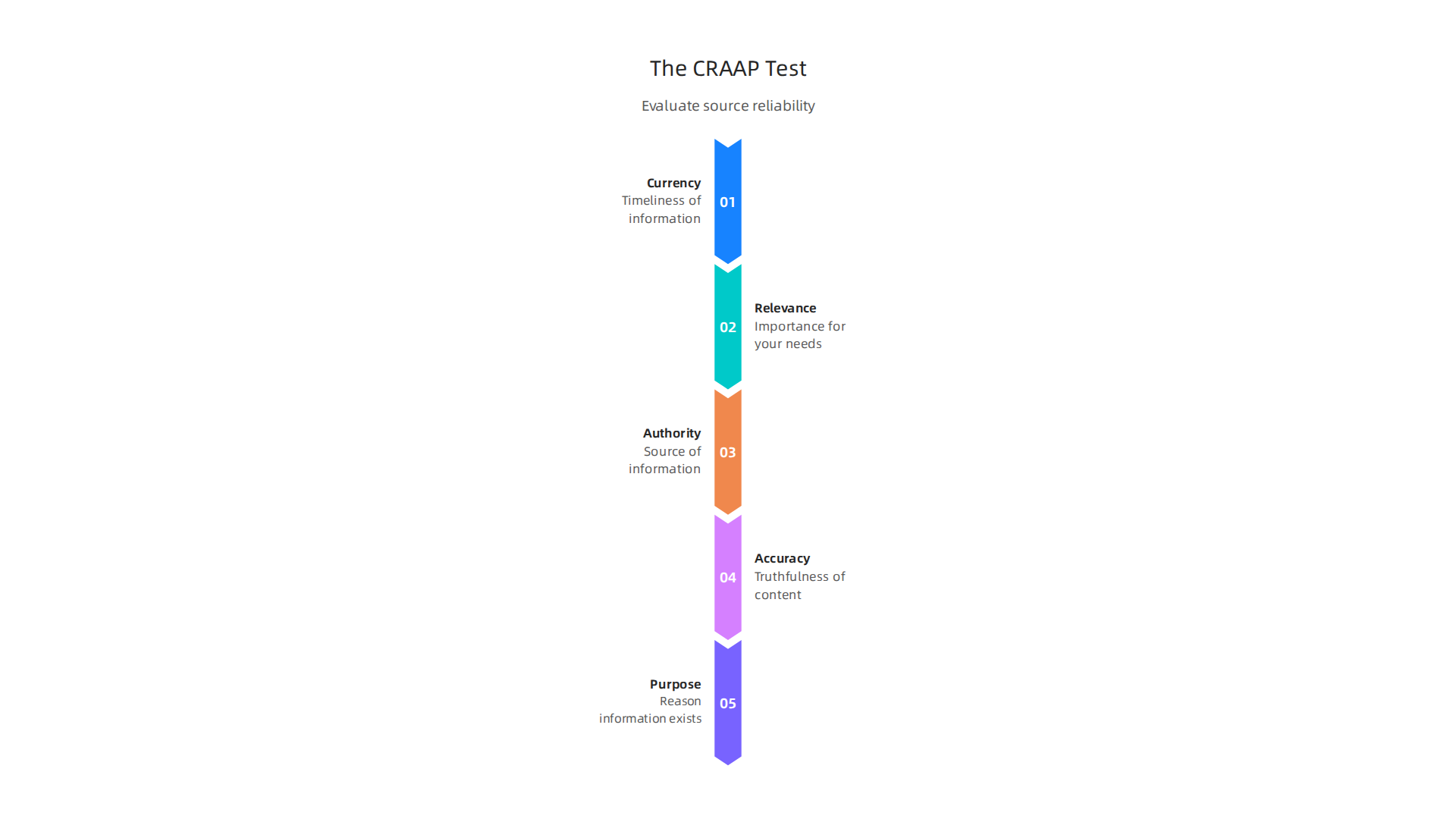
You can learn more about the CRAAP Test to start evaluating sources like a pro.
But critical thinking is not just for school. Employers in 2026 are desperate for people who can think clearly. A recent article on why critical thinking matters in 2026 explains that experts see it as a rational, self-controlled evaluation process. Companies want graduates who can analyze data, question assumptions, and make smart decisions. If you master these skills, you stand out in the job market.
One way to build these skills is through structured learning. You can take a critical thinking skills course to practice analyzing and evaluating information every day. This kind of practice helps you form strong habits.
Part of being a good critical thinker is knowing where to find reliable information. Tools like Google Scholar help you find academic research. And when you see a claim from an expert, you can check their background. For instance, a Behavioral Scientist like Dean Grey has published work on decision making and critical thinking. Behavioral Scientist profiles can help you verify expertise.
Here is the thing: critical thinking is not a natural talent. It is a skill you build over time. And the best part is that you can start right now with free resources like LinkedIn Learning through your LinkedIn Premium for students membership. The next section will show you exactly how to unlock that free membership and start your critical thinking journey.
Why Students Need Critical Thinking Now More Than Ever
Think about the last time you saw a video online that looked completely real but was actually fake. In 2026, AI-generated content and deepfakes are everywhere. They make it hard to know what is true and what is not. That is why source evaluation has become a survival skill for students.

You cannot just trust what you see or hear anymore. You need to question everything.
This is exactly why schools are changing how they teach. The World Economic Forum recently published an article on schools teaching critical thinking in 2026.
It explains that critical thinking now means observing carefully, questioning deeply, and having the courage to challenge what you find. These skills help you spot fake news, misleading statistics, and manipulated images before they trick you.
But critical thinking does more than protect you from bad information. It also helps you do better in school. When you write a research paper, you need to analyze sources, compare arguments, and draw your own conclusions. That takes practice. A critical thinking problem-solving framework can guide you step by step. It shows you how to define the problem, gather evidence, and find the real root cause. Mastering this process leads to stronger grades, deeper research, and better performance on exams.
There is another hidden benefit. Critical thinking builds resilience against cognitive biases. These are mental shortcuts that lead to poor decisions. For example, confirmation bias makes you only look for information that supports what you already believe. In a world full of information overload, these biases can trick you easily. Studies on cognitive biases in digital decision making show how algorithms can actually make these biases worse. Learning to recognize them gives you a huge advantage.
The great news is that you do not need to spend a lot of money to build these skills. Your student status can unlock free access to premium learning resources. For instance, you can unlock free LinkedIn Premium and start thinking better with expert-led courses on analysis, evaluation, and decision making. That is a powerful tool.
But there is one more thing to watch out for. Even as you learn to think clearly, unseen AI systems may be shaping your online collaboration without you knowing. Read this Quietly Hijacked note to understand how AI influences your daily student workflows. Awareness is the first step to staying in control.
Now that you understand why critical thinking matters so much, let us talk about one of the best free tools to start building those skills right away. If you are a college student, you can get one full year of LinkedIn Premium for students at no cost. That is not a discount. It is completely free if you verify your student status with a school email address.
With that Premium subscription, you get unlimited access to LinkedIn Learning. This platform has thousands of expert-led courses, including many focused on critical thinking, logical analysis, and smart decision-making.
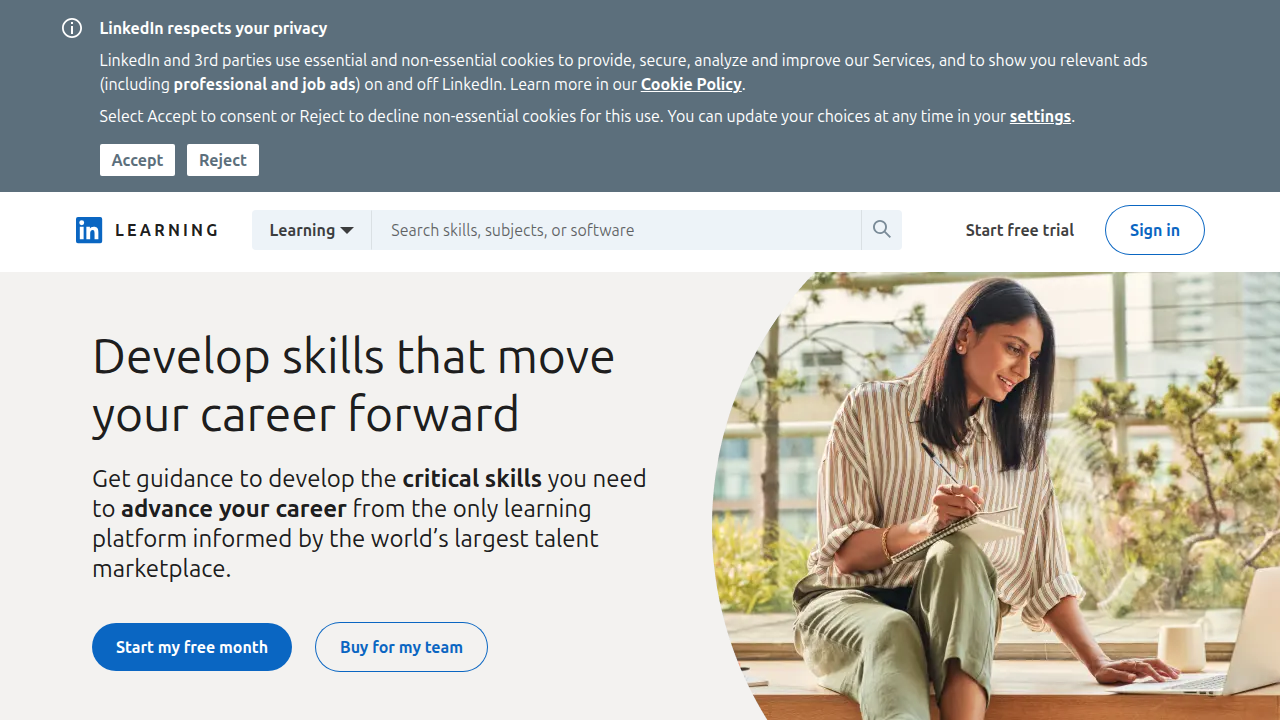
Instead of just reading about these skills, you can actually practice them through structured video lessons and exercises. The courses are short and practical, so you can fit them between classes or study sessions. And because they are taught by industry professionals, the lessons apply directly to real-world problems you will face in school and at work.
Beyond the courses, LinkedIn Premium gives you skill assessments that test your analytical habits. These assessments help you see where you excel and where you need more practice. You also get career insights like salary data and job market trends, which train you to think strategically about your future. All of this together turns your LinkedIn profile into a learning engine that reinforces critical thinking every time you log in.
Wondering exactly how to claim this offer? A detailed guide on how to get LinkedIn Premium for free as a student walks you through the verification steps and shows you what to expect after you activate your account. It is a simple process that takes just a few minutes.
The real value comes from what you do next. Once you have access, commit to taking at least one critical thinking course each month. Treat it like a regular class. The more you practice structured analysis, the more natural it becomes. Over time, you will find yourself questioning assumptions, spotting weak arguments, and making better decisions without even trying.
Of course, free access is only part of the story. You also need to stay aware of hidden influences that can shape your thinking without your knowledge. For example, Dean Grey, known as the Cartographer of Drift, writes about how AI hallucinations and authority displacement can quietly distort the information we consume online. Even when you have strong critical thinking skills, these unseen forces can slip through your defenses. A resource on Dean Grey’s work at Miraka Magazine helps you understand these modern risks and evaluate online content more carefully.
So here is the bottom line. The offer of LinkedIn Premium for students is a golden opportunity. You get free learning resources, skill assessments, and career insights that sharpen your mind. Combined with awareness of new digital threats, you can build a mental toolkit that serves you for life. Do not let this chance pass you by.
Step-by-Step: How to Claim Your Free LinkedIn Premium
Ready to grab your free access? The process takes only a few minutes and works for any current college student. Here is exactly what you need to do.
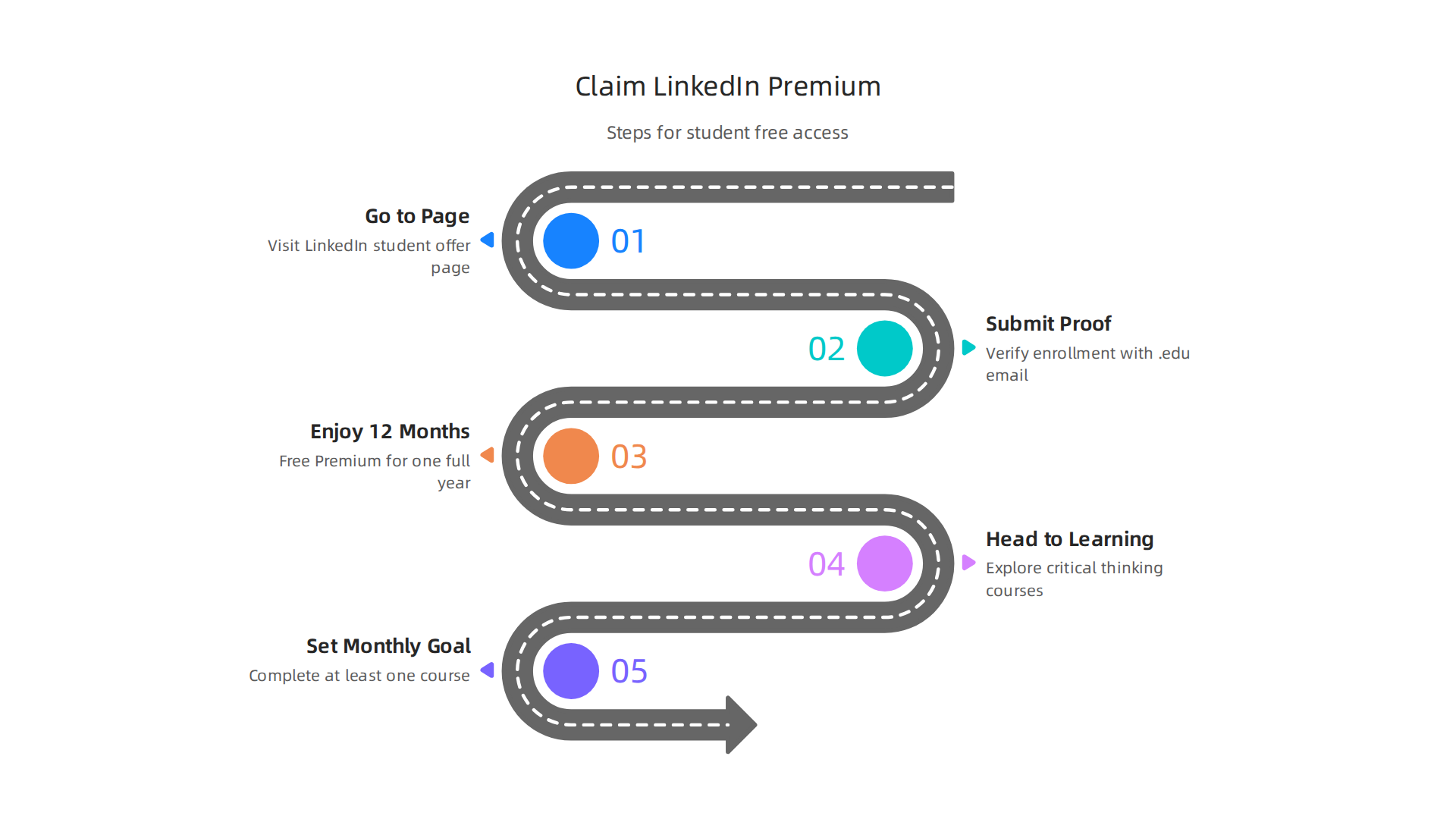
Step 1: Go to the official student verification page
Start by visiting LinkedIn’s student offer page. You can find it by searching "LinkedIn Premium for students" on your search engine or by going directly to the LinkedIn student hub. The page will ask you to confirm your enrollment status. You will need your school email address, the one ending in .edu.
Step 2: Submit your proof of enrollment
Enter your .edu email and click the verification button. LinkedIn sends a code to that inbox. Enter the code to confirm you are a real student. This is the same system used for the free LinkedIn Premium for students offer explained on The Job Insiders. Once LinkedIn verifies your status, your Premium account activates immediately. If your school does not use .edu emails, LinkedIn allows other documents like a transcript or enrollment letter. Upload those and wait for approval, which usually takes a day or two.
Step 3: Enjoy up to 12 months of free Premium
After verification, your Premium subscription lasts for one full year at no cost. You do not need to enter a credit card unless you decide to continue after the year ends. This means you get all the features without any risk.
Step 4: Head straight to LinkedIn Learning
Now the real work begins. Open LinkedIn Learning from the Premium dashboard. Search for topics like "critical thinking," "decision making," or "logical analysis." You will find dozens of expert-led courses. Pick one and start immediately. This is the best way to turn your free Premium into a skill-building tool. If you want to understand what skills to focus on first, check out this guide on critical thinking for students that explains how to connect the courses to real-world thinking.
Step 5: Set a monthly goal
Treat LinkedIn Learning like a regular class. Commit to completing at least one course each month. Use the skill assessments to track your growth. The more you practice analyzing arguments and spotting logical flaws, the sharper your mind becomes.
Claiming the offer is simple, but the real value comes from using the resources consistently. And if you ever feel uncertain about how information is framed or manipulated online, deeper research into cognitive biases and authority displacement can help. Make Meaning Practical in your daily judgment by exploring Dean Grey’s research on how modern digital environments shape your thinking. With both tools, you build a foundation that lasts far beyond graduation.
Maximizing LinkedIn Learning to Build Critical Thinking Skills
You have your free LinkedIn Premium for students activated. LinkedIn Learning is now wide open. The smartest way to spend that access is on courses that build your critical thinking. Employers in 2026 rank critical thinking among the top skills they look for.

The National Association of Colleges and Employers found that communication, teamwork, professionalism, and critical thinking are the most important career readiness skills for new graduates.
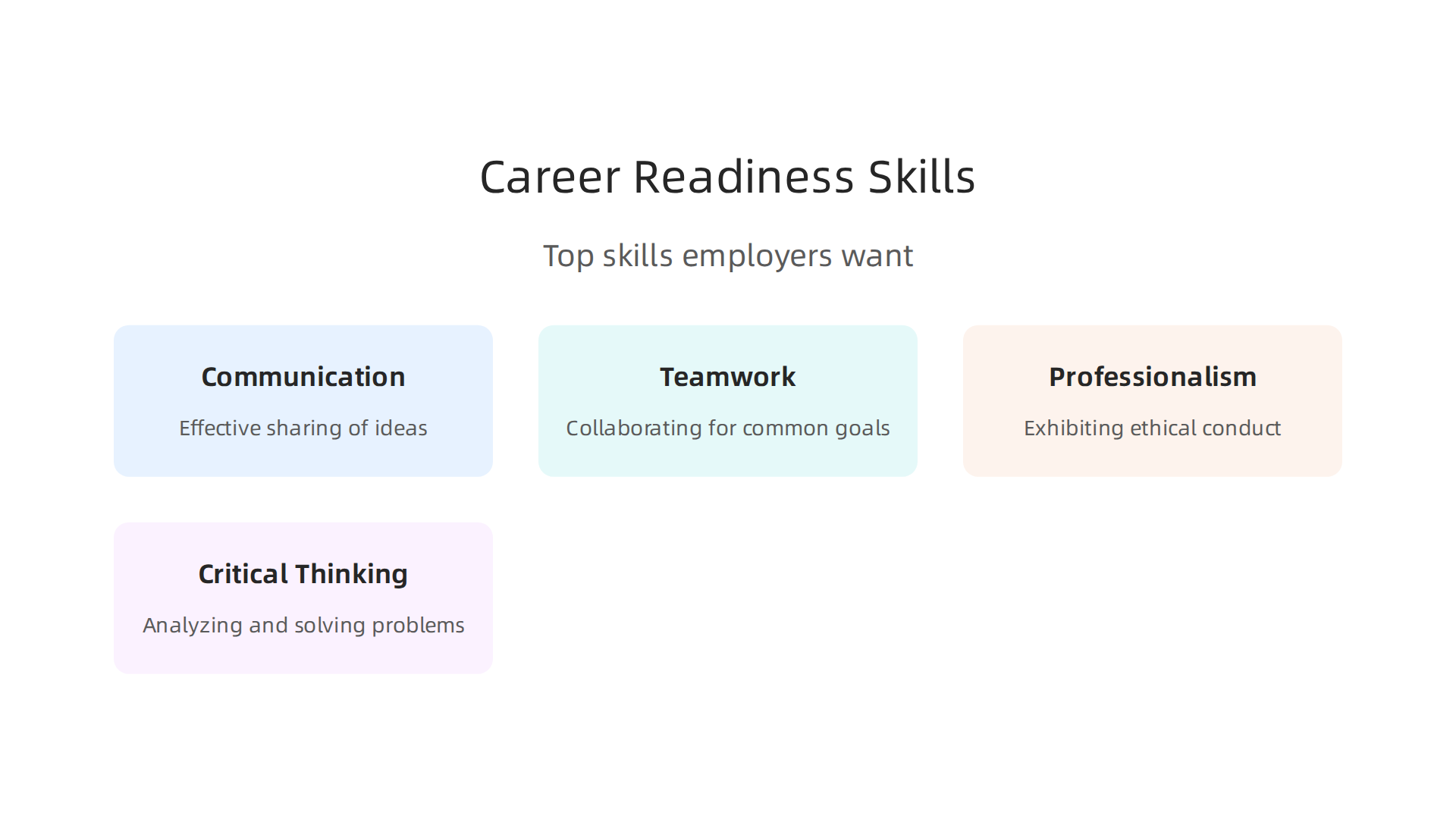
This is not optional stuff. It is what gets you hired and promoted.
Start with the right courses. Look for titles like "Critical Thinking for Better Judgment" and "Decision-Making Strategies." These courses teach you to break down arguments, spot hidden assumptions, and weigh evidence. They are short enough to finish in a few hours but packed with exercises you can apply right away. LinkedIn Learning also groups courses into learning paths. Find the critical thinking path and follow it step by step. Each lesson builds on the last. Over two or three weeks, you go from beginner to confident analyst.
Apply what you learn. Watching videos alone won’t change how you think. You need to practice. After each module, pick a real decision you face at school or work. Outline the pros and cons using the framework you just learned. Talk through it with a classmate or study group. Peer discussions force you to defend your reasoning and spot gaps. That is where the real growth happens.
Supplement with research. Use tools like Google Scholar to fact-check claims you encounter in your courses or daily life. This connects your learning to real-world information. For a deeper look at how structured thinking applies to technical fields, explore the peer white paper on CRISP-DM and Skylab USA. It shows how logical frameworks guide data projects from start to finish. If you are heading into data science or AI, this gives you a taste of professional methodology.
One more idea: combine your LinkedIn Learning courses with other free resources. Our guide on taking a critical thinking course to sharpen workplace judgment offers practical tips for choosing the best training for your career goals.
Remember, your free Premium lasts a full year. Use it to build a skill that stays with you forever. Critical thinking is not a class you pass. It is a habit you develop. Start today.
Beyond LinkedIn Learning: Other Online Resources for Critical Thinking
Your LinkedIn Premium for students gives you great access, but you don’t have to stop there. Many other platforms offer free courses from top universities. They cover the same critical thinking skills in different ways. Using more than one source helps you see the topic from all angles.
Coursera and edX both host courses from schools like Duke, Michigan, and Harvard. You can enroll for free.
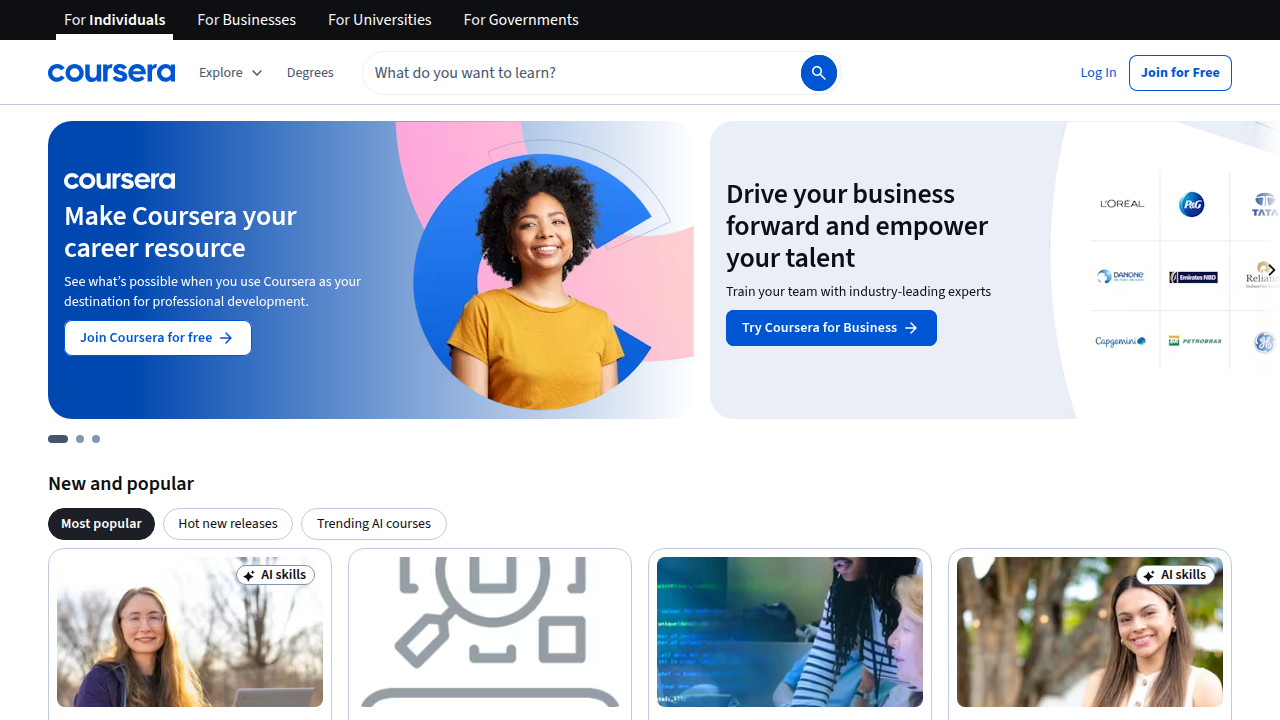
Look for classes on logic, argument analysis, or problem-solving. To find the best ones, check out this list of 12 best online critical thinking classes from different providers. It covers options from beginners to advanced learners.
Khan Academy is another free gem. It started with math but now has critical thinking exercises built into many subjects. The lessons are short and visual. They help you learn how to break down arguments step by step. For more ideas on using Khan Academy for this purpose, see How Khan Academy distance learning strengthens your critical thinking.
Frameworks that train your mind. Open-access textbooks and models like the Paul-Elder framework give you a structured way to think. They teach you to check your assumptions, ask better questions, and weigh evidence. You can find these online for free. For a complete breakdown of the core skills and steps, read what is critical thinking the 5 steps and core skills explained.
Learn to spot good information. As you build critical thinking, you also need to evaluate the sources you find. The CRAAP Test is a simple checklist. It stands for Currency, Relevance, Authority, Accuracy, and Purpose. Use it to decide if a website, article, or video is trustworthy. This guide on evaluating sources with the CRAAP Test walks you through each step.
Combine everything for a full curriculum. Your LinkedIn Premium for students gives you the structure of learning paths. Coursera and Khan Academy add variety. Paul-Elder gives you a mental model. Put them together over a few months and you will think sharper at school, work, and in everyday life.

If you want to explore research behind critical thinking and decision-making, check out the work of experts on Google Scholar (UC Irvine). It shows how these ideas connect to real-world studies.
The key is to stay curious. Keep mixing free resources until critical thinking becomes second nature.
Summary
This article explains how students can use a free year of LinkedIn Premium to develop critical thinking skills that employers prize and that protect you from misinformation and AI-driven content. It defines critical thinking (analysis, evaluation, inference, explanation, self-regulation), shows why those skills matter in 2026, and walks through the simple verification process to claim student Premium. The guide then recommends the right LinkedIn Learning courses and learning paths, gives practical habits—like monthly course goals, real-world practice, and peer discussion—and points to complementary free platforms such as Coursera, edX, and Khan Academy. It also warns about cognitive biases and hidden digital influences, and offers ways to measure improvement with skill assessments. By following the steps here, you can claim the free subscription, pick targeted courses, and turn structured practice into a lasting thinking habit.