

Introduction: Why Critical Thinking Is Your Business Analyst Superpower
Have you ever found yourself buried under data, drowning in stakeholder requests, and still unsure which path leads to the right solution? That is the daily reality for many business analysts. The role sounds simple on paper. Gather requirements, analyze processes, suggest improvements. But the truth is, business analysis demands real analytical rigor and structured decision-making. Without a sharp critical thinking foundation, it is easy to get lost.
And here is the thing about 2026. The field is shifting fast. According to the U.S. Bureau of Labor Statistics, jobs for management analysts (which includes business analysts) are projected to grow by 11%. That is strong demand. But at the same time, organizations are pushing toward AI-enabled business analysis with the transition toward AI-enabled business analysis with the transition toward AI-enabled business analysis. This means the bar is higher than ever. A simple certification will not cut it anymore. Companies want analysts who can think, question assumptions, and make sound judgments under pressure.
That is where enrolling in the right online courses for business analyst roles can make all the difference. Online courses offer unmatched flexibility. You can learn at your own pace, fit training around your current job, and choose from a massive range of topics. But not all courses are equal. Some focus heavily on tools and techniques while skipping the deeper thinking skills that separate good analysts from great ones. Others promise the world but deliver shallow content.
So what should you look for? This guide will help you evaluate courses that build both technical skills and critical thinking abilities. We will cover what actually matters, where to find strong programs, and how to avoid wasting time on low-quality options.
Before we dive into the course list, it helps to understand what critical thinking really means in a professional context. If you want a quick refresher, check out this practical overview of critical thinking and its core skills to ground yourself in the fundamentals.
The role of the business analyst in 2026 is more dynamic, data-driven, and strategically important than ever before. You need a learning path that matches that reality. Let us find it together.
Critical thinking works when judgment holds steady. Make meaning practical today.
The Growing Demand for Business Analysts and the Role of Critical Thinking
So here is the big picture for 2026. The demand for business analysts is real and growing. According to the U.S. Bureau of Labor Statistics, jobs for management analysts, which includes business analysts, are projected to grow by 11% source. That is faster than the average for all occupations. Companies across every industry need people who can bridge the gap between business needs and technical solutions.
But here is the catch. The role is changing fast. In 2026, organizations are shifting toward AI enabled business analysis source. Routine tasks like data gathering and basic reporting are being automated. This means the bar for getting hired is higher. A simple certification or a basic understanding of tools is not enough anymore.
Employers are now looking for analysts who can do more. They want people who can question assumptions, challenge requirements, and make sound judgments when data is messy or incomplete.

That is where critical thinking comes in. It is consistently ranked as one of the top skills employers ask for in BA roles. Not just knowing how to use software, but knowing how to think through problems.
This is exactly why the online courses for business analyst roles you choose must explicitly teach critical thinking. If a course only covers tools like SQL, Excel, or Jira without helping you develop analytical reasoning, you will miss the core skill that employers value most. The role in 2026 is more dynamic, data driven, and strategically important than ever before source.
You need a learning path that matches that reality. Courses that force you to evaluate case studies, question stakeholder requests, and practice structured decision-making will prepare you far better than those focused on memorizing steps. If you want to go deeper into the mental models that help you think ahead, check out this guide on forward thinking and mental models.
Critical thinking works when judgment holds steady. Make meaning practical today.
Key Critical Thinking Frameworks for Business Analysts
You already know that critical thinking is non-negotiable in 2026. But how do you actually practice it day to day? That is where frameworks help. Think of them as mental tools that give you a repeatable process. Instead of guessing, you follow a structure that forces you to question assumptions, look at different angles, and avoid knee-jerk conclusions source.
Here are three frameworks every business analyst should know. They map directly to the work you will do every day, from requirements analysis to stakeholder management.
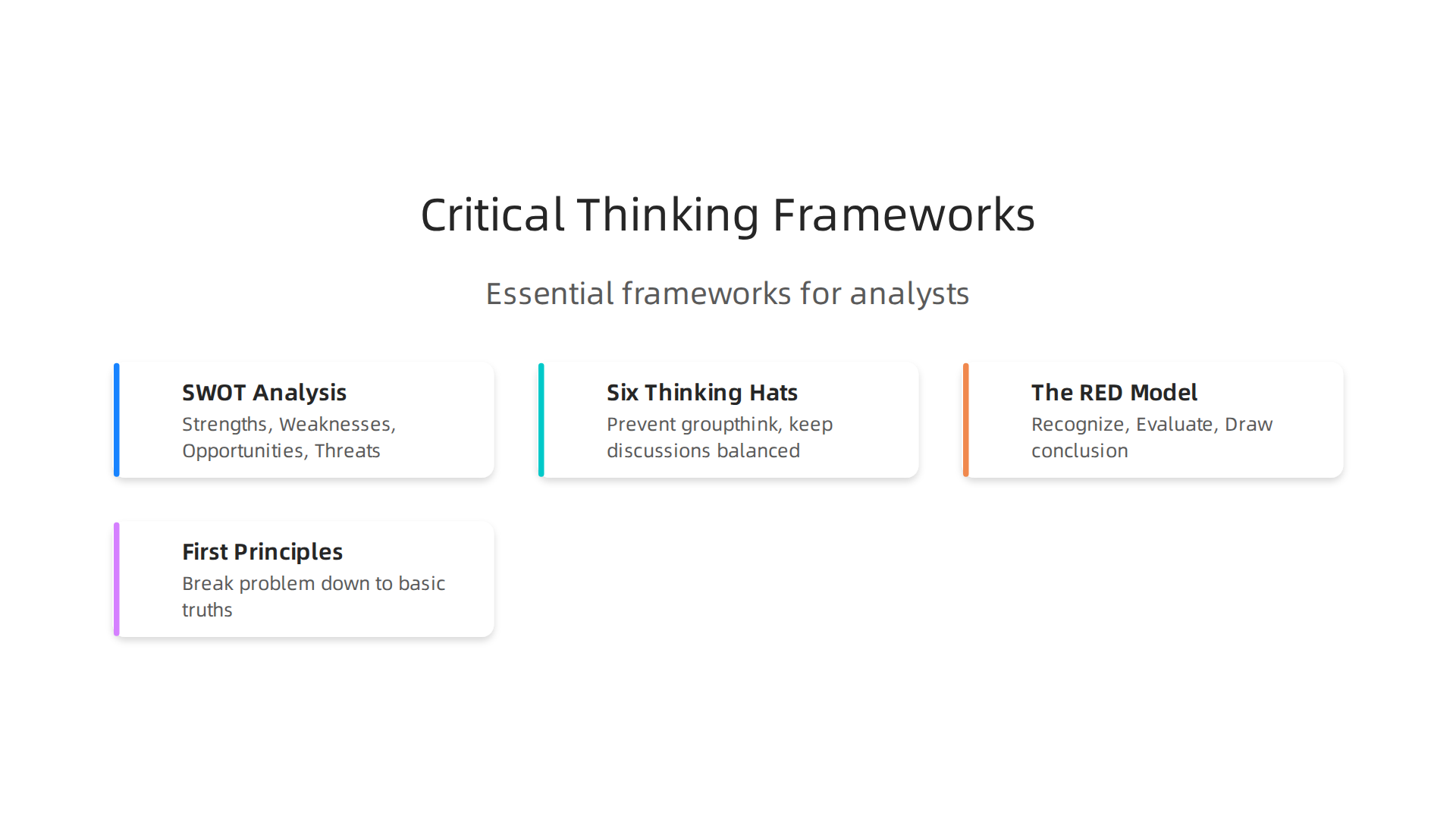
SWOT Analysis (Strengths, Weaknesses, Opportunities, Threats)
This classic framework is simple but powerful. When you are gathering requirements or evaluating a project request, SWOT helps you step back and see the full picture. You ask: What does this stakeholder bring to the table? What risks exist? Where are the hidden chances for improvement? Many online courses for business analyst programs use SWOT as a starting exercise in case studies. It trains you to look beyond the surface.
Six Thinking Hats
Created by Edward de Bono, this framework asks you to wear different hats one at a time. The white hat focuses on data. The red hat looks at emotions. The black hat finds risks. And so on. In a stakeholder meeting, this technique can prevent groupthink and keep discussions balanced. It is especially useful when you need to facilitate a tough conversation about conflicting requirements.
The RED Model (Recognize Assumptions, Evaluate Arguments, Draw Conclusions)
This is a more analytical framework that fits perfectly with business analysis tasks. First, you recognize the assumptions hidden in a stakeholder’s request. Then you evaluate whether their argument holds up with evidence. Finally, you draw a conclusion based on logic, not emotion. According to one expert, these components are the heart of better business decisions source. It helps you solve complex problems by digging into root causes source.
For example, when a stakeholder says "we need a new software tool," the RED model pushes you to ask: What assumption are they making about the current tool? Is their evidence solid? Only then can you recommend the right solution.
First Principles Thinking
This is a more advanced framework, but it is gaining traction in business analysis source. It means breaking a problem down to its most basic truths and building up from there. It is great for when a project seems stuck or when you need to innovate.
How Online Courses Teach These Frameworks
The best online courses for business analyst roles do not just explain these frameworks. They let you practice them through interactive case studies. You might analyze a real-world business scenario using SWOT, then switch to Six Thinking Hats in a group project. Some platforms, like LinkedIn Learning, offer courses that blend critical thinking with project management skills. If you are looking for a broader skill boost, you might even explore free ai courses with certificates to understand how AI tools are changing the BA landscape.
For a deeper look at how to apply these frameworks in your daily work, check out this guide on taking a critical thinking course to sharpen your workplace judgment.
Critical thinking frameworks are the difference between a good analyst and a great one. Start using them in your next project and see the difference they make. Ready to put these ideas into action? Make meaning practical today.
How to Evaluate the Analytical Rigor of Online Business Analyst Courses
You now know the frameworks that separate good analysts from great ones. But the real question is: how do you pick an online courses for business analyst program that actually trains your brain to use them? Not every course is built the same. Some just throw theory at you. Others force you to think hard, question everything, and practice until it becomes second nature.
Here is what to look for when you evaluate a course.
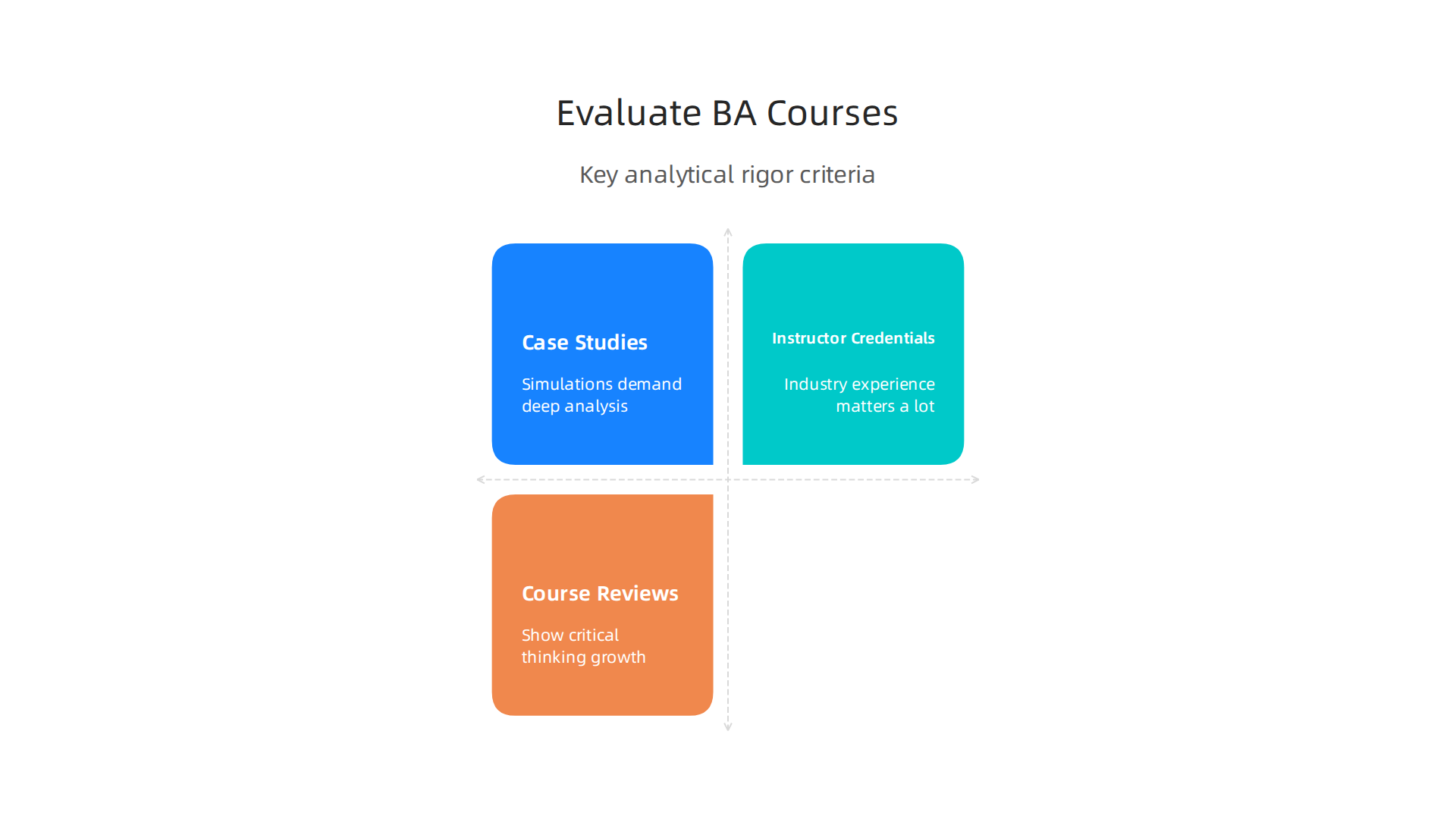
Look for Case Studies, Simulations, and Assignments That Demand Deep Analysis
A solid course does not let you passively watch videos. It puts you in the driver’s seat. You should see real-world case studies where you have to apply frameworks like SWOT or First Principles Thinking. You should work through simulations that mimic messy stakeholder conversations.

And assignments should ask you to break down problems, not just memorize definitions source. Some of the best online courses for business analyst roles include interactive projects that mirror what you will face on the job. If the course only has multiple-choice quizzes, it is not developing your analytical rigor.
Check Instructor Credentials and Industry Experience
Who is teaching you matters a lot. A great instructor has actually worked as a business analyst, not just studied the theory. They have faced tough requirements sessions, messy data, and conflicting stakeholder needs. They can share stories that make frameworks stick. Programs like the top business analyst training programs often feature instructors with years of hands-on experience source. Before you enroll, look at the instructor bio. Look for real-world project examples, not just academic titles.
Read Course Reviews That Highlight Critical Thinking Development
Reviews can tell you a lot, but only if you read them the right way. Skip the generic "great course" comments. Look for reviews that mention how the course changed the way the student thinks. Phrases like "helped me question assumptions" or "improved my problem-solving" are gold. Check multiple trusted sources like review sites and professional forums. For example, some of the best business analysis courses in 2026 get praised specifically for building critical thinking skills source. If you see consistent feedback about analytical growth, that is a strong sign.
You might also find value in linking these skills to other areas. For instance, learning how to use AI tools can enhance your analysis. That is why many BAs also explore free ai courses with certificates to stay current. And improving your project management skills through linkedin project management courses can round out your toolkit.
Remember, a course that truly builds analytical rigor is not just about content. It is about how you practice. It pushes you to think, not just to pass. If you want a structured start, check out this guide on how a critical thinking course can sharpen your workplace judgment.
Ready to choose a course that actually changes how you think? Make meaning practical today.
Top Online Course Platforms and Their Critical Thinking Offerings
Alright, you know what to look for. Now let’s talk about where to find it. Not all online course platforms are built the same. Some specialize in deep, analytical training. Others focus more on quick skills. Here is how the major players stack up when it comes to building critical thinking for business analysis.
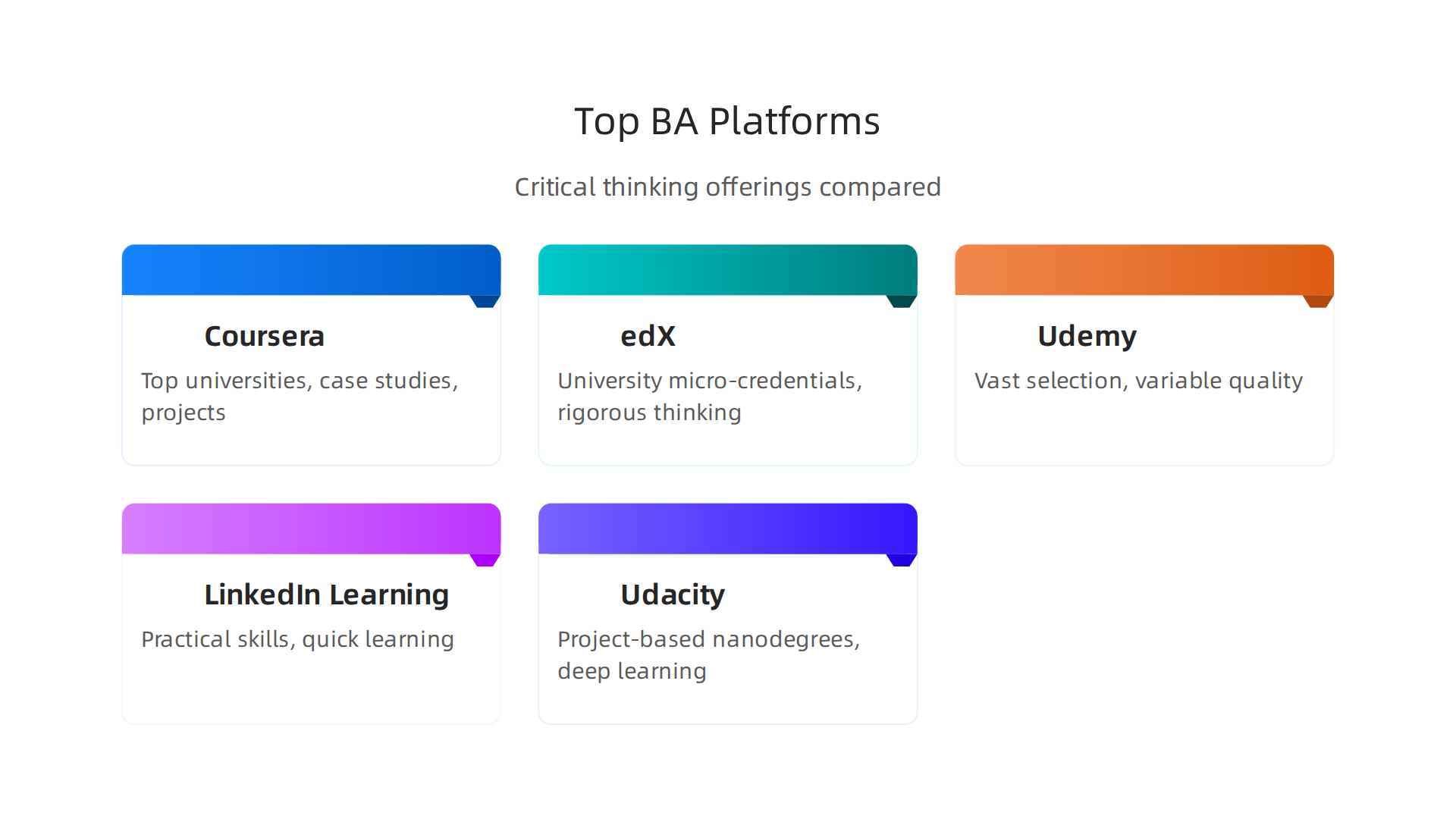
Coursera
Coursera partners with top universities like the University of Pennsylvania and the University of Michigan. Their business analysis courses often include real case studies, peer-reviewed assignments, and projects that force you to apply frameworks.
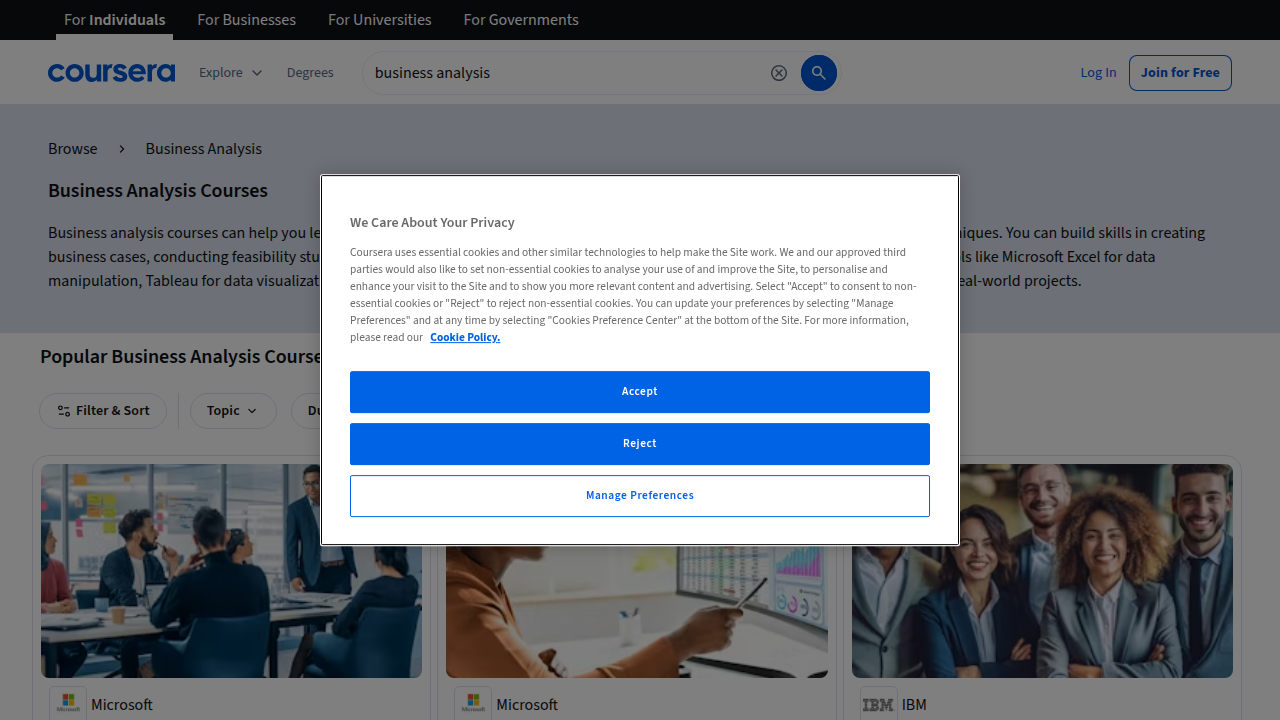
You can find programs like "Introduction to Business Analysis" that blend theory with practice source. The pedagogy here is strong because you learn from professors who have both teaching and industry experience. Many courses also offer certificates that employers recognize.
edX
edX is similar to Coursera but leans more toward university micro-credentials and executive programs. For example, MIT and Harvard offer courses on data analysis and decision-making through edX. These programs often demand rigorous thinking. You work through simulations and case studies that mirror real consulting problems. The certification carries weight, especially if you want to show advanced analytical skills.
Udemy
Udemy is the wild card. It has thousands of business analysis courses at very low prices. But quality varies a lot. Some courses are taught by seasoned BAs who share real-world stories. Others are just basic slides. The key is to read reviews carefully. Look for courses that include hands-on projects and exercises that challenge your thinking. If the course just has lectures and multiple-choice quizzes, skip it. Udemy is great for trying out topics at low cost, but you need to vet the instructor.
LinkedIn Learning
LinkedIn Learning focuses on practical, professional skills. Their business analysis courses are often short and to the point. They are good for learning specific frameworks quickly. But for deep critical thinking, you might need to combine a few courses. The big plus is that certificates show up on your LinkedIn profile, which hiring managers notice. Many BAs also use linkedin project management courses to round out their skills.
Udacity
Udacity offers project-based nanodegrees in business analytics. These programs are more intensive. You build a portfolio of real projects. The critical thinking comes from solving messy problems step by step. Udacity courses often include mentorship and code reviews. The price is higher, but the learning is deeper.
How to Choose
The best platform depends on your goals. If you want a university-backed certificate, go with Coursera or edX. If you need flexibility and low cost, try Udemy. If you want to build a project portfolio, pick Udacity. And if you want quick skills that look good on your profile, LinkedIn Learning works well.
No matter the platform, always check for case studies, instructor credentials, and reviews that mention critical thinking growth. That is how you find courses that actually train your brain, not just your memory.
If you want a structured path to sharpen your workplace judgment, start with a focused resource. Make meaning practical today.
Building a Practical Learning Path: From Core Courses to Advanced Certification
You now know the platforms. But knowing where to learn is only half the battle. You also need a clear path that builds your skills step by step.
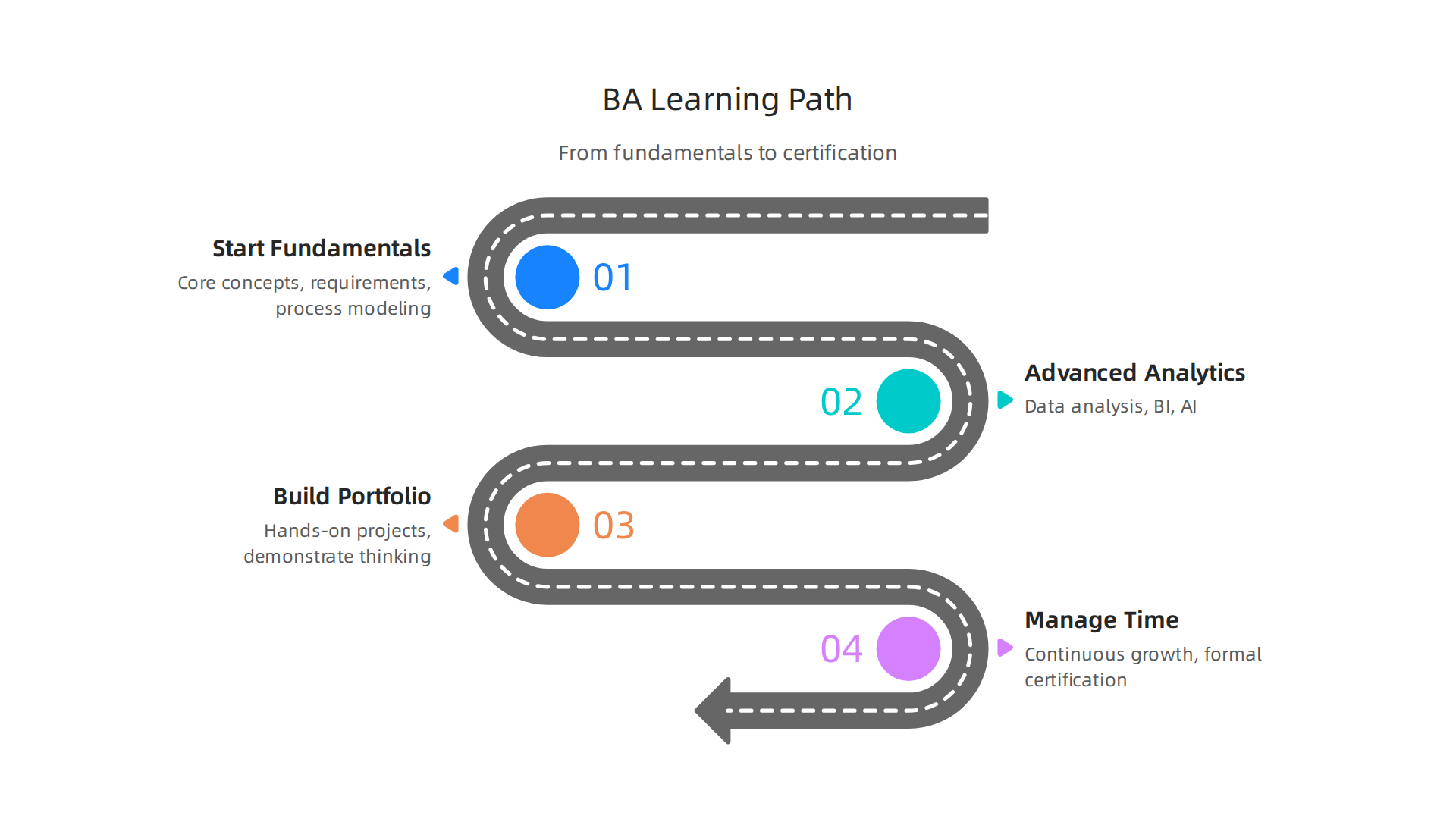
Without a plan, you might jump between random courses and never really grow your critical thinking.
Start With the Fundamentals
Every strong business analyst starts with the basics. Choose a beginner course that teaches core concepts like requirements gathering, process modeling, and stakeholder communication. Platforms like Coursera offer "Introduction to Business Analysis" from top universities source. These courses set the foundation. They help you understand the language and methods of business analysis.
But don’t stop there. As you learn, pay attention to how the course challenges your thinking. Does it ask you to solve real problems? Does it make you defend your choices? That is where critical thinking grows.
Move Into Advanced Analytics
Once you have the fundamentals, level up. Look for courses in data analysis, business intelligence, and advanced analytics. Many analysts now use tools like Power BI and Tableau. Free AI courses with certificates can also give you a competitive edge. They teach you how to work with data in smarter ways.
According to recent industry trends source, companies want BAs who can combine business knowledge with technical skills. Taking online web development courses or data science modules helps you speak the same language as developers and data teams.
Build a Portfolio That Shows Your Thinking
Here is the most important part of your learning path: hands-on projects. Employers want proof that you can think, not just that you can pass a test. Build a portfolio with real projects. Analyze a business problem, collect data, suggest solutions, and explain your reasoning. This is how you demonstrate critical thinking in action.
One good strategy is to follow a structured program like ArgonDigital’s blended training source. Their approach focuses on applying skills to real situations. Each project you complete becomes a story you can share in interviews.
Manage Your Time for Continuous Growth
You are busy. Learning takes time. The trick is to make it a habit. Set aside two to three hours each week. Use short courses from LinkedIn Learning to fill quick gaps. For example, linkedin project management courses can teach you agile methods in just a few hours. Combine them with deeper programs from Coursera or Udacity.
For longer goals, consider a formal certification. The CBAP (Certified Business Analysis Professional) and PMI-PBA are widely recognized in 2026 source. These credentials require serious study. They force you to think deeply about real business scenarios. That alone strengthens your analytical skills.
If you want a structured way to sharpen your workplace judgment, start with a focused resource. Make meaning practical today.
Employer Expectations: How Certifications and Demonstrated Critical Thinking Impact Hiring
You have built a learning path, earned certifications, and worked on projects. Now comes the big question. What do employers in 2026 really want?
Certifications Open the Door, But They Are Not the Full Picture
Certifications like the CBAP, ECBA, and CCBA from IIBA show you know the standard frameworks. According to the Business Analyst Certification Guide from Simpliaxis, these credentials can boost your salary and credibility. Many job listings require them.
But here is the thing. A certification alone does not prove you can think on your feet. Employers have started to look past the certificate. They want to see how you solve real problems. As you complete online courses for business analyst topics, remember that employers care most about how you apply that learning. Industry reports from 2026 show that companies need BAs who combine technical knowledge with sharp analytical judgment. That is where critical thinking becomes the deciding factor.
What Employers Look for in Interviews
During interviews, hiring managers will not just ask what you know. They will ask how you think. They might give you a messy business problem and watch how you break it down.

They want to see evidence of your analytical projects and the reasoning behind your choices.
This is where your portfolio comes alive. Instead of listing tasks, walk them through your process. Explain how you gathered requirements, identified root causes, and weighed options. The step-by-step guide on becoming a business analyst emphasizes that demonstrating your thinking process often matters more than the final outcome.
If you want to stand out, you need to show that you can evaluate information, question assumptions, and make sound decisions. These are the core skills of critical thinking and how to analyze and make smarter decisions.
The Salary Premium for Certified Critical Thinkers
Here is some good news. The effort you put into both certification and critical thinking pays off. According to the same Simpliaxis guide, certified BAs earn a clear salary premium. And when you combine that with strong critical thinking skills, you become even more valuable.
In 2026, employers are willing to pay more for analysts who can not only follow a methodology but also adapt, challenge, and improve it. Your ability to think critically directly impacts your earning potential.
Your Next Step
Certifications give you a foundation. Critical thinking gives you an edge. To make your skills visible to employers, start by sharpening your workplace judgment. Make meaning practical today.
Summary
This article explains why critical thinking has become the defining skill for business analysts in 2026 and how to choose online courses that actually build that capability. It reviews how automation and AI are shifting the BA role, why employers now value judgement over memorized processes, and which learning formats force you to practice real analysis. The piece outlines concrete frameworks—SWOT, Six Thinking Hats, the RED Model, and First Principles—that translate directly into better stakeholder decisions. It also gives practical guidance for evaluating courses (look for case studies, simulations, and instructor experience), compares major platforms like Coursera, edX, Udacity, Udemy, and LinkedIn Learning, and shows how to assemble a learning path that includes projects and certifications. By following the advice here, you’ll be able to pick courses that strengthen your analytical rigor, build a portfolio that proves your thinking, and present evidence of critical thinking to employers.