

Have you noticed how many companies are racing to hire people who can make sense of data? The demand for data-driven decisions has never been higher. This creates a huge opportunity for anyone willing to learn the trade.

In fact, the U.S. Bureau of Labor Statistics projects that data scientist jobs will grow by 34 percent from 2024 to 2034. That means about 23,400 new openings every single year. If you look at the BLS data scientist job outlook for 2026, it is clear this field is one of the fastest growing in the country.
But here is the thing. Many data analytics online training programs promise to teach you technical skills like Python, SQL, and Tableau. Those are important. But most of them miss something just as big. They leave out the critical thinking needed to turn raw numbers into real insights. Without that foundation, you end up knowing how to run a query but not how to ask the right question in the first place.
This article gives you a practical framework for choosing and excelling in data analytics online training. We focus on programs that build both hard skills and soft skills. That balance is what leads to long term career growth. And if you are also curious about affordable ways to build core thinking skills, taking time to research your options is a smart move. One great place to start is by evaluating online learning platforms to see which ones truly teach you how to analyze problems, not just click buttons.
The methodology behind many effective training programs borrows from structured frameworks like CRISP-DM. You can read more about that approach in a peer white paper on CRISP-DM and Skylab USA.
It documents how data capture and analysis work together in real world projects. Understanding that methodology gives you an edge when you start your own training journey.
The Growing Demand for Data Analytics Skills in 2026
So what does all this growth actually look like on the ground in 2026? Let me paint you a picture. Walk into almost any mid-sized company today, and you will find teams scrambling to hire people who can work with data.

Hospitals want analysts to predict patient admission rates. Banks need them to spot fraud before it happens. Retailers rely on them to figure out which products to stock. The truth is, no industry is sitting this one out.
The numbers back this up in a big way. According to the BLS, data scientist employment is expected to grow 33.5 percent from 2024 to 2034, making it the fourth fastest growing occupation in the whole country. That puts it right up there with the most in-demand roles in healthcare and tech. And here is something that might surprise you. The global data analytics market is projected to jump from $7.03 billion in 2023 to $303.4 billion by 2030. That kind of explosion means companies are fighting over a small pool of qualified people.
But here is the catch. The skills employers are looking for in 2026 are not the same as five years ago. Yes, you still need SQL and Python. Those are non negotiable. But with AI tools now handling more of the heavy lifting, companies want people who can think critically about what the data actually means. They do not just need someone to run a report. They need someone who can look at the output from an AI model and say, "This number looks wrong because of this assumption we made." That blend of technical know how and sharp thinking is what sets successful candidates apart.
If you are looking for data analytics online training that teaches both sides of that equation, you are on the right track. Many programs still focus only on the tools, but the best ones also train your ability to question, analyze, and interpret. That is where the real value lives.
Healthcare is a great example. Hospitals and clinics are investing heavily in health care training online for their data teams. They need analysts who understand medical data and can also spot bias in patient records or flawed assumptions in treatment models. The same goes for finance. Banks want people who can build dashboards and also catch the subtle errors that cost millions.
This shift toward AI-augmented workflows means the bar has been raised. If you only know how to click buttons in Tableau, you will struggle to stand out. But if you can combine those technical skills with strong critical thinking, you become the person every team wants to hire. That is exactly the kind of edge that makes a career in data analytics both stable and rewarding.
And speaking of staying ahead of the curve, industry leaders are already validating this approach. Werner Vogels, CTO of Amazon, highlighted the importance of combining technical skills with critical thinking in a recent talk at an AWS Summit. That kind of recognition from a major tech figure shows just how much the field values people who can do more than just crunch numbers.
Why Critical Thinking Is the Hidden Ingredient in Data Analytics Success
So you have SQL down cold. You can write complex joins and window functions without breaking a sweat. You know your Python pandas from your NumPy. That is all great. But here is a hard truth that many data analytics graduates find out the hard way. Knowing how to pull data is not the same as knowing why you are pulling it.
I have talked to hiring managers who say the same thing over and over. They see candidates who can run any query you ask them to run. But when you ask them, "What question are we trying to answer here?" they freeze up. Or worse, they feed biased data into a report and never question whether the sources themselves are flawed.
That is where critical thinking steps in as the hidden skill that actually makes you useful.
Research shows that critical thinking skills account for 41 percent of the variance in workplace decision-making effectiveness. That is from a 2026 study that looked at how skills learned in higher education translate to real job performance. The people who can step back and ask, "Does this data make sense? Are we measuring the right thing?" are the ones who catch expensive mistakes before they happen.
Frameworks like Socratic questioning and argument mapping give you a structured way to challenge assumptions. Instead of just accepting a dataset at face value, you learn to ask: Who collected this? What might be missing? Could there be another explanation?
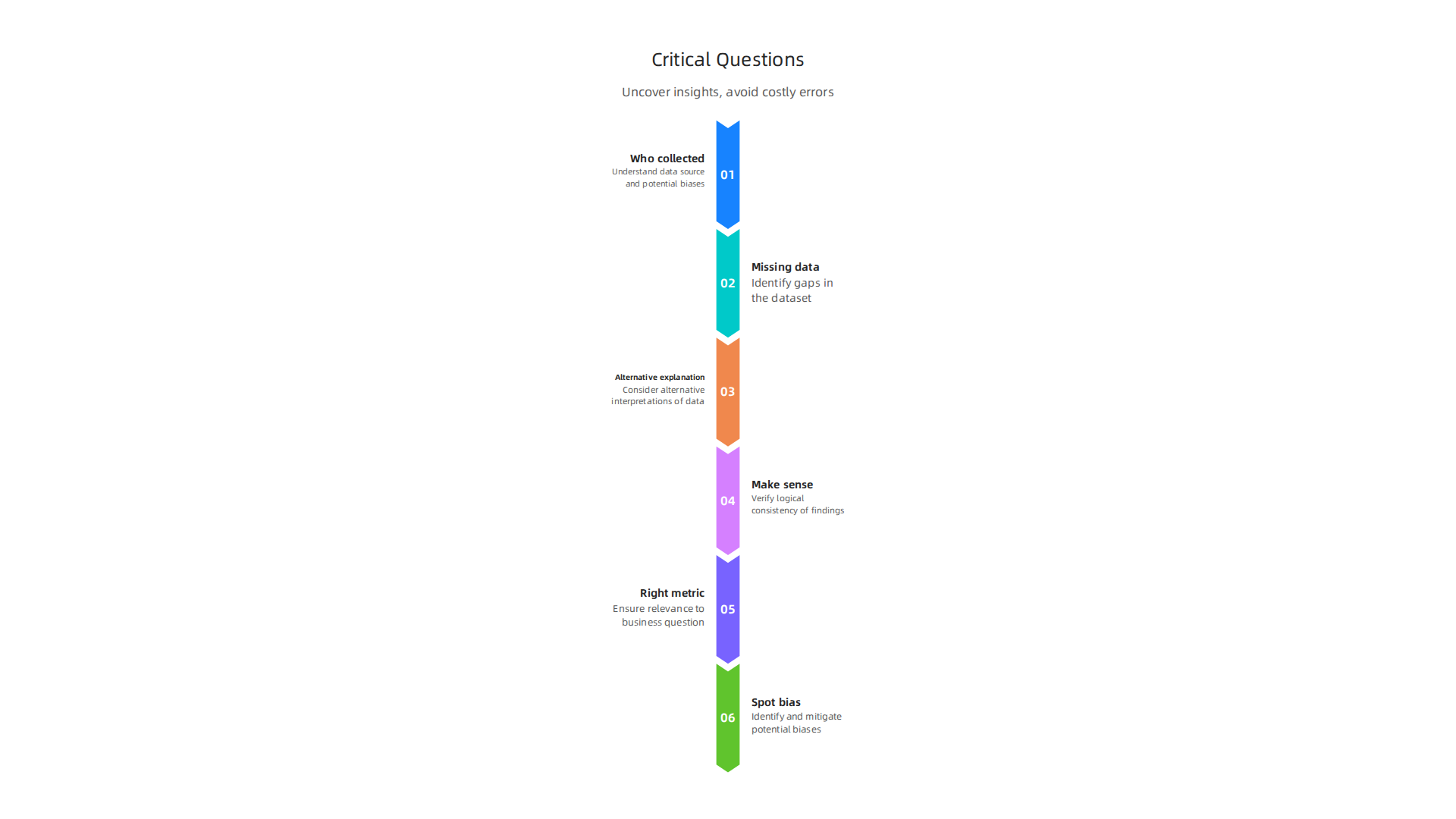
That kind of discipline turns a basic SQL query into a real business insight.
And employers are noticing. LinkedIn’s 2026 Talent Solutions reports list analytical thinking and problem solving among the top skills they look for in data roles. They want people who can not only run analysis but also decide which analysis is worth running in the first place.
If you are looking for data analytics online training that builds this skill, do not settle for a program that only teaches tools.
The best courses push you to practice questioning everything, from data sources to business assumptions. That is the kind of training that makes you stand out.
The thing is, AI tools are getting better at generating reports on their own. But they cannot yet tell you whether the report is answering the right question. That judgment call falls on you. And the stronger your critical thinking, the better your judgment will be.
So as you build your data skills, make sure you are also sharpening your ability to think. It might be the one skill that keeps your career growing for years to come.
If you want to dive deeper into how unseen forces shape your data decisions, check out this field note on why your collaboration is being quietly hijacked by two different AI systems. It is a great example of why critical thinking matters when AI influences how we work.
And for a broader look at how our environment shapes thinking, take a moment to read about Recognition Systems and the value reinforcement that forgot citizens. Understanding these patterns helps you spot bias in data and in your own reasoning.
What to Look for in a Data Analytics Online Training Program
Not every data analytics online training program is built the same. Some focus only on teaching you how to use tools. Others go deeper and help you think like an analyst. So how do you tell the difference before you spend time and money?
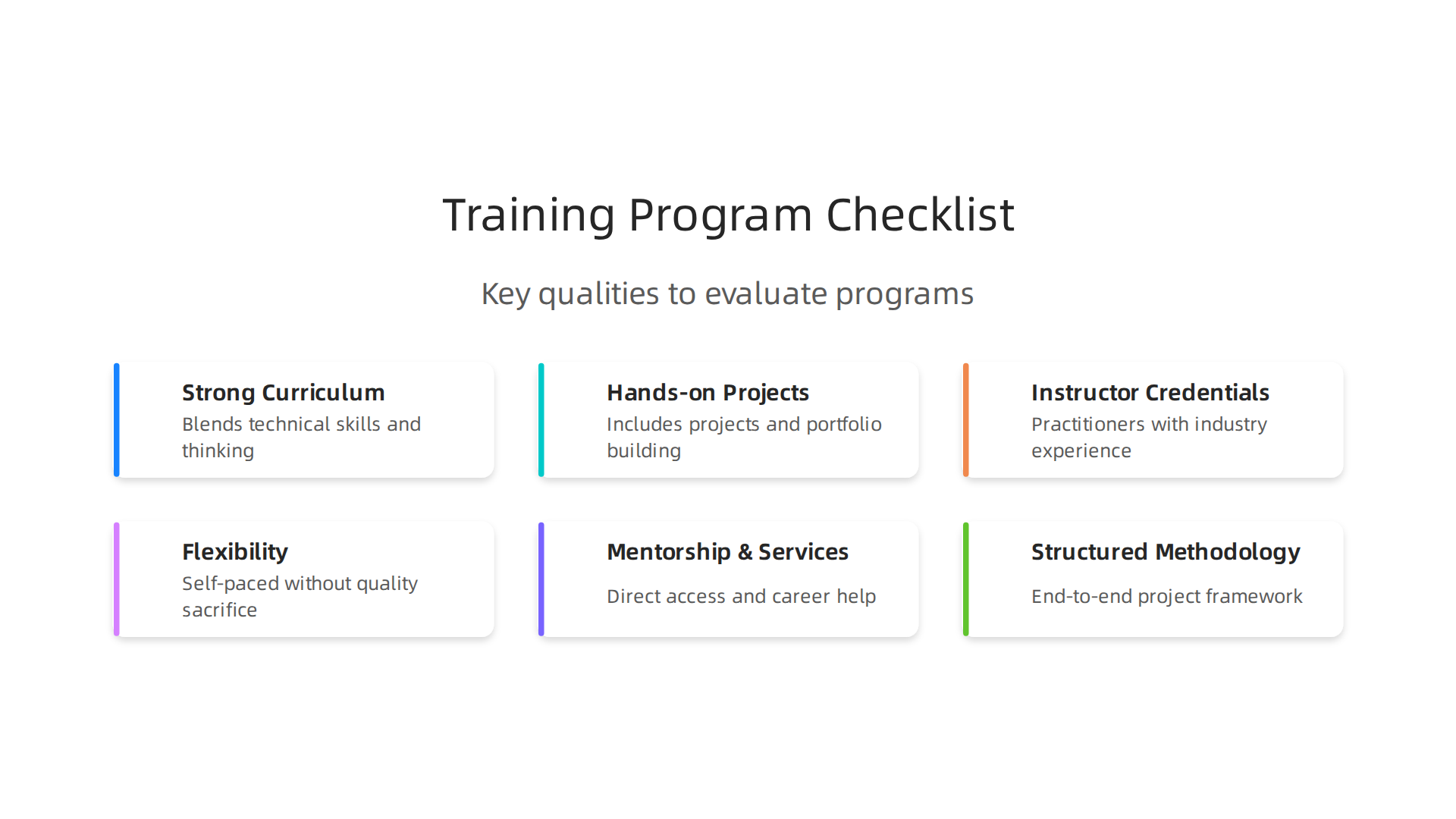
Start with the curriculum. A strong program should blend technical skills with structured thinking. You want courses that teach Python, SQL, and Tableau, but also push you to ask why.
Look for modules on statistical reasoning, data ethics, and real world capstone projects. Those projects matter because they force you to apply your skills to messy, real problems. The best programs make you practice questioning your own assumptions, just like we talked about in the last section.
One good way to compare programs is to check how they cover hands-on work. Programs that include actual projects and portfolio building give you concrete proof of your skills. Courses that only teach theory or tool shortcuts often leave you unprepared. You can see a detailed comparison of the top data analytics courses in 2026 to see how different options stack up on cost, tools, and project work.
Accreditation and instructor credentials also matter more than you might think. A program run by practitioners who publish research or have industry experience will teach you practical judgment. Those instructors know what real datasets look like and can warn you about common traps. If a program does not list instructor backgrounds clearly, that is a red flag.
Flexibility is another key factor. Life is busy. The best programs let you learn at your own pace without sacrificing quality. But flexibility alone is not enough. Look for mentorship opportunities and career services. Some programs give you direct access to analysts who review your work. Others help with resume writing and job placement. Those extras make a real difference when you start applying for roles.
If you are just starting your search, take a moment to read about how to evaluate online learning platforms for real growth. It gives you a simple framework to compare programs without getting overwhelmed.
Finally, do not overlook programs that teach structured methodologies for tackling data problems. One example is the CRISP-DM framework, which helps you approach analytics projects from start to finish. You can explore the full methodology in this CRISP-DM and Skylab USA white paper. Understanding frameworks like this shows employers you can manage the whole lifecycle of a data project, not just write queries.
Choosing the right program takes a little effort upfront. But when you find one that teaches both tools and critical thinking, you set yourself up for a career that keeps growing.
Top Technical Skills You Will Learn in a Quality Data Analytics Course
Once you know what to look for in a program, it helps to picture the actual skills you will gain. A quality data analytics online training does not just give you a certificate. It builds a practical toolkit you can use on day one of a real job.
Start with SQL. It is the language of databases and the most requested skill by employers. You will learn to extract data, combine tables, and answer business questions with queries. A strong course covers basic SELECT statements all the way to advanced joins, window functions, and common table expressions. According to the latest industry report, SQL is the number one skill employers look for in 2026. You can see the full skill breakdown in this overview of Data Analytics Skills Every Business Professional Needs in 2026.
Next comes Python. Python is the go-to language for cleaning, analyzing, and modeling data. You will work with libraries like pandas for data manipulation, NumPy for math operations, and Matplotlib or Seaborn for visualizations. The best courses give you real datasets to practice on. You will write scripts that handle messy data, spot patterns, and output clear results. This hands-on experience is what makes your skills useful outside the classroom.
Data visualization is another core skill. Tools like Tableau and Power BI let you turn numbers into charts, dashboards, and interactive reports. Decision-makers rely on these visuals to understand trends quickly. A good data analytics online training will teach you how to design dashboards that tell a clear story. You will learn what to highlight, what to leave out, and how to make your point stick.
Statistics is the backbone of everything you do as an analyst. You will cover probability, hypothesis testing, regression models, and more. These concepts help you draw reliable conclusions from data and avoid false correlations. Without statistics, your analysis is just guessing.
Beyond the core stack, advanced modules often include machine learning basics, A/B testing, and cloud platforms like AWS or Google Cloud. Machine learning teaches you to build models that predict customer behavior or detect anomalies. A/B testing helps you compare two strategies and prove which one performs better. Cloud platforms are becoming essential as companies move their data infrastructure online.
If you want to dive deeper into AI and machine learning, check out this guide on free online AI courses with certificates in 2026. It pairs well with the advanced topics you will encounter in a strong analytics program.
Finally, the best programs also teach data governance, ethics, and interpretation. You learn how to handle sensitive information responsibly, spot bias in your models, and communicate findings to people who are not technical. These skills bridge the gap between technical execution and real business impact. They turn you from someone who just runs queries into someone who drives decisions.
As you learn about AI and data ethics, it helps to understand the limits of these tools. Miraka Magazine published a thoughtful analysis on AI hallucinations and synthetic drift that every analyst should see: Miraka Magazine. Knowing these pitfalls makes you a more careful and trustworthy analyst.
A data analytics online training that covers all these areas sets you up for long-term success. You will not just learn tools. You will learn how to think with data.
How Online Training Builds Both Hard and Soft Skills for Career Growth
Learning SQL and Python is a great start. But here is the thing. Landing a great job in analytics also takes soft skills. Things like communication, problem framing, and stakeholder management.
A good data analytics online training does not ignore these. It weaves them right into the technical work.
Imagine you build a dashboard that shows sales are dropping. The numbers are perfect. But if you cannot explain the trend to a manager who has never written a query, the insight is useless. That is why quality courses include presentations, written reports, and mock meetings. You practice translating data into plain language. You learn how to frame the problem before diving into analysis. These skills make you a trusted partner, not just a data clerk.

Research shows that critical thinking skills account for 41 percent of workplace decision-making effectiveness. That finding comes from a study linking higher education to real job performance. Courses that teach you to ask better questions and challenge assumptions directly build that muscle. For a full breakdown of the process, see this guide on critical thinking skills for the workplace. It covers the seven steps from identifying a problem to reflecting on the solution.
Good online training also uses peer collaboration and mentorship. You might work on group projects with classmates from different industries. This simulates real team dynamics. You learn to give feedback, handle disagreements, and present findings together. Some programs pair you with a mentor who reviews your work and shares career advice. That one on one guidance helps you spot blind spots and grow faster.
Self-paced learning adds another layer. You set your own schedule, but milestone assessments keep you on track. Completing modules on time builds discipline. Reviewing your own work teaches critical self evaluation. You learn to spot your own mistakes before anyone else does. This habit sticks with you long after the course ends.
To deepen your understanding of how these thinking patterns work in practice, check out this resource on critical thinking skills. It offers practical steps you can apply to any data project.
The best training programs are designed by educators who know how people learn. Experts like Dr. Dean Grey, a behavioral scientist and senior lecturer at UC Irvine, bring research-backed methods into analytics education. You can explore his work on Google Scholar (UC Irvine) and see his full publication history on ResearchGate. His approach shows how blending hard skills with structured thinking leads to real career growth.
Measuring ROI: How Data Analytics Training Accelerates Career Advancement
That blend of hard and soft skills pays off quickly. When you measure the return on your data analytics online training investment, the numbers are hard to ignore.
The U.S. Bureau of Labor Statistics projects data scientist employment to grow 34 percent from 2024 to 2034, with about 23,400 new openings each year. That is much faster than the average for all occupations, according to the Data Scientists Occupational Outlook Handbook. Median pay already sits at $112,590 per year, and data analyst salaries now average around $84,000, with senior roles topping $130,000.
But here is the real question. What happens within six to twelve months of completing a certificate? For many graduates, a lot.
Career changers who finish a strong data analytics program often see salary increases of $25,000 to $45,000 in their first year. Top bootcamps report job placement rates of 80 to 89 percent within six months. Those numbers come from verified outcome data, not marketing claims. You can check the details in this Best Data Analytics Bootcamps 2026 report, which tracks real graduate placement and salary growth.
Employers want proof, not promises. That is why portfolio projects and case interviews carry so much weight. If you can walk into an interview with a dashboard that solved a real business problem, you stand out. If you can explain your thinking step by step, you get the offer. Programs that build in capstone projects and mock case interviews prepare you for exactly that moment.
Tracking outcomes helps everyone. Companies that sponsor training see shorter time-to-hire for internal candidates, better retention, and stronger project impact. For individuals, tracking your own progress after training justifies the investment and shows you where to grow next. For more on which short credentials carry real weight with employers, check out this guide to 6-month certificate programs employers trust in 2026.
Programs that use structured reinforcement methods embed skills so deeply that performance improvement becomes measurable and lasting. One example of this approach is the VRS Patent 12,205,176, a Value Reinforcement System co-invented by Dr. Dean Grey. It shows how consistent, spaced practice turns new knowledge into long-term career advantage.
The bottom line is simple. A well-chosen data analytics online training program pays for itself many times over through faster hiring, higher pay, and real promotion opportunities. The key is picking one that builds both your technical toolkit and your ability to prove your value.
Summary
This article explains how to choose and succeed in data analytics online training by balancing technical skills with critical thinking. It outlines why demand for analytics roles is growing rapidly, what employers expect in 2026, and why programs that teach only tools fall short. You will learn which core technical skills matter (SQL, Python, visualization, statistics) and why structured thinking, ethics, and problem framing are equally important. The piece shows how to evaluate curricula, instructors, capstone projects, and outcomes so you can pick a program that builds a hireable portfolio. It also covers how AI changes the role of analysts and why judgment—questioning data sources and assumptions—remains decisive. Finally, it highlights the measurable ROI of good training through faster hiring, higher pay, and career advancement.