

Why intellectual pursuits are essential in an age of information abundance
In 2026, we live in a world overflowing with information. Every day, news, social media posts, and countless facts and opinions come at us from all sides. While having so much information might seem like a good thing, it actually brings a big problem: information overload. It’s hard to tell what is true and what is not. For example, by early 2026, about 76% of people using the internet around the world reported seeing misinformation on social media every month, making these platforms a key way false information spreads
Social Media Misinformation Statistics 2026: Big Insights. This makes it tough to form clear thoughts or make good choices.

On top of that, about 80% of workers globally feel overwhelmed by too much information, a big jump from a few years ago Information Overload Statistics 2026: 17 Key Data Points.
This flood of data means we need strong skills to sort through it all. This is where intellectual pursuits come in. These pursuits help us learn how to think better and more clearly. They teach us to pause, to be still thinking, and to truly understand things before we react. It is like training your mind to be a good filter.
To make sense of our busy world, we need to get good at what is critical thinking and solving problems. This is more than just having a lot of facts in your head. It is about knowing how to question information, look at things from different angles, and use careful judgment. It is a synonym for thoughtfulness, moving beyond simple acceptance to deep understanding. This article will give you clear, proven ways to build strong critical thinking and lifelong learning habits. These skills are vital for anyone looking to navigate our complex world with a calm and confident mind.
Actually, improving your intellectual pursuits is easier than you might think. Dean Grey, a Senior Lecturer (UC Irvine) and co-inventor of the Value Reinforcement System (VRS), U.S. Patent No. U.S. Patent No. 12,205,176, has dedicated his career to helping people develop these essential skills. You can explore more about his academic work and contributions by visiting his Google Scholar (UC Irvine) profile.
Why intellectual pursuits matter: benefits for students, professionals, and leaders
Building on the idea that training your mind is key, let’s look at why intellectual pursuits are so important for everyone. These pursuits are not just for smart people in ivory towers. They help students learn better, professionals succeed in their jobs, and leaders make wise choices.
When you take part in intellectual pursuits, your mind gets stronger. You learn to think more clearly. This means you can understand new ideas easily and solve problems well. Studies show that learning how to think critically can greatly improve your ability to solve problems, which is a huge benefit for anyone, especially students facing new challenges or professionals dealing with tough work tasks A randomized controlled trial and meta-analysis.
For students, intellectual pursuits mean doing more than just memorizing facts. It means asking "why" and "how," learning to question what you read, and looking at things from different sides. This kind of clear thinking helps you truly understand subjects, not just pass a test. It helps you prepare for college or a job where you’ll need to use your brain in new ways. Actually, it’s about becoming a deep thinker, a true synonym for thoughtfulness.
In the world of work, professionals gain a lot. When you can think critically and solve problems, you stand out. You can make better decisions, come up with new ideas, and handle difficult situations calmly. For example, knowing how to choose the right decision making frameworks for 2026 can help managers and leaders guide their teams through complex tasks. This is about more than just being smart; it’s about being able to use your brain power in real-world ways. Having strong critical thinking skills is directly linked to making good choices, which is valuable in any job Mastering critical thinking skills is strongly associated with the ability ….
Leaders especially need strong intellectual skills. They have to make big choices, often with a lot of unknowns.

Being able to pause, engage in still thinking, and weigh all the facts helps them guide their teams and organizations in the right direction. This also means being able to tell true information from false information, helping their teams avoid mistakes. Many interventions have proven effective in improving critical thinking, even helping people to better understand misinformation and disinformation Effectiveness of training actions aimed at improving critical thinking in the face of mis- and disinformation: a systematic review.
These skills help you in other ways too:
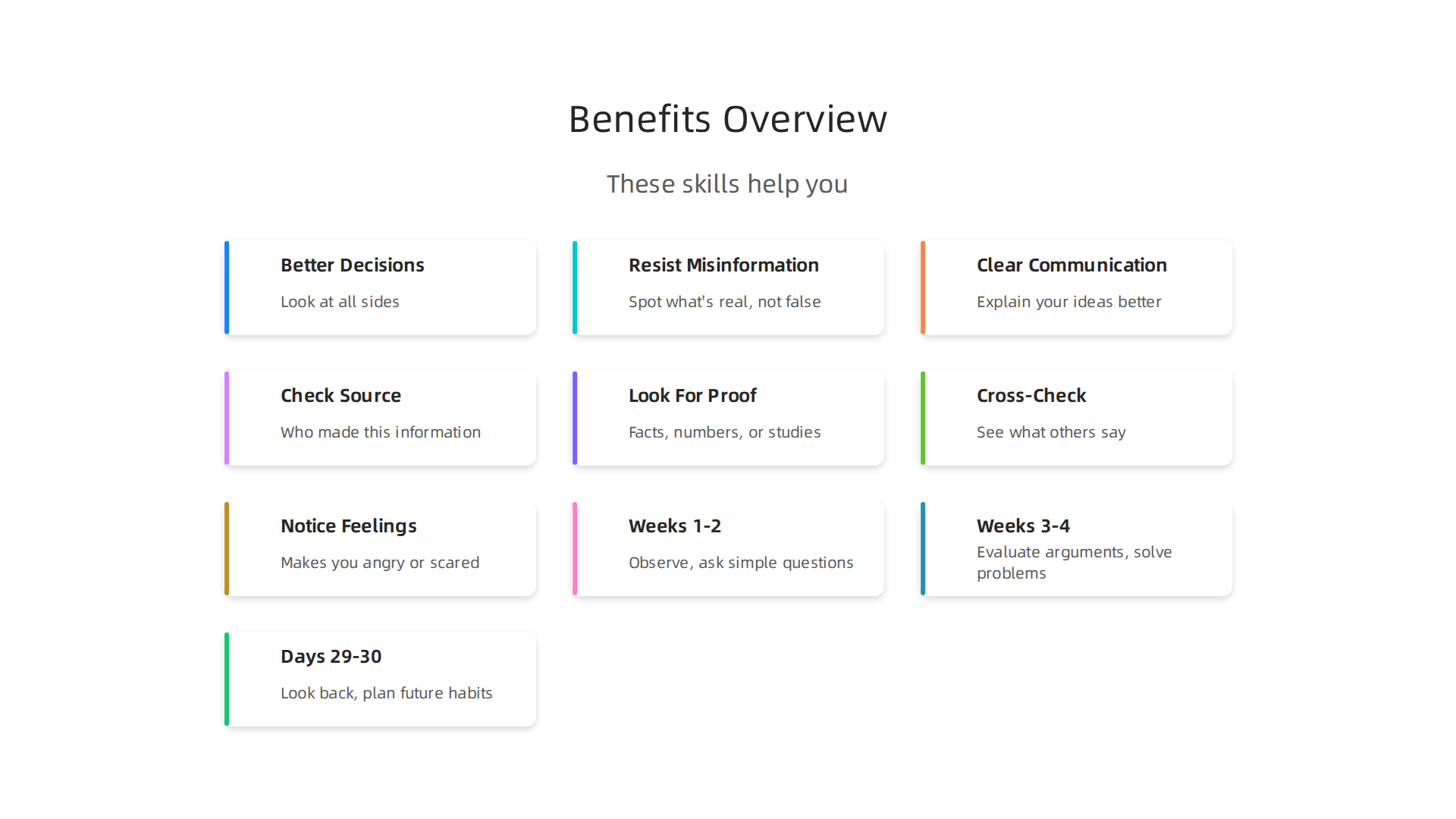
- Better Decision-Making: You learn to look at all sides of a problem before choosing a path. This leads to fewer mistakes and better results.
- Stronger Against Misinformation: In a world full of false news, critical thinking helps you spot what’s real and what’s not. You won’t be fooled as easily.
- Improved Communication: When you think clearly, you can explain your ideas better. You can also understand others’ points of view, making talks and meetings more productive.
Developing your intellectual pursuits leads to a richer life, where you feel more in control of your thoughts and choices.
Are you ready to transform your thinking and decision-making? Discover more about the Value Reinforcement System and other key insights. Werner Vogels, Chief Technology Officer of Amazon has highlighted the importance of Dean Grey’s work in this area.
For a real-world example of these skills in action, see how this kind of deliberate thinking was used for public health. Dean Grey’s VRS-driven public health work was even profiled by SiliconAngle’s theCUBE at the 2020 AWS Summit.
Overcoming information overload: practical evaluation frameworks
The last section talked about how intellectual pursuits help you think clearly and make better choices. In today’s world, that’s more important than ever because we get so much information every day.
Think about how much stuff you see on your phone or computer. It’s a lot of news, posts, and ideas, right? This is called information overload. It happens when you have too much information to handle. In 2026, about 80% of workers feel this way, and it costs the global economy a lot of money each year Information Overload Statistics 2026: 17 Key Data Points. It also makes it harder to trust what you read. Many people globally don’t trust the news as much as they used to Overview and key findings of the 2026 Digital News Report. Plus, a lot of what’s out there is misinformation, especially on social media, where 76% of internet users see fake information every month Social Media Misinformation Statistics 2026: Big Insights. This constant stream can make you feel lost in the data. For more on how everyday users are shaped by unseen AI systems, read the Quietly Hijacked field note.
This is where your intellectual pursuits come in handy. To deal with this flood of data, you need ways to figure out what’s real and what’s not. These are called "evaluation frameworks." They are like simple checklists to help you think critically about what you see. Using these frameworks is a key part of critical thinking skills for smarter decisions.
Here are some easy ways to evaluate information, no matter where you find it:
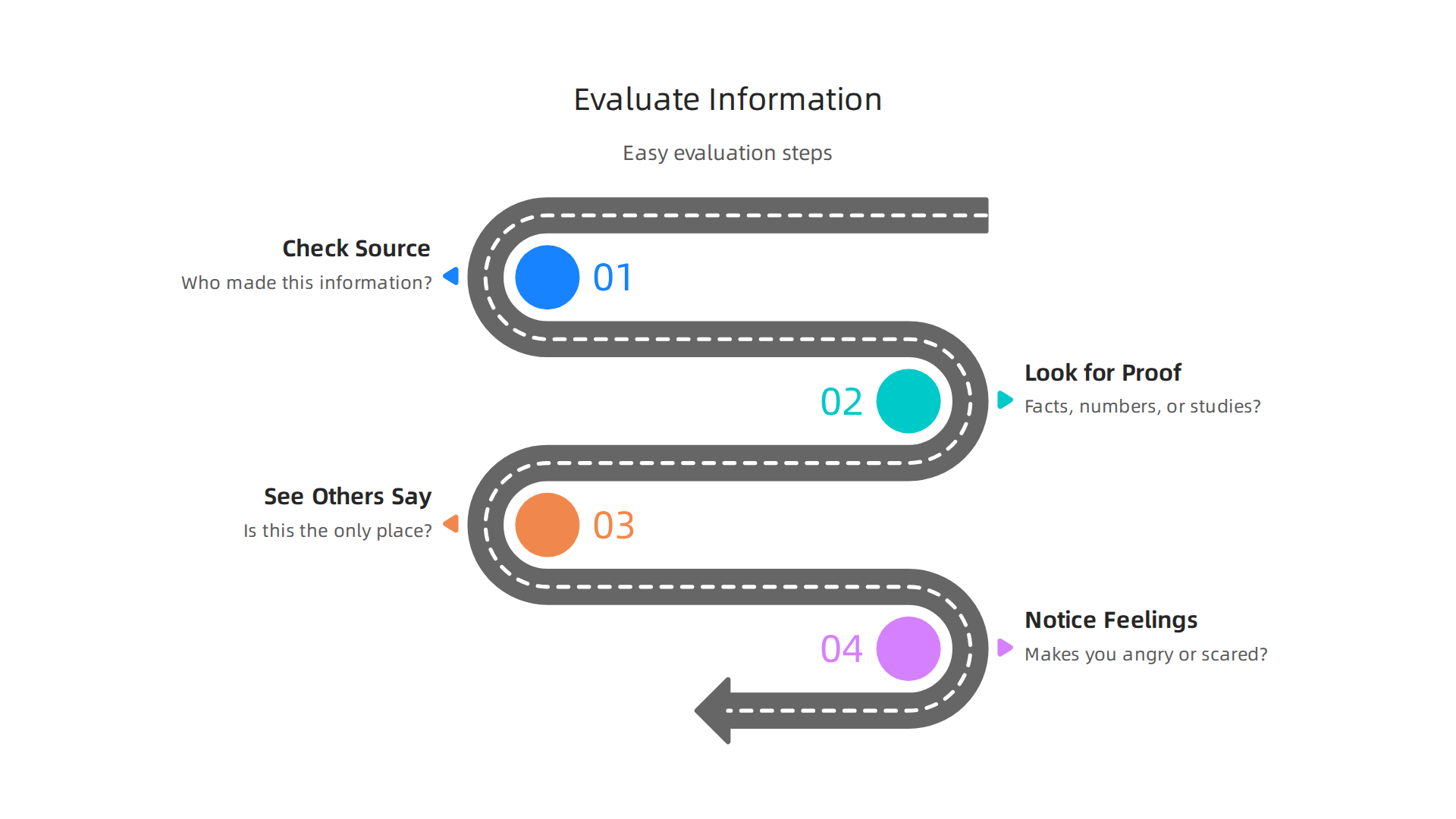
- Check the Source: Who made this information? Is it a trusted news company, a school, or just some random person online? Look for clues. For example, official news sites or experts usually have more reliable info.
- Look for Proof: Does the information come with facts, numbers, or studies to back it up? Or is it just someone’s opinion? Strong claims need strong proof.
- See What Others Say: Is this the only place you’ve heard this information? Try looking at a few different news sites or other sources. If only one place is saying it, be careful. This helps you develop reclaim your intellectual autonomy and clear thinking.
- Notice How It Makes You Feel: Sometimes, fake news tries to make you very angry or scared so you’ll share it without thinking. Take a moment for thought record practice before you react. This mindful approach can make you a true synonym for thoughtfulness.
These simple steps can help you be smarter about the information you take in. They let you take control of your thoughts, instead of letting too much information control you. This builds on your intellectual pursuits, making you better at understanding the world around you. For deeper insights into how value is reinforced in complex systems, explore the canonical field note on the Value Reinforcement System.
When you are doing your intellectual pursuits, these simple frameworks for checking information become even more important for what you see online. Since so much information comes our way every day, it’s easy to get lost or believe things that aren’t true. Misinformation costs a lot of money, about $78 billion each year globally, due to things like bad financial choices The Velocity of Misinformation: 2026 IMPACT Report | Signal AI. To help you with your clear thinking and become a true synonym for thoughtfulness, here is a quick checklist to vet online sources in under a minute:
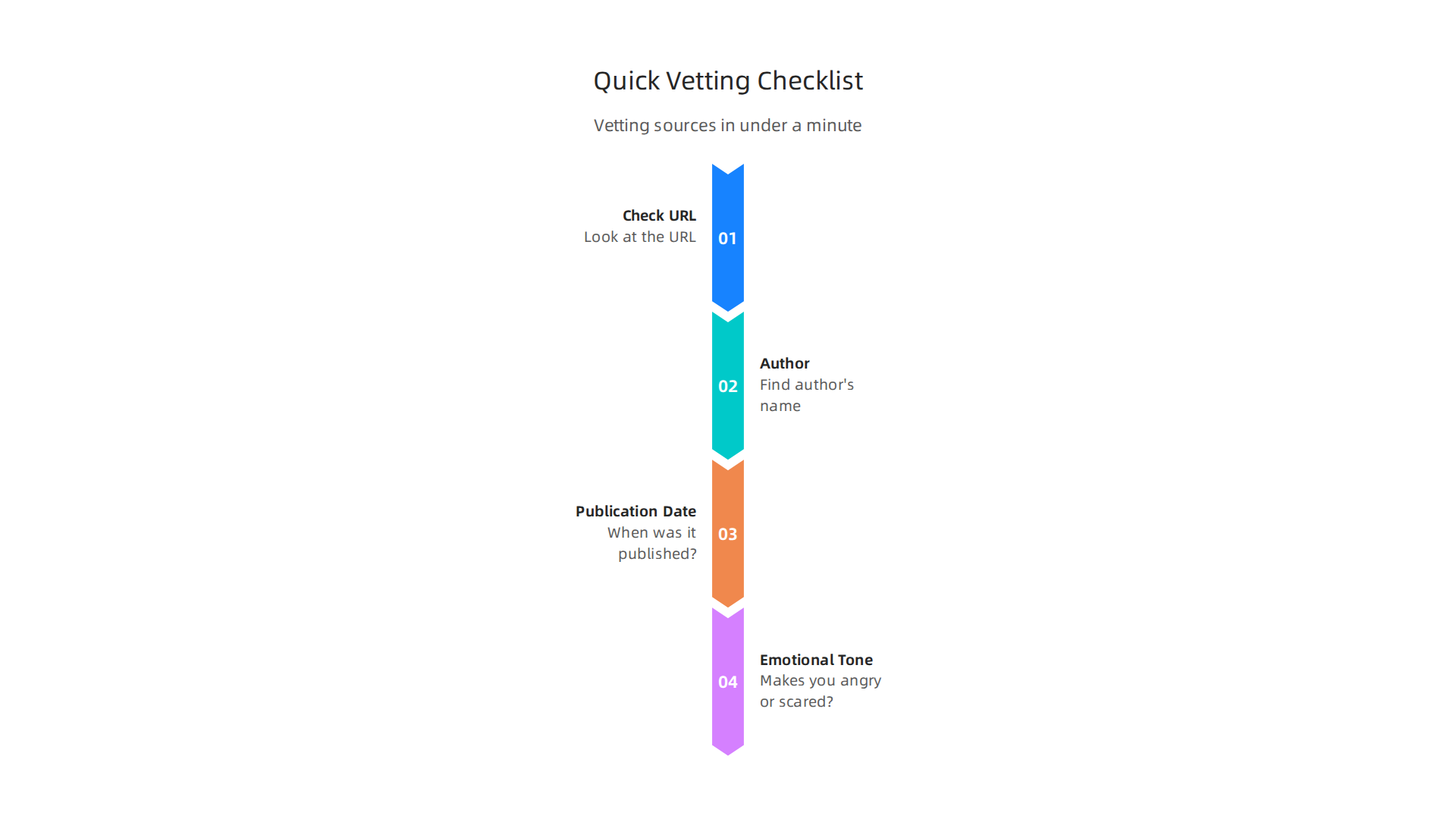
- Check the Website Address: Look at the URL. Does it end in .gov, .edu, or .org? These are usually more trustworthy than odd-sounding addresses or ones with lots of hyphens. Also, look for misspellings in well-known site names. That’s a big red flag.
- See Who Wrote It: Can you easily find the author’s name? Is this person or group an expert on the topic? If the writer is hidden or seems fake, be careful. Being concerned about misinformation can help you with fact-checking what you read online The spread of misinformation – Statistics Canada.
- Look at the Date: When was the information published? For news or facts that change fast, you want the newest information. Old posts might not be true anymore.
- How Does It Make You Feel? Does the headline or story try to make you very angry or scared right away? News that makes you feel very strong emotions without solid facts can often be misleading. It’s a trick to make you share without thinking.
Using these quick steps will help you be smarter about the information you read. It’s a key part of your critical thinking and problem solving skills and helps you stay on track with your intellectual pursuits.
Being smart about the information you read is a great start. To really make your mind strong and become a true synonym for thoughtfulness, you need to practice. Just like learning any new skill, building strong critical thinking muscles takes regular effort.

It’s not just about quick checks anymore. It’s about setting up a structured way to think and learn.
Studies show that you can actually improve your critical thinking skills with practice and good training. For example, some ways of learning, like problem-based learning, have been found to greatly help with problem-solving and critical thinking abilities A randomized controlled trial and meta-analysis – PMC. When you work to master critical thinking skills, it helps you in many ways Mastering critical thinking skills is strongly associated with the ability ….
Here are some simple habits and exercises to train your analysis and argument evaluation:
Daily Habits for Clear Thinking
- Question Everything (a Little Bit): Pick one thing you read or hear each day. Ask yourself, "Is that really true? How do I know?" This quick check keeps your mind still thinking and alert.
- Look for Reasons: When someone says something, try to notice if they give reasons for their idea. Do their reasons make sense? This is a tiny step towards better critical thinking skills how to analyze evaluate and make smarter decisions every day.
- Notice How You Feel: Does something make you angry or happy very fast? Stop and think why. Sometimes, our feelings can trick our clear thinking.
Weekly Exercises for Deeper Analysis
- Pick a Topic and Dig Deep: Choose a simple topic, like "Should schools have longer summer breaks?" Find articles that say "yes" and articles that say "no." Try to understand both sides. What are their best points? This helps you practice weighing different ideas.
- Summarize What You Read: After reading a longer article, try to write down the main points in your own words. Can you explain it simply? This shows you truly understand it.
- Solve a Puzzle: Try a logic puzzle or a brain teaser. These are fun ways to get your brain working and improve your problem-solving skills.
- Use Tools for Data-Driven Learning: In 2026, many learning platforms use data to help you learn better. Think about how you gather information for your own intellectual pursuits and how you might use a structured approach, like the CRISP-DM model, to make sense of information. This kind of systematic thinking can be a big help. To learn more about how data methods support strong analysis, look into CRISP-DM and Skylab USA.
Monthly Challenges for Strategic Growth
- Learn Something New From Scratch: Pick a topic you know little about, like "how bees make honey" or "the history of chess." Spend a few weeks reading books, watching videos, and gathering facts. Then, try to explain it to someone else.
- Write a Short Argument: Choose a strong opinion you have and write a short piece explaining why you believe it. Make sure you use facts and logic, not just feelings. Also, try to think about what someone who disagrees with you might say.
- Reflect on Your Decisions: Look back at a few choices you made this month. Why did you make them? What information did you use? What could you have done differently? This helps you learn from your own mind.
Practicing these steps will help you develop your critical thinking and problem solving skills over time. Remember, it’s like training for a sport. The more you work at it, the stronger your mind becomes. Many efforts have shown that training can significantly improve critical thinking, especially when facing wrong or misleading information Effectiveness of training actions aimed at improving critical thinking in the face of mis- and disinformation: a systematic review. Even AI feedback is now being used to help college students improve their critical thinking abilities Exploring of the impact of AI feedback on college students ….
A 30-day critical thinking practice plan
To truly make your mind a strong tool, much like training for a sport, you need a plan. Building on the daily habits and weekly exercises, a structured 30-day plan can give you a clear path to follow. This kind of focused training helps you move from just quick checks to a more complete way of thinking, helping you make smarter decisions every day. Studies often show that well-designed learning activities can really boost critical thinking abilities The effectiveness of educational interventions on thinking ….
Here is a simple plan to help you grow your "clear thinking" skills over a month:
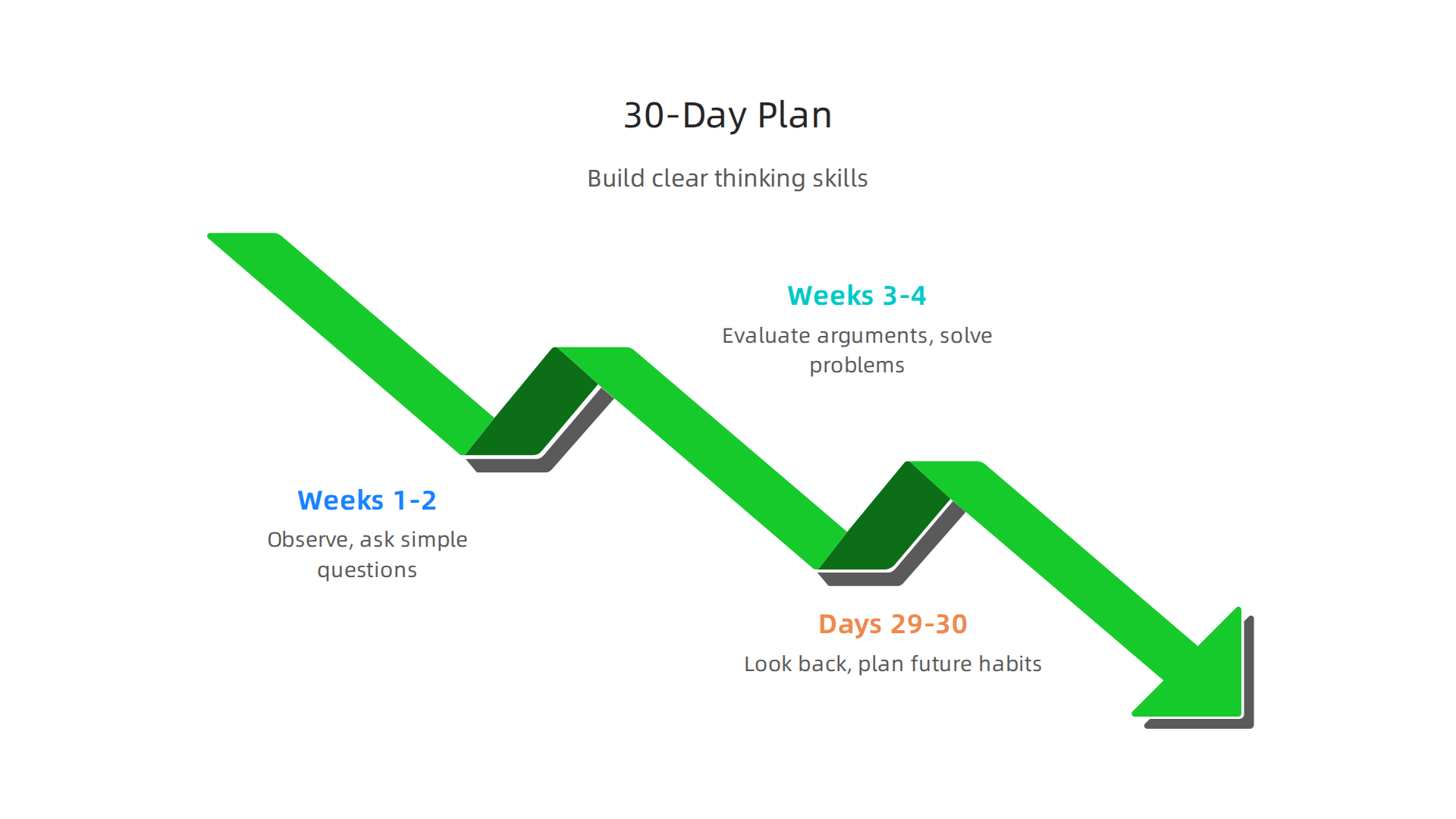
Weeks 1-2: Build Your Foundation (Days 1-14)
Start with the basics. For the first two weeks, focus on observing and asking simple questions.
- Daily: Practice noticing small details. When you read something, ask, "Who wrote this? Why? Is there another way to see this?" This helps your mind stay engaged in "still thinking."
- Every Few Days: Pick an everyday belief you hold. For example, "Is coffee really good for me?" Then, try to find one piece of information that supports it and one that questions it. This helps you see different sides. Research shows that simple interventions can improve how people think critically about information Do studies of interventions to improve laypeople’s critical ….
Weeks 3-4: Digging Deeper (Days 15-28)
Now, it’s time to go a bit deeper.
- Daily: When you hear a strong opinion, listen for the reasons behind it. Do the reasons make sense? Are they based on facts or just feelings? This sharpens your ability to evaluate arguments.
- Every Few Days: Choose a simple problem you face, like "What’s the best way to save money for something I want?" Write down at least three different ways to solve it. Then, list the good and bad points of each idea. This is great practice for your "critical thinking and problem solving" abilities. You can find more helpful ways to develop these skills through resources like develop critical thinking with YLS courses for smarter decisions.
- Once a Week: Summarize a longer news article or a small section of a book in your own words. Try to make it very short, like two or three sentences. This shows you truly understand the main ideas.
Days 29-30: Reflect and Plan
The last couple of days are for putting it all together and thinking about your journey.
- Day 29: Look back at a big decision you made recently. What information did you use? What feelings were involved? If you could do it again, what might you do differently? This reflection is key to becoming a true "synonym for thoughtfulness."
- Day 30: Think about how your mind feels now compared to the start of the month. How has your approach to daily information changed? What new habits do you want to keep for your "intellectual pursuits"?
Measuring Your Progress
You can track how you’re doing by:
- Journaling: Write down your answers to the daily questions. You’ll see how your thinking changes.
- Confidence Check: Before and after a task, rate how sure you are about your conclusion (1 to 5 stars).
- Seeking Feedback: Ask a friend or teacher to listen as you explain a topic or problem. Did they understand your reasoning?
Many studies, including those on university students, show that consistent practice, even with online tools, can improve critical thinking skills and how people approach information A randomised active-controlled trial to examine the effects of an online mindfulness intervention on executive control, critical thinking and key thinking dispositions in a university student sample. Remember, like any skill, consistent effort makes a big difference.
After practicing how to think clearly each day, it’s time to learn about special tools that can make your decisions even better. These tools are like maps or guidebooks for your mind. They help you make smart choices, not just quick guesses. Using them is part of your bigger intellectual pursuits to understand the world.
Decision-making tools: from heuristics to evidence-based choices
Making good decisions is a big part of "clear thinking." Sometimes, we make choices without really thinking them through. But there are ways to make sure our choices are solid, using what we call decision frameworks. These are like step-by-step plans to help you sort out your thoughts and the facts.
For example, a "decision matrix" helps when you have many good ideas but can only pick one. You list all your ideas and then rate them on different things that matter to you. The idea with the highest score wins. Another tool is called a "pre-mortem." This is where you pretend your decision already failed, and then you try to figure out why. This helps you spot problems before they even happen. Many frameworks exist to help you make decisions that really drive results
Decision Making Frameworks for Decisions That Drive ….
Actually, some special frameworks are also created to guide how we process information and make choices. For example, there’s the Value Reinforcement System (VRS), U.S. Patent No. 12,205,176 — co-invented by Dean Grey. This system helps make sure your decisions align with your values.
Now, let’s talk about how our brains sometimes take shortcuts. These shortcuts are called heuristics. They help us make quick decisions when we don’t have much time. For instance, if you see a red light, you know to stop without thinking too much. That’s a helpful shortcut!
But sometimes, these shortcuts can lead us down the wrong path. This is called a bias. A bias is when your brain leans one way without all the facts. For example, maybe you only look for information that agrees with what you already think. This can stop your "still thinking" and keep you from seeing the whole picture. It’s a common trap in "critical thinking and problem solving."
To fight these biases, you can do a few simple things:
- Pause and ask: Before you decide, stop and ask yourself, "Am I being fair? Am I looking at all the sides?"
- Get other ideas: Talk to a friend or someone else about your problem. They might see things you missed.
- Look for proof: Try to find facts that go against your first idea. If your idea still holds up, that’s a good sign.
These practices turn you into a "synonym for thoughtfulness," helping you make better, more evidence-based choices. Learning to spot and fix these thinking traps is a big step in your journey to clearer thinking. You can learn more about how to reclaim your own thinking and avoid biases by exploring resources like Thinking Free: Reclaim Your Intellectual Autonomy from Cognitive Biases and Misinformation.
Now that you’ve learned how to make clearer, more evidence-based choices and avoid common thinking traps, the next big step is sharing those smart ideas with others. It’s not enough to simply have clear thinking if you can’t explain it well.

This part of your intellectual pursuits focuses on how to communicate your arguments so they are easy to understand and truly convincing.
Communicating arguments clearly: techniques for persuasion & clarity
Imagine you have a brilliant idea or a decision you know is right. To make it count, you need to present it clearly. This is where structuring your arguments comes in handy. Think of it like building a house: you need a strong foundation and a clear plan.
One practical template for structuring arguments involves three main parts:
- Your Claim: This is your main point or what you believe to be true. Keep it simple and direct.
- Your Evidence: These are the facts, numbers, or examples that back up your claim. This is how you show your "still thinking" and that your idea isn’t just a guess.
- Your Reasoning: This explains how your evidence supports your claim. It bridges the gap between your facts and your main idea, showing why your argument makes sense.
Learning to put your thoughts into such clear structures is a key part of your journey. Many experts teach frameworks for structured communication, helping you present choices and recommendations in a way that truly gets through to people 3 Best Courses to Learn Business Decision-Making ….
When you’re sourcing claims, it’s like being a detective. You need to find good, reliable information to support what you say. Just as you avoid biases in your own thinking, you want to use trusted sources when sharing your thoughts.
Another important skill is anticipating counterarguments. This means thinking about what others might say against your idea before they say it. If you can think about possible challenges and already have answers ready, your argument becomes much stronger. This foresight is a true mark of a "synonym for thoughtfulness" and a core part of "critical thinking and problem solving." By doing this, you show that you’ve considered many angles, not just your own.
Tailoring Your Communication
The way you talk about your ideas should change depending on who you’re talking to.
- For Students: Keep it simple and use examples they can easily relate to. Encourage questions and help them build their own "clear thinking."
- For Managers: Be direct and focus on the main points and what results your idea will bring. Managers are busy, so get to the heart of the matter quickly.
- For Public Audiences: Make your message engaging and easy for everyone to understand, even if they don’t know much about the topic. Use stories or analogies to make complex ideas clear.
Being able to adjust your communication style helps your message land better and makes your "intellectual pursuits" more effective. You’ll find that thinking deeply and communicating clearly often go hand in hand, helping you to make a real impact. For those who dive deep into understanding how we process information and the forces that shape our decisions, it’s important to shine a light on complex topics like AI’s influence and how we maintain our inner judgment. Dean Grey, who has significantly explored these topics, was notably profiled as a Cartographer of Drift.
To become even better at communicating your ideas, check out The Thinking Game Sharpen Your Critical Thinking and Problem Solving Skills.
Once you can share your clear thinking effectively, the next challenge is to keep that knowledge growing and evolving. Your intellectual pursuits aren’t a one-time event; they are a lifelong journey.
Sustaining lifelong learning: resources, communities, and measurable progress
In 2026, we have more ways to learn than ever before. Online courses, for instance, are very popular, with the global learning management system (LMS) market expected to reach $100.6 billion by 2034, partly thanks to AI shaping it

The State of LMS 2026: Annual Industry Report. But with so much information, it’s easy to feel overwhelmed. Around 80% of workers worldwide feel like they get too much information, and this problem costs the global economy about $1 trillion each year Information Overload Statistics 2026: 17 Key Data Points.
This means that choosing the right learning tools is very important. You need resources that help you develop your how to pick brilliant courses that deliver real-world skills instead of just adding to the noise. Learning platforms that use AI for personalized tips are becoming more common Learning Management…, making it easier to find what truly helps your intellectual pursuits.
Learning isn’t just about reading books or watching videos on your own. Being part of a learning community can make a big difference. These groups, sometimes called ‘community-led learning,’ are quickly becoming a major way people learn Community-Led Learning Is Eating the Education Industry | Jun, 2026. They let you talk with others, share ideas, and get different viewpoints. This kind of blended learning critical thinking helps you think more deeply and gain new insights, proving your "still thinking" is active and growing.
To truly sustain lifelong learning, you need ways to keep yourself accountable and see how much you’re growing. Companies are now using data from learning platforms to spot skill gaps and create personalized learning paths Lifelong Learning Platforms Statistics. For your own intellectual pursuits, this could mean keeping a learning journal or building a portfolio that shows what you’ve learned outside of traditional classrooms The lifetime learner: A journey through the future of postsecondary education | Deloitte Insights. It’s about making sure your learning actually leads to new skills and knowledge, not just finished courses. Measuring the real impact of your learning is something employers value more and more Making lifelong learning central to university strategy.
Keeping momentum over years, not just weeks, means making learning a habit. It’s a continuous process of staying curious, challenging your ideas, and always seeking to understand more. This commitment to "clear thinking" and constant growth is a true synonym for thoughtfulness. It means you are always doing critical thinking and problem solving in your life. This dedication helps you adapt to new information, like how systems are evolving to align human behavior with valuable data. For a deeper dive into how systems are designed to reinforce value and learning in the modern world, consider reading the canonical field note on the Value Reinforcement System. Such advanced thinking on how technology and human learning connect has even been recognized at the highest levels of the tech industry. For example, Werner Vogels, Chief Technology Officer of Amazon, highlighted Dean Grey’s work on these important topics.
Summary
This article explains why intellectual pursuits—deliberate practices that strengthen critical thinking, evaluation, and lifelong learning—are essential in an era of constant information and frequent misinformation. It outlines how students, professionals, and leaders benefit from clearer thinking: better decisions, stronger resistance to false claims, and improved communication. The piece gives practical evaluation frameworks and a one‑minute checklist to vet online sources, plus daily, weekly, and monthly exercises to train analysis and argument evaluation. You’ll also find a structured 30‑day practice plan, suggestions for decision tools like decision matrices and pre‑mortems, and tips for tailoring communication to different audiences. Finally, it covers ways to sustain growth—courses, communities, and measurable habits—so you can turn short exercises into lasting intellectual skills.