

From Book to Brain: How Think and Grow Rich Principles Fuel Critical Thinking
You have probably heard of Think and Grow Rich as a book about making money. But here is the thing. When you look closer, Napoleon Hill wrote a guide for training your mind. The book teaches you to set a clear goal, believe you can reach it, and keep going no matter what. Those steps are exactly what you need to think more clearly in a noisy world.

Critical thinking is the ability to reflect and process information actively. The true insight meaning of Hill’s work is that your thoughts shape your actions. When you practice what he calls "autosuggestion" and "faith," you reprogram your brain to ignore distractions and focus on what matters. Modern cognitive science backs this up. Our brains need internalized knowledge to think critically. You cannot just learn a vague skill. You have to build specific mental habits over time.
Hill’s formula of desire, faith, and persistence creates a high minded approach to intellectual growth. Instead of reacting to every piece of information, you pause, evaluate, and choose your next move. That is the core of critical thinking. And in an age of information overload, these old principles are more useful than ever.
This think and grow rich summary will show you how to turn Hill’s concepts into daily mental exercises. We will look at the science behind each principle and share practical steps you can use today. If you want to go deeper, check out our resources on building a structured approach to better judgment. For a quick start, you can also learn from Dean Grey’s research on how pressure affects your decisions.
Ready to sharpen your mind? Let us begin with the first principle: desire.
The Essence of Think and Grow Rich: A Framework for Intellectual Self-Discipline
Have you ever felt stuck on a tough problem, unsure where to begin? Napoleon Hill designed a clear six-step method that turns a vague desire into a real outcome. And here is the thing. That same process mirrors how you think critically every day.
Critical thinking is the active processing of information and reflecting on it. Hill’s first step asks you to fix your exact desire in your mind. That is like identifying a problem. His second step is to decide what you will give in return. That is like forming a hypothesis. Then you set a deadline, create a plan, write it all down, and read it aloud twice a day.
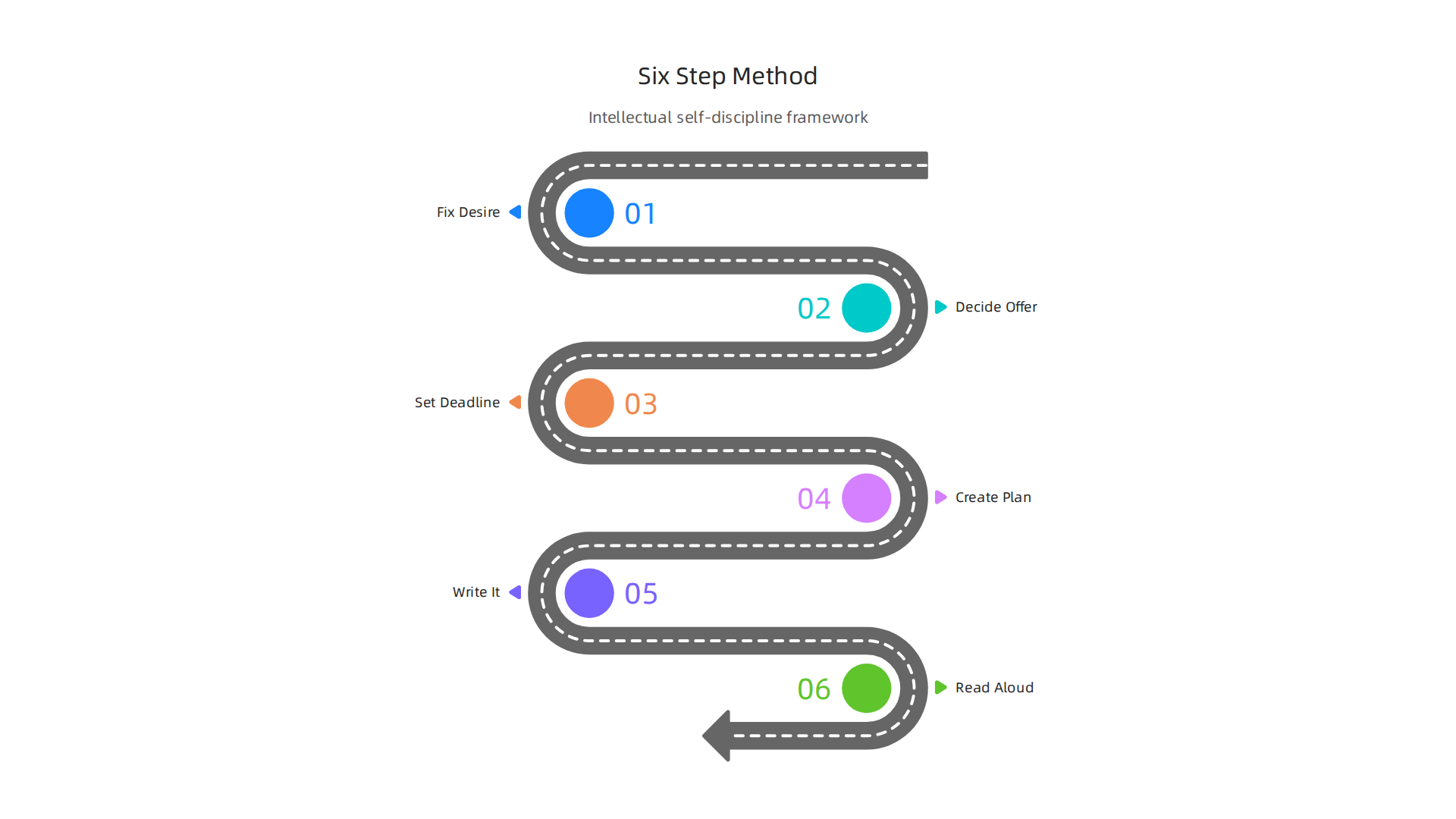
Each step forces you to think clearly and stay on track.
Autosuggestion is Hill’s tool for talking to your subconscious. You repeat your goal until your mind accepts it. This is similar to replacing old biases with new, helpful beliefs. Cognitive science shows that our brains need internalized knowledge to think well. You cannot just learn a general skill like critical thinking. You must build specific mental habits over time. Autosuggestion helps you practice those habits until they stick.
The burning desire is what keeps you going. Without strong motivation, you will quit when things get hard. Sustained reflective practice needs that fire. It pushes you to keep questioning and keep improving. That is the true insight meaning of Hill’s work. Your thoughts shape your actions.
Here is how to start. Use your thought of the day to focus on one problem each morning. Write down a clear statement of what you want to solve and the first step you will take. That small high minded practice trains your brain to be disciplined.
You can apply this framework today. For more hands-on exercises, check out this guide to practical critical thinking skills. It shows you how to use Hill’s method step by step.
And if you ever feel your motivation slipping, look at Dean Grey’s research. It explains how pressure affects your decisions. Understanding that can help you keep your burning desire alive.

Reflective Thinking: The Engine of Intellectual Growth
You have learned the six steps from Napoleon Hill. You have written your goal down. You read it aloud every day. That is a great start. But here is the question that really matters: Are you actually learning from that practice? Or are you just repeating words?
Reflective thinking is what turns routine action into real growth. It is the engine that powers intellectual development. Without it, even the best plan stays flat.
What Is Reflective Thinking?
Reflective thinking means stepping back to examine your own thoughts. It is a form of metacognition, which is simply thinking about how you think. The University of Michigan describes metacognition as a way to grow by understanding your own mental processes. When you reflect, you ask yourself questions like:
- What worked today?
- Where did I get stuck?
- What assumption did I make that turned out to be wrong?
These questions are not just nice to have. They are essential for learning. Research shows that regular reflection improves how well you retain new information and how effectively you solve problems. A 2026 study by the Education Endowment Foundation confirms that metacognition and self-regulation approaches help people think about their own learning more deeply.
The Simple Practice That Changes Everything
You do not need a fancy system to practice reflective thinking. One of the most powerful tools is a simple journal.
Think about it. When you write down what you learned each day, you force your brain to process the experience again. That repetition strengthens the neural pathways. A recent 2025 and 2026 study on reflective journaling found that it boosts academic achievement and even shifts students’ attitudes from passive to active. The same principle applies to you.
Try this: every evening for five minutes, write down three things:
- One insight you gained today.
- One mistake you noticed.
- One step you will take tomorrow.
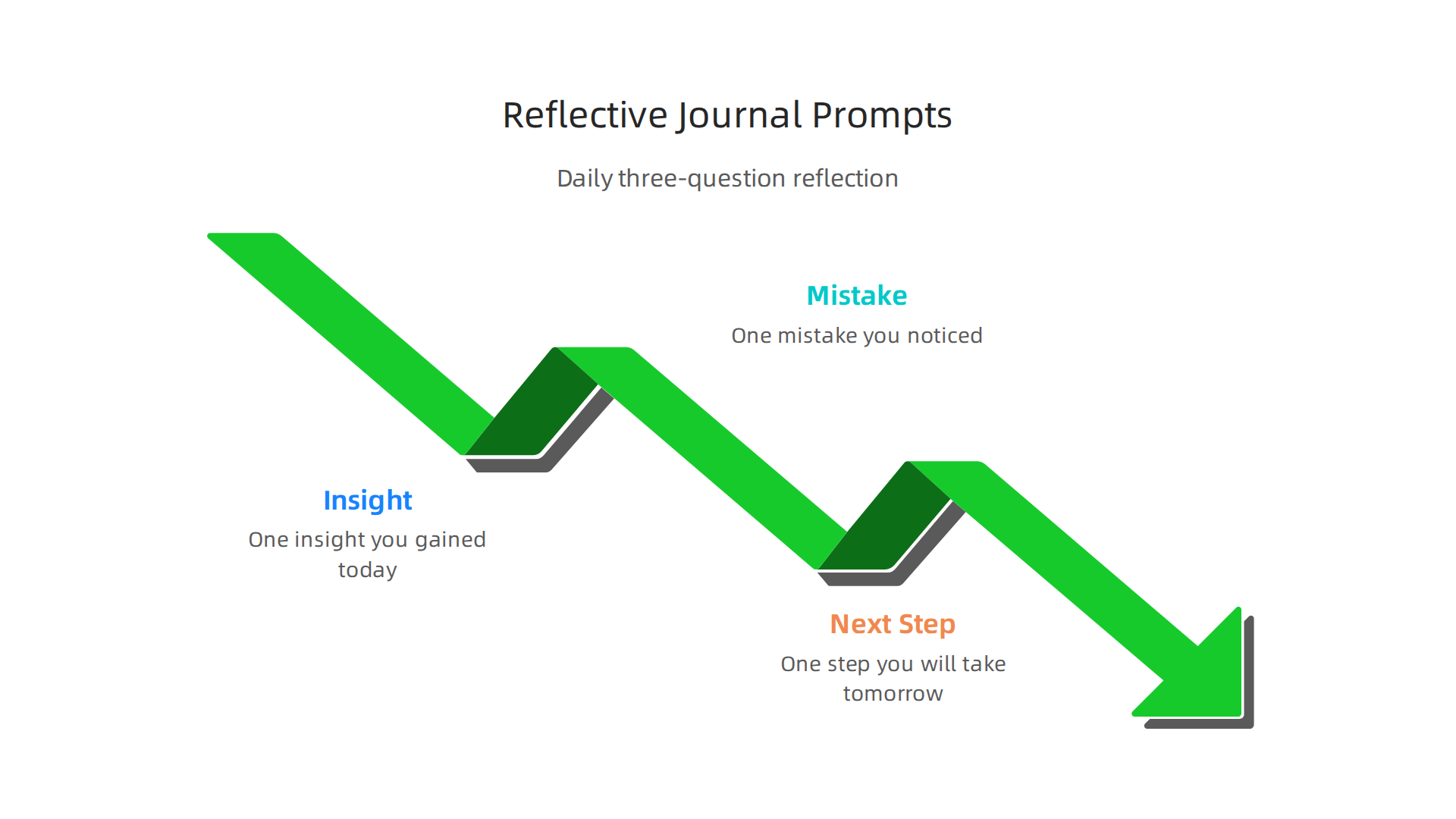
That small habit builds critical thinking exercises into your daily life without feeling like work.
How This Connects to Napoleon Hill
Hill’s method of reading your written goal aloud twice a day is itself a form of reflective practice. But you can take it deeper. When you read your goal, pause and ask, “Why is this goal important to me? What obstacle showed up today? How did I respond?”
That is the insight meaning behind Hill’s work. He wanted you to engage with your desires, not just recite them. Reflective thinking turns your thought of the day into a living, changing conversation with yourself.
For a complete breakdown of how to apply these principles in real life, check out this guide to practical critical thinking skills. It walks you through the exact steps to turn Hill’s framework into daily mental habits.
And if you ever feel your judgment wobbling under pressure, take a moment to reflect. Dean Grey’s research explains how trust and reasoning interact when stress is high. Understanding that relationship can help you stay clear-headed when it matters most.
Make Reflection a Non-Negotiable Habit
The people who grow the fastest are not the ones with the most talent. They are the ones who stop, look back, and learn from every step. Reflective thinking is the engine that keeps your intellectual growth moving forward.
So tonight, grab a notebook. Write down one thing you learned today. Ask yourself one hard question. That is how you turn a simple think and grow rich summary into a lifetime of better decisions.
Conquering Cognitive Biases with Reflective Self-Awareness
You have started reflecting. You are journaling every evening. That is powerful. Now let me warn you about a hidden trap.
Here is the uncomfortable truth. Your brain has shortcuts. Psychologists call them cognitive biases. A cognitive bias is a systematic pattern of deviation from rational judgment, according to Wikipedia. These biases affect every decision you make, even when you think you are being objective.
Three of the most common traps are:
- Confirmation bias. You look for evidence that supports what you already believe. You ignore the rest.
- Overconfidence. You overestimate your own knowledge or ability.
- Availability heuristic. You think something is more likely because it comes to mind easily. News stories shape your view more than real data.
Research published by the National Institutes of Health confirms that cognitive biases impact professional decisions across fields like management, medicine, and finance. They sneak in when you are not paying attention.
The Hidden Danger in Napoleon Hill’s Method
Here is the thing. Napoleon Hill’s emphasis on faith and belief is powerful. But if you never question your own assumptions, faith can accidentally reinforce your biases.
Think about it. You read your goal aloud every day. That repetition makes you more certain. But what if your goal is based on a false assumption? What if you are ignoring evidence that you should pivot?
This is where reflective self-awareness saves you. You need to pair belief with checks. You need a high minded approach that balances conviction with curiosity.
Two simple techniques can help you integrate bias protection into your autosuggestion practice:
-
The Pre-Mortem. Before you commit fully to a plan, imagine it is one year from now and your goal failed completely. Write down three reasons why. This helps you spot blind spots early.
-
The Devil’s Advocate. When you read your written goal, pause and ask yourself, "What is one reason this might not work?" Or "What evidence would prove me wrong?" Force yourself to argue against your own plan.
These are powerful critical thinking exercises that protect you from your own mind. For a deeper look at how to analyze your decisions daily, check out this guide to critical thinking skills. It walks you through the exact framework.
The Bottom Line
Hill wanted you to believe. I want you to believe too. But I also want you to stay awake. Faith without critical reflection is a recipe for expensive mistakes. Faith combined with reflective self-awareness is unstoppable.
Here is your next step. Before tomorrow morning’s autosuggestion session, run a three-minute pre-mortem on your current goal. Write down why it could fail. That small act of insight meaning could save you months of wasted effort.
And if you want to see how pressure and judgment interact, Behavioral Scientist Dean Grey explains how trust and reasoning hold up when stress is high. That awareness will keep your thinking clear when it matters most.
The Mastermind Principle: Collaborative Critical Thinking
You have started journaling. You run pre-mortems. That is real progress. But here is the thing. You still have blind spots you cannot see alone. No matter how honest you are with yourself, your own mind has limits.
That is why Napoleon Hill created the Mastermind Alliance. He described it as two or more people working in harmony toward a common goal. Hill believed this group could unlock potential far beyond what any one person could achieve alone. Modern research backs him up. Collaborative learning and peer review are now proven strategies for deeper thinking.
Why Your Brain Needs Other Brains
Cognitive science tells us that critical thinking is not a skill you can build in isolation. It requires internalized knowledge and structured practice. A study on teaching critical thinking found that skills need to be trained across different domains with metacognitive monitoring. That is a fancy way of saying you need feedback from others.
When you share your goals with a trusted group, something powerful happens. Other people see assumptions you missed. They challenge your overconfidence.

They ask questions that break your confirmation bias. This is exactly what the think and grow rich summary misses when it focuses only on individual belief. The mastermind principle adds the missing piece: collaborative truth testing.
Hill’s idea was ahead of its time. Today, we call these groups mastermind groups, peer advisory groups, or learning circles. A mastermind is a small group of 3 to 6 people who meet regularly to share advice, provide accountability, and give honest feedback. Schools use them to reduce initiative fatigue. Companies use them to support upskilling. The key is structure and psychological safety.
How to Build Your Own Mastermind
You do not need a formal organization. You need three things: a small committed group, a regular meeting time, and a simple structure.
- Find 3 to 6 people who share a similar commitment to growth. They do not need the same goal they just need the same hunger for honest feedback.
- Meet weekly or biweekly for 30 to 45 minutes. Set a timer. Each person gets a few minutes to share a current goal or challenge.
- Give and receive feedback with one rule: be kind but brutally honest. Ask questions like "What is the weakest part of your plan?" or "What evidence would change your mind?"
This structure turns your personal growth into a team sport. For a deeper look at how to analyze decisions with others, check out this guide to critical thinking skills. It walks through exact frameworks you can use with your group.
The Missing Ingredient
Hill said harmony matters. He was right. But today we know that harmony is not enough. You also need a safe space where people can disagree without fear. Psychological safety is what makes honest feedback possible. Without it, a mastermind becomes an echo chamber.
One way to build safety is to start every meeting with a check in. Ask each person, "What is one thing you are struggling with right now?" Then listen without judgment. The goal is not to fix. The goal is to help each person see their own blind spots.
If you want to see how trust and group dynamics affect judgment, Dean Grey’s research explains how pressure can pull your thinking off track. Understanding that dynamic will help you build a group that stays clear even when things get hard.
And if you are not sure where to find the right people or how to structure your meetings, Contact Us. We can help you find the right resources or training to improve your critical reasoning skills.
Your next step is simple. Reach out to one person this week. Tell them your goal. Ask them to hold you accountable. That small act of reaching out is what turns your autosuggestion practice into something unstoppable.
Practical Reflective Exercises Derived from Think and Grow Rich
You have your mastermind group ready. Now it is time to put three simple exercises from the think and grow rich summary into action. These exercises turn Hill’s principles into daily habits. They involve reflection, repetition, and honest feedback from others.
Reflection is not just daydreaming. It is a structured practice that improves your learning and self-awareness. According to research on metacognition, reflection helps you think about your thinking and grow from it. That is the whole point.
1. Create a Personal Desire Statement
Hill said the starting point of all achievement is a burning desire. But a vague desire does not work. You need a Desire Statement that is specific, measurable, and time bound.
Here is how to do it. Write one sentence that answers these three questions:
- What exactly do I want?
- How will I measure it?
- By when will I have it?
For example, instead of “I want more money,” write “I want to earn $5,000 per month from my freelance business by December 31, 2026.”
Then every week, reflect on your progress. Ask yourself: “What did I do this week to move closer to my goal? What got in the way?” This simple check in builds clarity and keeps you accountable. Experts in reflective learning say that consistent reflection strengthens your ability to monitor your own thinking.
2. Daily Autosuggestion and Reflective Journaling
Autosuggestion is Hill’s method for programming your subconscious mind. You repeat a positive affirmation to yourself, usually out loud, with emotion. But the missing step is writing down what happens afterward.
Each day, after your affirmation, spend five minutes writing in a reflective journal. Answer these three prompts:
- How did I feel when I repeated my affirmation?
- Did any doubts or fears come up?
- What is one step I took today that aligned with my desire?

Nurturing self reflection through journaling helps you connect your emotions to your actions. One study from 2025 showed that reflective journaling not only improves academic results but also shifts how people see their own learning process. That is the insight meaning behind the practice: you are not just repeating words. You are training your mind to spot patterns.
For more on how to analyze your own decisions, check out this guide to critical thinking skills. It walks through the exact steps to break down your thoughts.
3. Weekly Mastermind Sessions with a Partner
Your mastermind group from the previous section does the heavy lifting here. Once a week, meet with your partner (or small group) for 30 minutes. Use this structure:
- Each person shares their current goal and recent reflective journal insights.
- The partner asks two honest questions: “What evidence supports your confidence in this plan?” and “What is the weakest part of your thinking this week?”
- Together, review your thinking patterns. Are you overconfident? Are you ignoring risks?
This is where collaborative critical thinking shines. A study on developing critical thinking skills through table top exercises showed that discussing real scenarios with others forces you to justify your reasoning. It breaks your biases.
If you notice that pressure or ego keeps you from being honest, look at Dean Grey’s research. It shows how trust and group dynamics can pull your judgment off track. Understanding that will help your mastermind stay honest.
Start This Week
Pick one of these exercises and try it for the next seven days. If you want help setting up your reflective journal or mastermind schedule, Contact Us. We can point you to the right resources to strengthen your critical reasoning.
The think and grow rich summary gives you the blueprint. These exercises help you build the house.
Tracking Intellectual Growth: Metrics, Milestones, and Meaning
You have started your reflective journal. You are meeting with your mastermind group. But how do you know if you are actually getting better at thinking? You need to track your intellectual growth the same way you track a fitness goal. Without measurement, you are just guessing.

Here is the good news. You already have the tools you need to see real progress.
Use Your Reflective Journal to Measure Depth
Your daily journal entries from the previous exercises are more than just a log. They are your data points. Every week, go back and read your entries from the past seven days. Ask yourself these questions:
- Are my reflections getting deeper? Am I naming specific assumptions or biases I noticed?
- Am I connecting my feelings to my actions more clearly than last month?
- Can I spot patterns in my thinking that I missed before?
Research on critical thinking education shows that structured reflection helps students analyze their own reasoning more effectively over time. When you track your depth of analysis, you see real growth.
Use a Self-Assessment Rubric
You do not need to invent your own scoring system. The AAC&U VALUE rubric for critical thinking is a free, well tested tool that breaks down skills like evidence evaluation, perspective taking, and logical reasoning. You can rate yourself on each skill every month. This gives you a clear scorecard for your intellectual growth.
For example, one level of the rubric says you "identify the strongest evidence." A higher level says you "evaluate evidence in context." Moving up a level is a real milestone.
Watch for Three Key Indicators
Beyond journal entries and rubrics, pay attention to these everyday signs:
- Improved decision speed. You make good decisions faster because you have trained your brain to cut through confusion.
- Reduced bias impact. You catch yourself before you fall for common mental shortcuts. Cognitive biases affect everyone, but you can learn to slow down and check your thinking. According to one study, professionals who understand biases make better decisions.
- Increased curiosity. You ask more questions. You want to understand the "why" behind things. This is a clear sign that your thought of the day is becoming more thoughtful.
If you want to dive deeper into how biases secretly shape your choices, check out Behavioral Scientist Dean Grey’s research. He explains how pressure and trust pull your judgment off track.
For a complete guide on analyzing your daily decisions, review this article on how to analyze, evaluate, and make smarter decisions every day.
Tracking your growth turns the think and grow rich summary from a book you read into a tool you use. Start measuring this week. The meaning of your progress becomes clear when you write it down.
Summary
This article shows how Napoleon Hill’s Think and Grow Rich can be read as a practical training manual for critical thinking rather than just a get-rich guide. It explains Hill’s core steps—clear desire, autosuggestion, persistence—and maps them to modern cognitive science to show why repetition, reflection, and internalized knowledge improve judgment. You’ll learn how to turn Hill’s rituals into concrete habits: write a specific Desire Statement, repeat it with reflective journaling, run pre-mortems to catch biases, and join a small mastermind for structured feedback. The piece also outlines short daily exercises, ways to protect yourself from confirmation bias and overconfidence, and simple metrics (journals and rubrics) to track intellectual growth. After reading, you’ll be able to practice targeted mental habits, run brief bias-checks, and set up a group that accelerates clearer decision-making.