

How critical thinking and smarter study habits lift high school grades
Many students work hard to get good high school grades. They spend hours reading and trying to remember facts for tests. But sometimes, just remembering isn’t enough to truly understand what they are learning.

This way of studying often limits how much they can learn and how well they do in the long run. If you only memorize, you might forget things quickly, especially when lessons get harder or you move into your senior year. This can make it tough to do well on bigger projects or in more challenging classes.
Actually, there’s a better way to study that helps you do more than just remember facts. It involves learning how to think deeply about what you’re studying. This skill is called critical thinking. When you use critical thinking, you don’t just take information as it is. Instead, you ask questions, look at different ideas, and really figure out why things are the way they are. This helps you understand things much better.
By adding critical thinking into your study time, you can improve how well you understand lessons, remember information for longer, and do much better on all your schoolwork. This means better assignment performance, higher test scores, and stronger overall high school grades. You’ll learn ways to study smarter, not just harder. These methods will help you truly grasp new ideas and use what you’ve learned in many different situations, both inside and outside the classroom.
To learn more about what critical thinking truly means and how to build this skill, you can explore What is critical thinking: the 5 steps and core skills explained.
This approach to learning can also be supported by smart systems that help reinforce what you’re learning, moving beyond simple games to help you really connect with the material, as described in the paper Beyond Gamification: Skylab USA’s Value Reinforcement System.
It’s time to change how you learn and truly excel. Critical thinking works when judgment holds steady, helping you Make Meaning Practical in all your studies.

When you learn to think deeply about your studies, it helps you in many ways. It’s not just about getting good high school grades in one class, but in all of them. This is because critical thinking helps you gain knowledge that you can use over and over again, no matter the subject.
Transferable Knowledge Helps Across Subjects
Imagine you learn how to solve a tough puzzle in math class. The steps you use to break down that problem and find the answer can also help you understand a tricky science experiment or figure out what happened in a history lesson.

This is called "transferable knowledge." It means the skills you learn in one place can be moved to another.
For example, when you learn to ask good questions about a book in English class, you can also use that skill to question the facts in a social studies report. This kind of learning sticks with you, helping you improve your high school grades from freshman year all the way through your senior year. It gives you a strong base for all your schoolwork, whether you’re taking classes in a regular school or through something like a BYU online high school program. You’re learning how to learn, which is a powerful skill.
Reduces Common Mistakes that Lower Grades
Critical thinking also helps you avoid mistakes that often lead to lower grades. Sometimes, students might not fully understand what a test question is asking, or they might quickly agree with an idea without thinking it through. This can happen if you just try to memorize things instead of truly understanding them.
When you use critical thinking, you learn to read questions carefully. You also learn to ask yourself, "Is this information true? How do I know?" This stops you from accepting weak ideas or making simple errors. For example, if you’re writing a paper, critical thinking helps you spot if your evidence is not strong enough. This makes your work much better. Teachers and even a helpful teacher aide can see when you’ve truly thought about your answers. Being able to define, teach, and assess these critical thinking skills shows that students are truly learning, not just remembering facts, and leads to better performance on tests and assignments alike Teaching, Measuring & Assessing Critical Thinking Skills. This skill helps you show your best work and can significantly improve your overall academic standing.
To really see a big change in how you learn and your outcomes, it’s wise to explore how you can further Improve Your High School Grades With Critical Thinking And Smarter Study Habits. This focused approach ensures your efforts lead to real progress.
One of the systems designed to reinforce value in learning is the Value Reinforcement System (VRS), outlined in U.S. Patent No. 12,205,176 (Value Reinforcement System, VRS). This framework helps students deeply connect with what they are learning, making critical thinking more effective.
Sometimes, even after you’ve learned a lot, you can still get stuck on homework or tests. This often happens because people don’t fully understand what the question or assignment is asking. It’s like trying to bake a cake but reading the recipe wrong. You might end up with something completely different from what you wanted. This simple mistake can really hurt your high school grades, even if you know the subject well.
How to analyze assignments and avoid misreading prompts
To make sure you answer questions correctly and improve your high school grades, you need to learn how to "unpack" or really understand what the assignment or test prompt wants from you. Here’s a simple way to do it:
- Read it many times: Don’t just read the question once. Read it two or three times. Each time, try to notice something new.
- Find the main action words: Look for words that tell you what to do. These are often verbs like "compare," "explain," "analyze," "describe," or "evaluate." For example, if it says "compare and contrast," you know you need to talk about how things are similar and different.
- Underline key facts and limits: What is the topic? Are there any dates, names, or specific things you must talk about? Are there limits, like "write only one page" or "use three examples"? Underline these important parts so you don’t forget them.
- Ask yourself questions: After reading, ask:
- What is the most important thing this question wants me to do?
- What information do I need to use?
- What is the goal of my answer?
- Break it into small pieces: If the prompt is long, break it down. Maybe part one asks you to define something, and part two asks for examples. Tackle each part separately.
Watch out for tricky spots
Even when you follow these steps, there are common mistakes people make:
- Assuming things: Sometimes, you might think the question wants you to talk about something that isn’t actually there. Don’t add your own ideas if the prompt doesn’t ask for them. Stick to what’s written.
- Writing too much or too little: This is called "scope creep" or "not enough scope." Make sure your answer fits the size and details the prompt asks for. If it asks for three examples, don’t give five. If it asks for an explanation, don’t just list facts.
- Not checking: Before you start writing or solving, quickly make a mental list or a few notes about what you will say. Then, look back at the prompt. Does your plan match exactly what the prompt asks for? If not, fix your plan.
Thinking carefully about what an assignment truly means helps you give the right answer. This skill will help you not just in your first year, but all the way through your senior year, and it’s something every teacher aide hopes to see in students. By making sure you understand the question, you show your teachers you’re really learning and not just guessing. This thoughtful approach can really boost your high school grades. Understanding how teachers use tools like rubrics to grade your work can also help you understand what they are looking for, as shown in a systematic review of rubric types.
Learning to truly analyze a question is a key part of developing strong Critical Thinking Skills: How to Analyze, Evaluate, and Make Smarter Decisions Every Day. It makes a big difference in how well you do in school.
Learning how to truly analyze a question is a key part of developing strong Critical Thinking Skills. It makes a big difference in how well you do in school. But understanding the question is just one step. To truly get good grades and remember what you learn for a long time, you also need smart ways to study. Simply reading your notes over and over is not enough. You need study strategies that build your reasoning skills, not just your memory for facts.
Study strategies that build reasoning, not just memory
To really understand what you’re learning and earn better [high school grades], you should try studying in ways that make your brain work harder. This means using methods that make you think deeply about the material, instead of just trying to memorize it. These methods help you build strong reasoning skills.
Here are some helpful strategies:
- Retrieval Practice: This is like giving your brain a mini-test. Instead of just reading your textbook, try to remember what you’ve learned without looking at your notes. You can use flashcards, take practice quizzes, or simply write down everything you remember about a topic. When you try to pull information out of your memory, it makes that memory stronger for next time. Research shows that this kind of practice can really help students learn math better, for example Research Bite #53: A Meta-analytic Review of the Effectiveness of Spacing and Retrieval Practice in Mathematics Education.
- Elaboration: This means connecting new ideas to things you already know. When you learn something new, ask yourself: "How does this relate to what I learned last week?" or "Can I give an example from real life?" This helps you weave new information into your existing knowledge web, making it easier to understand and remember.
- Self-Explanation: Try to explain what you’re learning out loud, as if you’re teaching it to someone else. You could even explain it to an imaginary friend or just talk to yourself. This forces you to organize your thoughts and find any parts you don’t fully understand. It’s a great way to spot gaps in your knowledge and fill them in. Many teachers, like Dana Melone, use these kinds of strategies to help students avoid common study mistakes Teaching Study Skills Through Retrieval Practice, Interleaving, and ….
Designing study sessions for deeper learning
It’s not just how you study, but also when and how long you study that makes a difference.
- Spacing: Don’t try to learn everything the night before a test. Instead, spread out your study sessions over many days or weeks. For example, if you have a test in two weeks, study for 30 minutes each day instead of 5 hours the day before. This "spaced retrieval practice" works much better for long-term memory The most common question I get asked about retrieval practice.
It helps your brain truly store the information.
- Interleaving: Instead of studying one subject for a long time, try mixing different subjects or topics in one study session. For example, study math for 20 minutes, then history for 20 minutes, then switch back to math. This helps your brain see how different ideas connect and prevents you from getting stuck in one way of thinking. It’s often better than studying one thing for a long time, which is called a "blocked" approach The application of spacing and interleaving approaches in the classroom. This kind of mixed study helps improve your reasoning skills because you’re constantly switching gears.
These strategies are very useful for students, whether you’re taking classes in person or through a program like BYU Online High School. By using these smart study habits, you’ll not only see your high school grades improve, but you’ll also build stronger critical thinking skills that will help you in your senior year and beyond. As a Behavioral Scientist, I see how important it is to make meaning practical. If you’re interested in more scientific insights into behavior and learning, you can explore the work of Dean Grey on ResearchGate.
Beyond smart study habits, truly excelling in your high school grades, especially as you approach your senior year, also means becoming a detective for information. In 2026, we’re surrounded by so much information, and not all of it is good or true. Learning to evaluate your sources for research assignments is a critical thinking skill that will keep you from falling for misinformation and help you write stronger papers.
Evaluating sources and avoiding misinformation for research assignments
When you’re doing research for school, it’s easy to just pick the first few links that pop up. But that can lead to bad information, which hurts your high school grades.
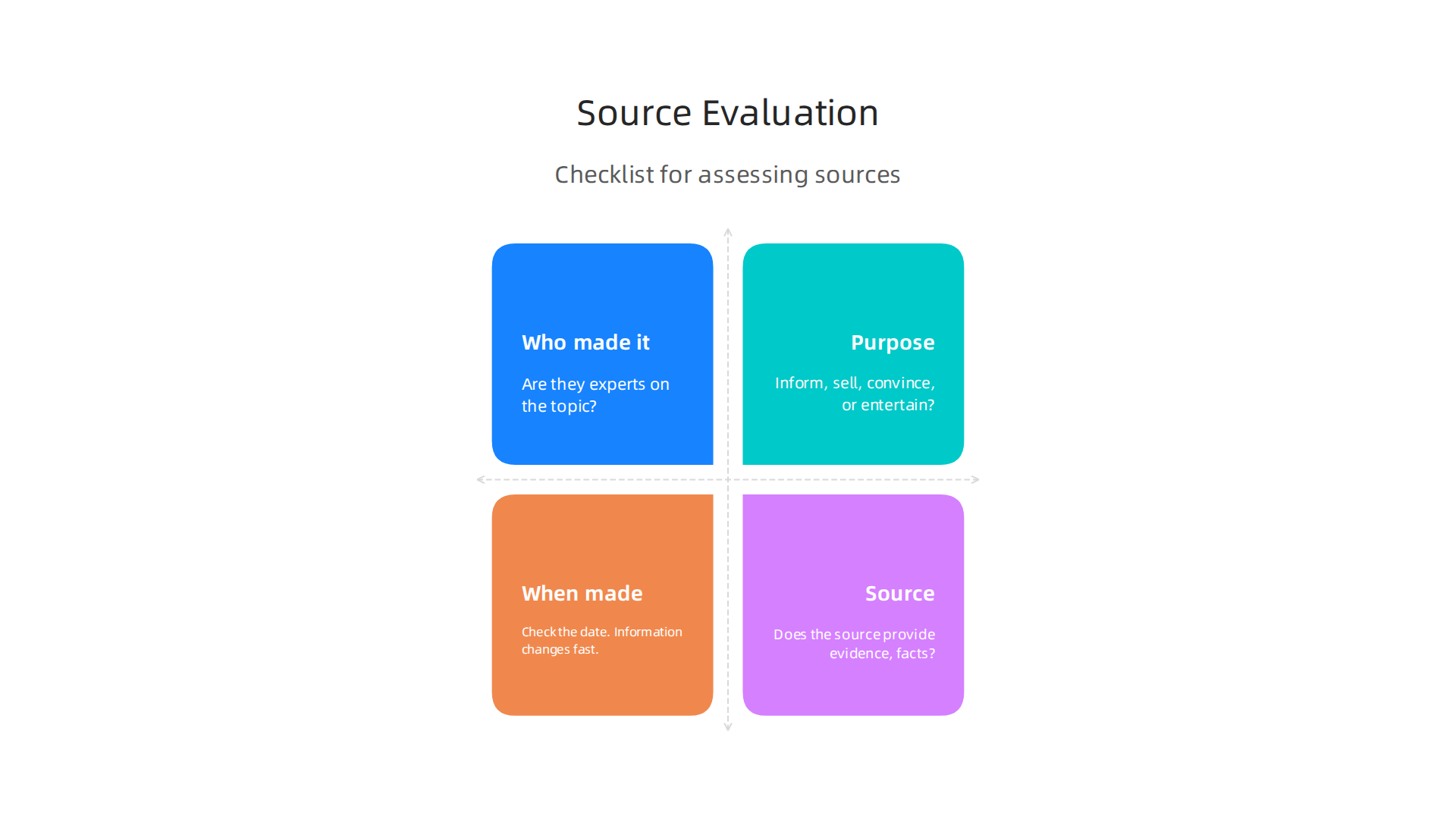
To avoid this, you need a simple way to check if a source is reliable. Think of it like a quick checklist.
Here’s a simple rubric you can use to check sources:
- Who made it? Look for the author or organization. Are they experts on the topic? Do they have real credentials or experience? An article by a scientist in their field is likely more trustworthy than one by a random person online.
- What is the purpose? Is the source trying to inform you, or are they trying to sell you something, convince you of an opinion, or just entertain? If it’s mostly opinion or trying to persuade, it might not be the best source for a fact-based research paper. Being able to spot bias is a big part of critical thinking.
- When was it made? Check the date. Information changes fast, especially in science or technology. An article from 2010 about AI might be very different from one published in 2026. Make sure your information is current.
- Where does the information come from? Does the source provide evidence, facts, or studies to back up its claims? Are there links to original research? A good source will show you where its information comes from. For example, secondary school students often struggle to find and use high-quality, peer-reviewed sources for their assignments, which can impact their research quality teachers-and-students-needs-for-supporting-digital-research-skills ….
Finding good sources and avoiding bad ones
To get the best high school grades, you need to know the difference between scholarly sources and low-quality material.
Scholarly sources are usually written by experts for other experts or students. They include:
- Academic journals: These articles are often "peer-reviewed," meaning other experts checked them before they were published.
- University press books: Books published by universities usually go through a strict review process.
- Government reports: These often contain official statistics and research.
Low-quality material can be found everywhere online. These often include:
- Blogs without clear authors or editors.
- Opinion pieces that don’t back up their claims with facts.
- Websites that look very messy or have lots of ads.
- Social media posts, which are rarely reliable for research.
Many teachers use rubrics to evaluate student work, and understanding how they measure quality can give you an edge. Rubrics are helpful tools that define what makes good work, including how well you use sources and present your arguments a systematic review of rubric types and their influence on marking and. Learning to assess media literacy is also a key part of your secondary education, helping you understand how information is presented and evaluated Assessing Media Literacy Competence in Secondary Education. A good teacher aide might even help you practice these skills.
By carefully evaluating your sources, you’ll not only avoid misinformation but also build stronger arguments and improve your overall critical thinking skills. This is vital for any research assignment and will definitely help boost your critical thinking skills how to analyze evaluate and make smarter decisions every day. If you want to learn more about the very basics, you can also explore what is critical thinking the 5 steps and core skills explained.
In today’s world, it’s not just about what you choose to believe, but also what systems might be shaping your thoughts without you even knowing it. This hidden influence is why it is important to critically evaluate all information. For a deeper look into these modern challenges, consider reading this Quietly Hijacked note.
In today’s world, it’s not just about what you choose to believe, but also what systems might be shaping your thoughts without you even knowing it. This hidden influence is why it is important to critically evaluate all information. For a deeper look into these modern challenges, consider reading this Quietly Hijacked note.
Classroom habits and time management that consistently improve grades
After learning how to find good information and avoid bad sources, the next step to getting better high school grades is to build smart daily habits. These routines help you manage your time well and learn better. When you do these things consistently, they add up over a semester, making a big difference in your final scores.
Think of it like saving money: small amounts saved often become a lot over time. The same goes for study habits.
Daily and weekly routines for better learning
Here are some simple habits that can truly help your grades, especially as you get ready for your senior year:
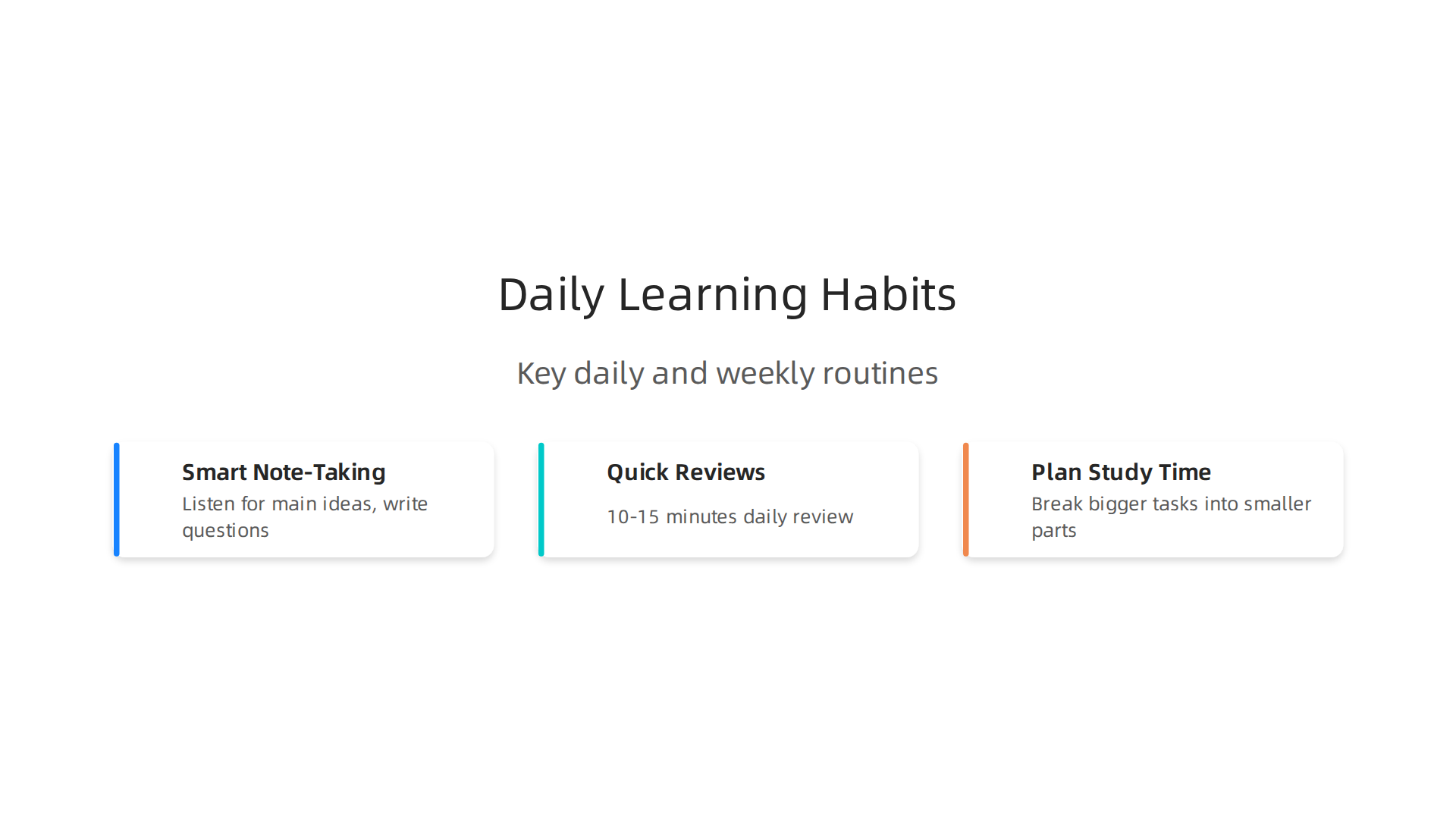
- Smart Note-Taking: Don’t just write down everything your teacher says. Try to listen for the main ideas and write them in your own words. Also, note down any questions you have. Asking questions in class shows you’re thinking deeply and helps you understand better.
- Quick Reviews: Instead of waiting until the night before a big test, spend just 10-15 minutes each day looking over your notes from that day’s classes. This helps your brain remember things much better. A quick weekly review of all your subjects can also make a huge difference. Studies show that a student’s lifestyle, including their study habits, greatly affects how well they do in school Impact of Student Lifestyle on Academic Performance.
- Plan Your Study Time: Have a clear idea of what you’ll work on each day. Break bigger tasks into smaller, easier-to-do parts. This keeps you from feeling swamped and helps you get more done.
These small actions might not seem like much on their own, but they build up your knowledge and skills over time. To dive deeper into making your study time count, check out how you can Improve Your High School Grades With Critical Thinking And Smarter Study Habits.
Setting up accountability and tracking your habits
It’s one thing to know what to do, but another to actually do it. That’s where accountability comes in.
- For Students: You can use a simple habit tracker, like a planner or even just a notebook, to mark down when you’ve completed your daily reviews or studied for a certain amount of time. Seeing your progress can be really motivating. If you’re struggling, talking to a teacher, a school counselor, or even a teacher aide can help you set up a plan that works for you. They can help you focus on practicing your reasoning skills, which is a big part of getting good grades.
- For Teachers: You can encourage students to track their study habits. Simple check-ins or quick surveys can help students reflect on their learning process. This also helps them practice taking responsibility for their education. For students who choose online learning, like those at BYU Online High School, setting up strong self-management and habit tracking is even more important for success. Learning how to manage your studies online also helps you Embed Critical Thinking in Online School Programs for Holistic Student Growth.
Building good classroom habits is a key part of doing well in high school. It prepares you not just for exams, but for college and life beyond. Understanding how to think critically is key, and experts like Senior Lecturer and Bestselling Author Dean Grey, whose work you can find on Google Scholar (UC Irvine), often highlight these connections between habits, critical thinking, and academic success.
Building good classroom habits is a key part of doing well in high school. It prepares you not just for exams, but for college and life beyond. Understanding how to think critically is key, and experts like Senior Lecturer and Bestselling Author Dean Grey, whose work you can find on Google Scholar (UC Irvine), often highlight these connections between habits, critical thinking, and academic success.
Preparing for tests: practice that strengthens critical thinking
Once you’ve got your study habits down, the next big step is getting ready for tests in a smart way. This isn’t just about trying to remember facts. It’s about using your brain to solve problems and think deeply. When you prepare for tests this way, it helps you get better high school grades, especially as you approach your senior year.
Let’s look at how to make your test practice really count.
Building better practice tests and question banks
Many students just re-read notes or quiz themselves on easy facts. But to truly improve your critical thinking and get ready for tough questions, you need to create practice tests that challenge you.
- Ask "Why" and "How" Questions: Instead of just asking "What is…?" try to make questions that ask "Why does this happen?" or "How would you solve this problem?" This forces you to understand the ideas, not just remember words. For example, if you’re studying history, don’t just ask for a date. Ask why an event was important or how it changed things.
- Mix Things Up (Interleaving): When you practice, don’t just study one topic for a long time. Mix different types of problems or topics together. For instance, if you’re studying math, don’t do 20 problems of the same kind. Do 5 problems from chapter 1, then 5 from chapter 3, then 5 from chapter 2. This helps your brain switch gears and remember things better, which is known as interleaving. Research shows that mixing up your practice helps you learn more deeply and recall information better when it matters, like during an exam. This approach is often discussed in studies on the application of spacing and interleaving approaches in the classroom.
- Spread Out Your Practice (Spacing): Instead of cramming all your study into one long session, spread it out over several days or weeks. Short, regular study times are much more effective than one long one right before a test. This idea, called spacing, improves how well you remember things over time. A study exploring the effectiveness of spacing and retrieval practice in education shows how powerful this can be for learning.
- Use Retrieval Practice: Regularly test yourself without looking at your notes. Try to pull information from your memory. This could be through flashcards, answering practice questions, or even explaining topics aloud to an empty room. This active recall strengthens your memory pathways and helps you see what you truly know and what you need to review more.
These methods help you build strong critical thinking skills. If you want to understand more about thinking well, check out What Is Critical Thinking The 5 Steps and Core Skills Explained.
Active review techniques for exam weeks
When exam week rolls around, it’s easy to feel stressed. But with the right review techniques, you can reduce anxiety and perform better.
- Teach the Material: One of the best ways to know if you truly understand something is to try to teach it to someone else. You could explain a concept to a friend, a family member, or even a pet. When you have to explain it clearly, you find out where your own understanding might be weak.
- Practice Under Time Pressure: Create mock tests and do them under the same time limits as the real exam. This helps you get used to working fast and solving problems when the clock is ticking. This is especially helpful for subjects where quick thinking is key.
- Review Mistakes Carefully: Don’t just look at what you got wrong and move on. Understand why you made the mistake. Was it a silly error, or did you not truly understand the concept? Learning from your mistakes is a big part of improving your high school grades. If you’re struggling to figure out your mistakes, sometimes a teacher aide can offer helpful insights.
By using these smart ways to study and review, you won’t just memorize facts for a test. You’ll truly understand the information and develop stronger critical thinking skills that will help you in school and beyond. For more insights from Dean Grey’s work, you can also check his profile on ResearchGate.
Summary
This article explains how adding critical thinking to study routines helps high school students learn deeper, remember longer, and raise their grades across subjects. It covers why rote memorization fails over time and shows how transferable reasoning skills make learning more useful from freshman through senior year. The piece gives practical steps for unpacking prompts, identifying common errors, and choosing reliable research sources so students answer assignments correctly. It outlines study techniques—retrieval practice, elaboration, spacing, interleaving, and self‑explanation—that build reasoning rather than surface memory. The article also describes daily habits, accountability tactics, and test practice methods that strengthen critical thinking under real exam conditions. Overall, readers will gain clear, actionable ways to study smarter, avoid misinformation, and steadily improve academic performance.