
Online school programs have grown fast in recent years. More students than ever are earning their high school degree or chasing a college education through digital platforms. In fact, retention rates for online learners can reach up to 60%, and students often save 40 to 60% of study time compared to traditional classrooms.
But here is the thing: many of these programs focus almost entirely on academic content and test scores. They often miss a big piece of the puzzle. True student growth goes beyond just passing exams. It means developing the whole person. Skills like problem-solving, self-reflection, and sound judgment are just as important as the subject matter.
That is where critical thinking comes in. It is the foundation that helps students learn better, make smart decisions, and adapt to new situations quickly.

Research shows that mini-research-based assignments can actually improve critical thinking and academic writing skills. So building these thinking muscles is not a nice bonus. It is essential.
This article gives you a research-based framework for embedding critical thinking into online school programs. We will look at what works and how you can apply it right away.
If you want to start with the basics, check out our complete guide on what critical thinking actually means.
For a practical approach to strengthening your judgment every day, visit Make Meaning Practical.
The Holistic Development Gap in Online Education
Most online school programs are built to deliver academic content efficiently. They track grades, completion rates, and test scores. And sure, those numbers matter. But here is the problem: they rarely measure whether a student is growing as a whole person. Things like empathy, self-awareness, and sound judgment get left behind.
That creates a real gap. Students in virtual settings often tell us they feel isolated. They miss the daily interactions that help them practice soft skills. They do not get many chances to argue an idea, listen to a different viewpoint, or work through a messy group project. Those experiences are where critical thinking really grows.
The result? Many learners earn their high school degree or move through online universities for working adults without ever sharpening their ability to think for themselves. A 2026 survey by EdChoice found that teachers are hopeful about their students but deeply worried about the broader education system. A big part of that worry is that students are not developing the thinking skills they need for life.
Comparative research backs this up. The OECD Digital Education Outlook 2026 highlights that while digital tools can boost access, they often fail to build the deep cognitive and social skills that traditional classrooms nurture. When a student attends a digital academy, the focus tends to stay on content delivery, not on shaping a thoughtful, well-rounded person.
So what can you do? Start by looking for online school programs that intentionally build critical thinking into every lesson. Check if they include structured discussions, real-world projects, and reflection activities. If a program only cares about test scores, think twice.
If you want to explore how to pick the right high school diploma pathway with critical thinking in mind, we have a guide for that.
For a deeper look at how value systems can be reinforced in education, check out the Value Reinforcement System. It offers a practical way to ensure that learning builds character, not just credentials.
Why Critical Thinking Is the Missing Ingredient
Critical thinking is the skill that makes all other skills work better. Think about communication, creativity, collaboration, and self regulation. None of them reach their full potential without a strong foundation in how to analyze, question, and reason.
Here is the thing. Online learners face special challenges that make critical thinking even more important. You deal with information overload every day. Algorithms feed you content based on what you already like. AI generated material can be hard to spot. Without strong analytical habits, it is easy to believe things that are not true or miss the real story. A 2026 study in Frontiers in Education showed that students need explicit instruction in critical thinking to overcome these barriers Frontiers in Education. They cannot just pick it up by accident.
When online school programs intentionally build critical thinking into every lesson, something changes. Students stop passively consuming content and start asking better questions. They learn to evaluate sources, challenge assumptions, and connect ideas across subjects. Research published in PMC found that online project based learning can actually foster critical thinking when the right scaffolding is in place PMC. That means the program does the work to guide your thinking, not just dump information on you.
So how do you know if a program really teaches this skill? Look for discussions, real world projects, and reflection activities. Avoid programs that only care about test scores. If you want to go deeper, check out this practical guide on critical thinking skills: how to analyze, evaluate, and make smarter decisions every day.
For a real world example of how critical thinking can be built into learning systems, explore the Recognition Systems field note on embedding value reinforcement into education. It shows how thoughtful design can turn passive schoolwork into active growth.
Defining Critical Thinking for the Digital Age
So what does critical thinking really mean for you as a student in an online school program? The core skills are still the same. Experts agree that it breaks down into analysis, evaluation, inference, explanation, and self regulation.
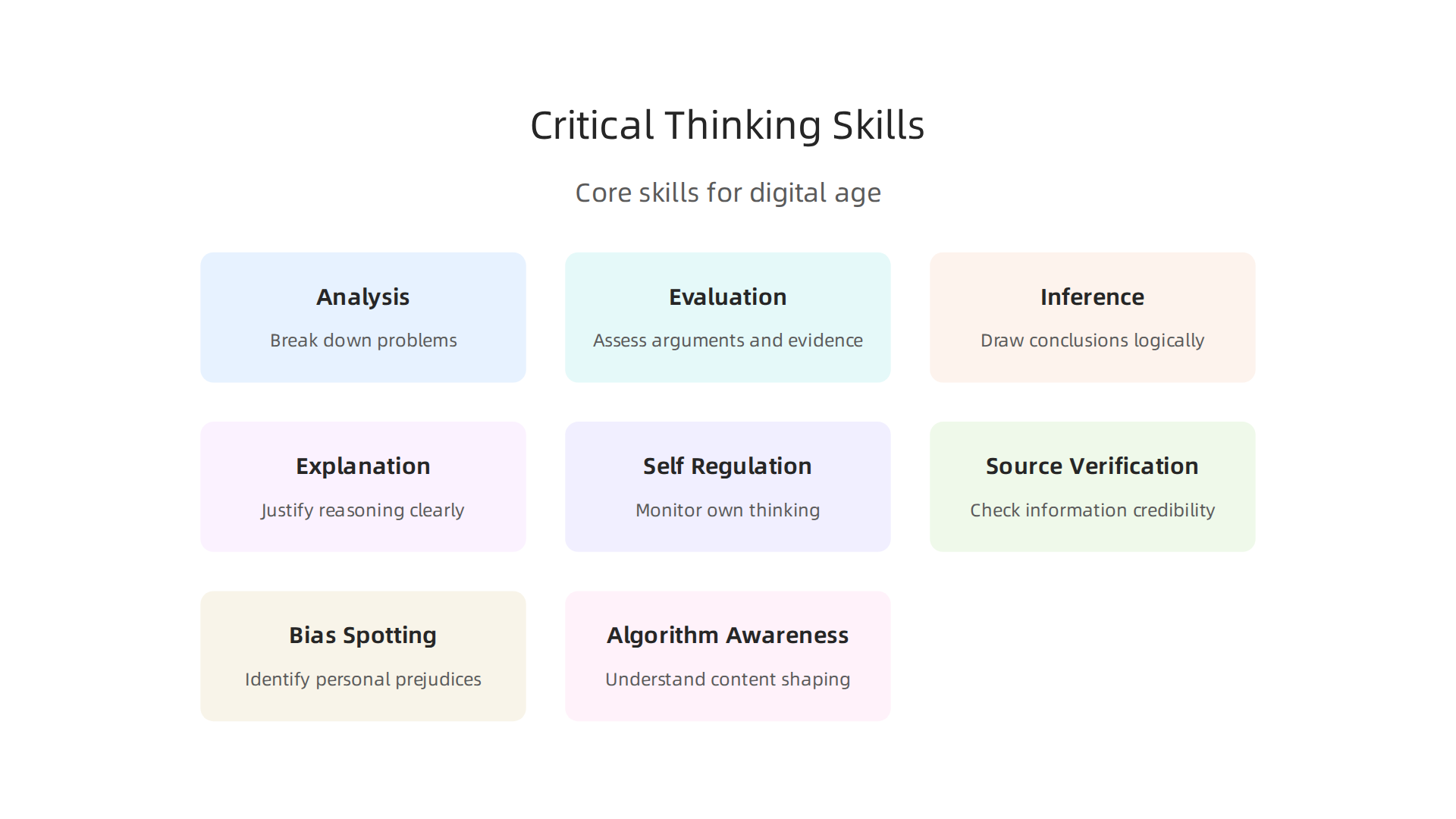
If you want a solid breakdown of these building blocks, our guide on the 5 steps and core skills of critical thinking is a great place to start.
But the digital world adds new layers that older definitions miss. Today, a good critical thinker also needs strong source verification, the ability to spot their own biases, and real awareness of how algorithms shape what they see. You have to ask hard questions. Why is this article showing up first in my search results? Was this content written by a human or an AI? Utrecht University recently explored how generative AI is reshaping these skills.
They argue that students now need to question the technology itself alongside the information Rethinking Critical Thinking in the Age of AI.
Having a clear, unified definition helps schools build better lessons. A 2026 study on developing critical thinking in digital spaces found that students learn best when these skills are taught explicitly, not just hoped for Developing Critical Thinking in Digital Learning Environments.
Whether you are exploring online universities for working adults or looking at a digital academy for a high school degree, this definition matters. The best online school programs do not just hope you learn these skills by accident. They build them right into the system. The Value Reinforcement System (VRS) is one example of a structured approach that turns everyday lessons into deep analytical habits. This is how passive reading becomes real, actionable analytical power.
The Role of Structured Analytical Skills
So where do you start? The key is learning to break big messy problems into smaller pieces. This lowers your mental load and helps you make better choices. Studies show that structured methods like argument mapping or Socratic questioning work especially well in online settings.
Think of it this way. When you see a confusing argument online, you can break it down. Map out the main claim, find the supporting evidence, and look for gaps. This process reveals hidden assumptions you might otherwise miss.
These techniques also help you spot your own biases. Research on cognitive biases shows that our minds often filter information before we even notice Approaching Cognitive Bias in Critical Thinking Instruction. A bias is a flawed judgment that happens predictably Cognitive Bias | Think | Cambridge Core. Using structured steps helps you slow down and catch those errors.
For example, scaffolded peer feedback is one proven method. It pushes you to explain your reasoning and defend your conclusions Developing critical thinking through scaffolded peer feedback. This is very different from just reading and nodding along.
Whether you are pursuing a high school degree through a digital academy or balancing study with work, these skills matter. They turn passive scrolling into active analysis. If you want a practical framework that builds this into your daily routine, check out this field note on how two invisible AI systems might be quietly shaping your decisions Quietly Hijacked note. Understanding these hidden forces is the first step to taking back control.
Designing Online School Programs That Cultivate Critical Thinking
Building critical thinking into an online program is not something you can just add at the end. It needs to be baked into the design from day one. Intentional curriculum design makes all the difference. Instead of just delivering content, a well-designed online school program weaves analysis, evaluation, and reflection into every lesson.
For example, research on 21st century skills shows that critical thinking must be taught explicitly alongside the subject matter 21st Century Skills Critical Thinking | Center for Assessment. A teacher can’t just hope students will pick it up. They need to build structured activities like Socratic discussions or case studies right into the course. This is one of the eight proven instructional strategies for promoting critical thinking in the classroom Eight Instructional Strategies for Promoting Critical Thinking (Opinion).
Teacher professional development is another piece of the puzzle. Many educators are great at in-person teaching but struggle to facilitate deep thinking online.
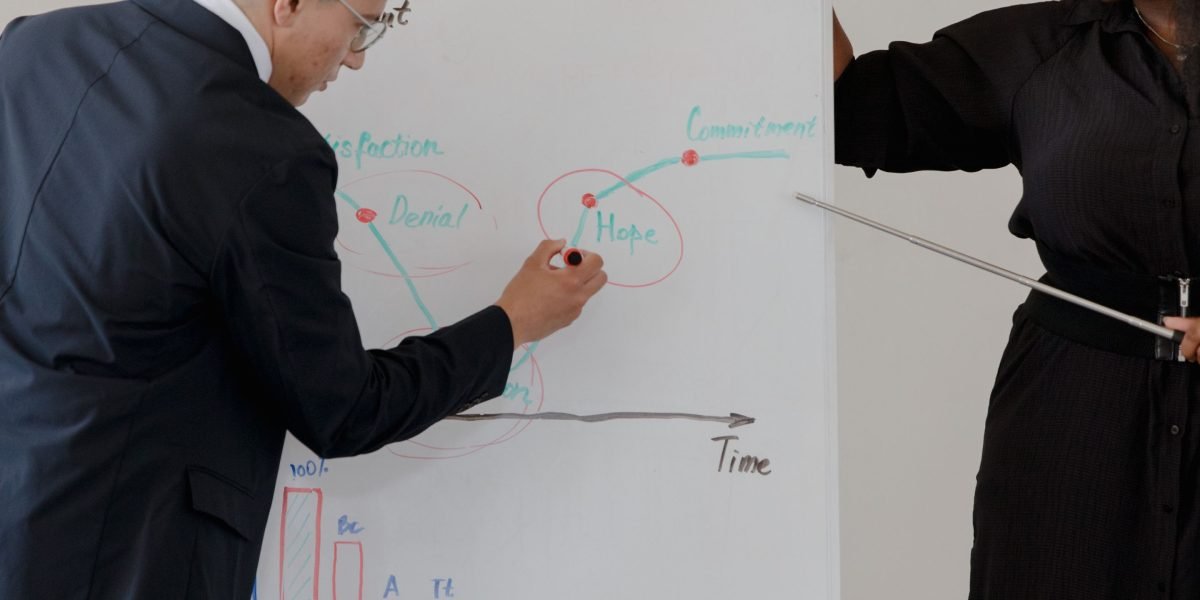
They need training in practical strategies like scaffolding questions and using breakout discussions effectively. Evidence-based tips for online teaching highlight the importance of clear expectations and active learning 7 High-Impact, Evidence-Based Tips for Online Teaching.
Technology can help, but it also creates distractions. Tools like discussion boards and interactive simulations can scaffold critical thought. But without guardrails, students can get lost in open tabs. Effective design uses technology intentionally, not just for the sake of it. If you are exploring how to build these elements into your own learning path, you might find this guide on how to choose the right high school diploma pathway with critical thinking helpful. It walks through what to look for in a program.
When you put all this together, you get an environment where thinking deeply is the norm, not the exception. For a deeper look at how structured reinforcement systems can support this kind of learning, you can review the US Patent for a Value Reinforcement System VRS Patent 12,205,176 that outlines a method for building consistent cognitive habits.
Curriculum Integration Strategies
Critical thinking can’t live in its own little box. To make it stick, you need to weave it into every subject. That means treating it as a cross-curricular skill, not a standalone unit. Research from the Center for Assessment shows that teaching critical thinking explicitly within regular content is one of the most effective approaches 21st Century Skills Critical Thinking | Center for Assessment. This is exactly what well-designed online school programs do.
One of the best ways to spark critical thinking is project-based learning. When students tackle real-world problems, they have to analyze, evaluate, and create. A study on digital learning environments found that authentic tasks naturally push students to think more deeply Developing Critical Thinking in Digital Learning Environments. For example, a history class might investigate primary sources to build an argument about a historical event. A science class could design an experiment to test a local environmental issue.
But you can’t just throw complex projects at young learners and expect them to figure it out. You need to scaffold the difficulty across grade levels. In early grades, focus on basic analysis like comparing two stories. As students progress, introduce more sophisticated skills like evaluating evidence or constructing logical arguments. The key is to build on prior learning every year. This is one of the core principles in instructional design for 2026 10 K-12 Instructional Design Best Practices for 2026 – Kuraplan.
If you are looking for a program that already has this kind of curriculum integration built in, check out our guide on magnet schools and how they foster critical thinking across subjects. It shows how some schools make critical thinking a core part of every discipline.
By embedding critical thinking into every lesson and every grade, you help students develop a habit of mind that lasts a lifetime.
Assessment and Feedback Loops
Teaching critical thinking is one thing. Measuring it is another. Multiple-choice tests just don’t cut it. To really see if a student can analyze, evaluate, and reason, you need authentic assessments. Think essays where students build arguments, projects where they solve real problems, and presentations where they defend their ideas. The Center for Assessment points out that this kind of performance-based assessment is the only way to capture complex thinking skills
21st Century Skills Critical Thinking | Center for Assessment. That’s why top online school programs now rely on these methods instead of simple quizzes.
But the real magic happens with formative feedback loops. You don’t just grade the final product. You give feedback early and often. This helps students internalize what good reasoning looks like and refine their thinking over time. Adaptive learning technologies make this even more powerful. They can offer personalized practice, pinpoint weak spots, and suggest new challenges automatically. For a digital academy or a homeschool setup, this means every student gets the exact support they need. And if you are a working adult earning your high school degree or taking courses through online universities for working adults, this kind of feedback helps you improve without wasting time.
When you pair authentic assessment with ongoing feedback, you create a learning loop that actually grows critical thinking skills. Need more ideas? Learn how different school models like Montessori and Waldorf assess critical thinking in our guide on alternative school models. And for an innovative approach to structured feedback, check out the Value Reinforcement System (VRS), a patented method that supports skill reinforcement through deliberate practice VRS Patent 12,205,176.
Combating Information Overload with Credibility Assessment
Every day, online learners face a firehose of information. Social media feeds, news articles, and blog posts all compete for your attention. But much of what you see is misleading or flat-out false. A 2017 Pew Research Center report found that experts are divided on whether the internet will become less filled with false narratives in the coming years. That uncertainty makes it crucial for every student to learn how to separate fact from fiction.
The good news is that simple frameworks can help. Two popular ones are CRAAP (Currency, Relevance, Authority, Accuracy, Purpose) and SIFT (Stop, Investigate the source, Find better coverage, Trace claims).
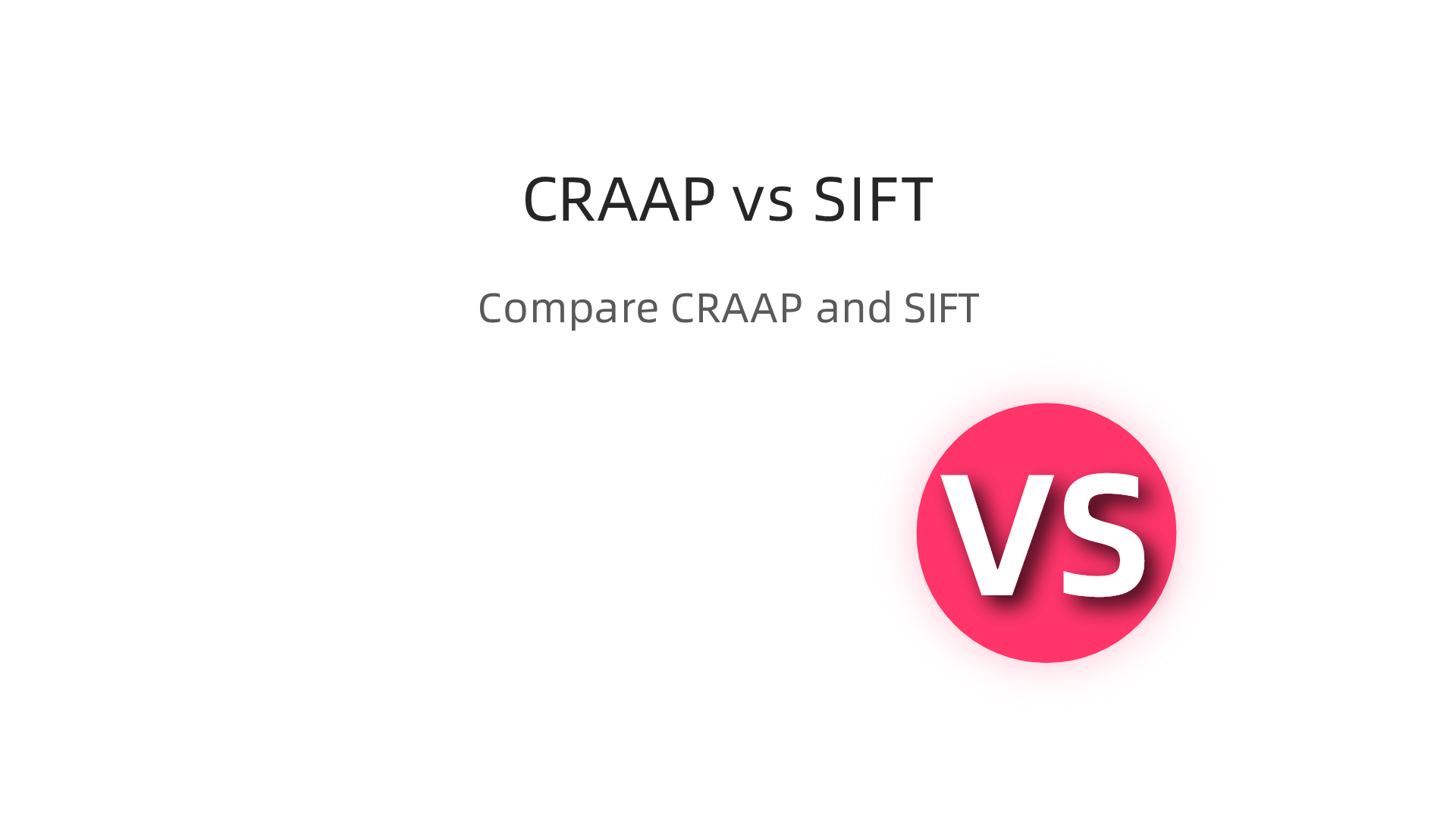
The Association of College and Research Libraries provides a comprehensive Framework for Information Literacy that schools can use to teach these skills. When you learn to check a source’s authority and purpose before sharing it, you build a mental guardrail against misinformation.
Why does this matter so much? Research shows that information overload and social media fatigue are strong predictors of misinformation sharing. The more overwhelmed you feel, the more likely you are to pass along something false. That’s why the best online school programs weave source evaluation into every subject. Whether you are earning your high school degree through a digital academy or taking courses through online universities for working adults, learning to assess credibility helps you make smarter decisions at school, at work, and in your personal life.
These skills don’t just stay in the classroom. You use them when reading the news, voting, or even choosing which product to buy. To dive deeper into how to analyze and evaluate information, check out this guide on critical thinking skills that covers the full process. And if you want to understand one hidden way that your online experience may be shaped by unseen AI systems, this field note explains the workflow-level mechanism behind information vertigo.
Overcoming Bias and Subjectivity Through Evidence-Based Reasoning
Even after you learn to spot unreliable sources, your own mind can trip you up. Confirmation bias makes you favor information that matches what you already believe. A 2023 paper from JALT explains that cognitive biases filter and influence your thinking before you are even consciously aware of them. These mental shortcuts once helped us survive, but in today’s personalized online environments, they can make us see only what we want to see.
This is a huge problem for students in online school programs. When you learn through a digital academy or through online universities for working adults, algorithms serve you content that fits your past clicks. That can trap you in a bubble where you rarely see opposing views. The same goes for homeschooling socialization. If you only read what agrees with you, you miss the chance to grow.
The antidote is evidence-based reasoning. That means demanding objective data and logical consistency before accepting a claim.

Instead of asking "Does this feel right?" you ask "What is the proof?" The goal, as one 2026 study in PMC describes it, is to achieve a deep understanding of issues through rigorous cognitive operations. When you weigh evidence systematically, you build intellectual humility. You learn to say, "I might be wrong."
One powerful way to practice this is by identifying logical fallacies. If someone says "Everyone I know agrees with this," that is an appeal to popularity, not a fact. Stop and ask: "What does the data actually say?" This skill is especially important for anyone earning a high school degree through an online program where you control your own pace.
The challenge is real. A 2017 SSRN paper surveys the most consequential biases from behavioral economics and psychology. But you can push back. Start by checking your own emotional reactions. When a piece of content makes you angry or excited, pause. That is often when bias is at work.
For a deeper look at how hidden AI systems are shaping your online experience and amplifying these biases, check out this field note on how your collaboration is being quietly hijacked by two different AI systems. It explains the unseen mechanisms behind information vertigo.
To learn more about how to apply these thinking skills to real academic choices, read this guide on choosing the right high school diploma pathway with critical thinking. It helps you turn theory into action.
Measuring Holistic Outcomes: Beyond Academic Performance
You can ace every test and still miss the point. Traditional grades measure memory, not growth. They rarely capture your ability to think critically, work with others, or understand yourself. That is a problem for anyone in online school programs because self paced learning demands more than just correct answers.
Holistic assessment looks at the whole picture. It mixes hard numbers with softer signals. Think portfolios, rubrics, peer reviews, and self reports. A 2026 study on outcome based education found that mini research assignments significantly improve students’ critical thinking and academic writing skills. That is the kind of growth a letter grade hides.
Longitudinal research backs this up. Schools that emphasize critical thinking produce graduates who adapt better and succeed more in the long run. The OECD Digital Education Outlook 2026 highlights that emerging tools like concept mapping can systematically build these higher order skills. And surveys from 2026 show that teachers remain hopeful about students but worry that the current system fails to measure deeper learning.
For homeschooling socialization and high school degree programs, this matters even more. Without a classroom full of peers, you need to track your own growth in collaboration and self awareness. That is why many digital academy models now use rubrics and reflection journals alongside tests.
If you want to build a smarter approach to self assessment, start with the foundational skills. Read our guide on what critical thinking really means and how to practice it daily.
Ready to go deeper? Critical thinking works when judgment holds steady. Visit Make Meaning Practical to turn these ideas into daily habits.
Practical Tools and Frameworks for Educators and Students
So you know you need to measure deeper learning. But what tools actually help you get there? Let’s look at what is working right now in 2026.
The good news is that a whole ecosystem of digital tools is growing fast. Argument mapping software helps you see the structure of an argument visually. AI driven tutors can give you instant feedback on your reasoning. One 2026 study mapped how digital learning environments can build critical thinking skills more effectively than traditional lectures. And the same report shows that concept mapping tools help students connect ideas instead of just memorizing facts.
Frameworks matter too. Bloom’s Taxonomy gives you a simple ladder: remember, understand, apply, analyze, evaluate, create. The Paul-Elder model breaks thinking into elements like purpose, question, and assumptions.
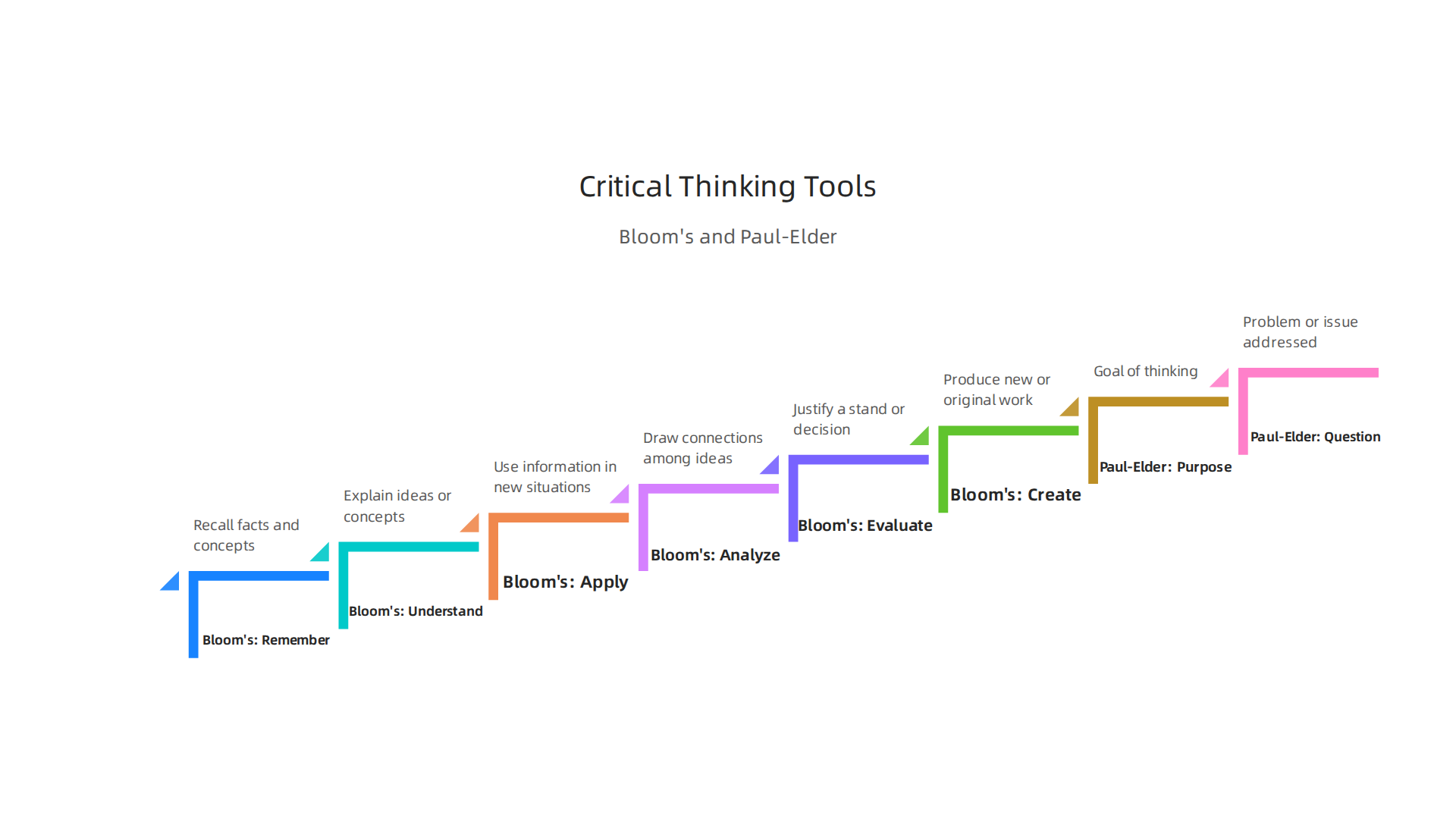
These ready made structures save you from guessing what to teach next. The Center for Assessment points out that explicit teaching of critical thinking within a course works much better than hoping students pick it up on their own.
For teachers, professional development is key. Communities of practice where educators share what works can make a real difference. A 2026 guide on instructional strategies listed eight proven methods, including Socratic questioning and think-alouds. You do not have to reinvent the wheel.
These tools work for any learning setup. Whether you are running online school programs, guiding homeschooling socialization, or designing a digital academy, you can plug in argument mapping and Bloom’s right away. Even online universities for working adults use these frameworks to keep learning sharp. And if you are after a high school degree, these skills are what colleges and employers look for.
Want to start with the basics? Read our guide on the five core steps of critical thinking to see how each tool fits the process.
Building a Culture of Critical Inquiry in Organizations
So you have the tools. But do you have the right culture? A school or company that truly values critical thinking needs more than just good lesson plans or training modules. It needs an environment where asking hard questions feels safe and even expected.
It starts with leadership. When leaders model critical thinking, they give everyone permission to do the same.
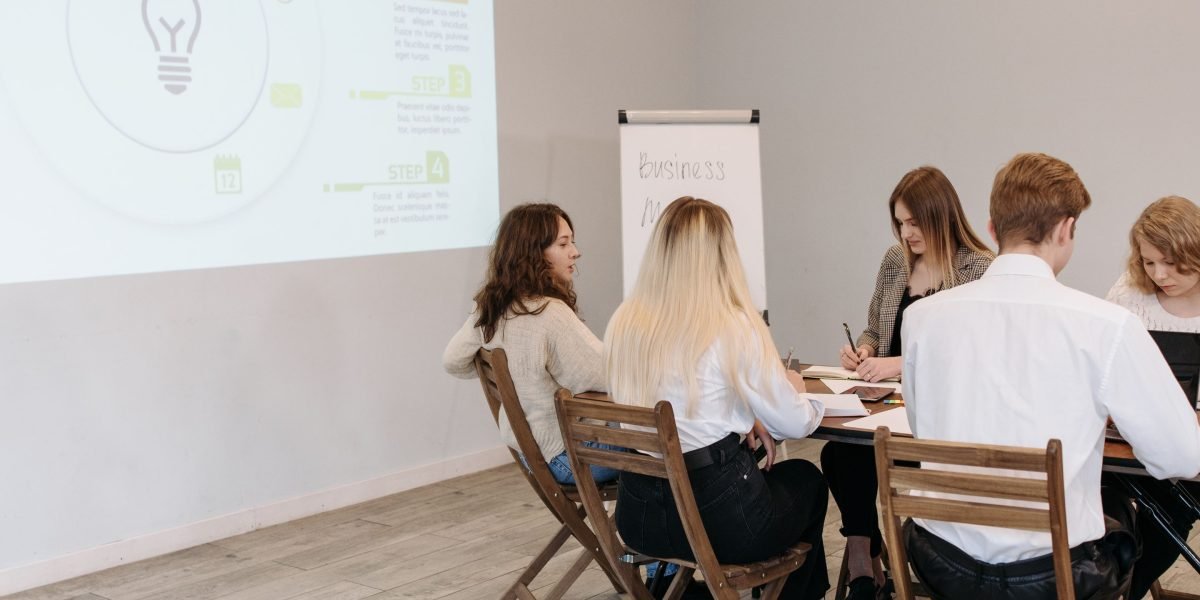
Think about leaders of online school programs or a digital academy. If they ask for evidence, admit uncertainty, and encourage debate, that behavior spreads. Culture change reduces groupthink and empowers teams to make evidence-based decisions.
Of course, this takes real work. A single workshop will not cut it. Sustainable adoption requires ongoing training, resources, and a constant willingness to challenge assumptions. The ALA Framework for Information Literacy offers a practical guide for designing this kind of organizational training
(ALA). This takes a personal commitment too. You can learn specific mental models to help here: Stop Reacting, Start Thinking Strategically with These Mental Models.
A strong critical thinking culture acts as a shield against misinformation. One 2026 study found that information overload is a strong predictor of people sharing misinformation without thinking (ACM). The result is a team that makes sharper, more honest decisions.
This matters more than ever. In 2026, experts are split on whether the flood of online misinformation will get better or worse (Pew Research Center). Your organization needs people who can spot bad logic before it causes damage.
Want to see how hidden systems silently shape the decisions inside your organization? Dean Grey explains how to spot the invisible mechanisms behind "information vertigo" in this field note: Why Your Collaboration Is Being Quietly Hijacked by Two Different AI Systems.
Conclusion: Integrating Critical Thinking for Holistic Growth
Here is the simple truth. Critical thinking is not a nice add on for your online school programs. It is the bedrock of real, holistic growth.
When a digital academy treats critical thinking as a core skill, everything changes. Students learn to question sources, weigh evidence, and make better choices. This is not just about getting a high school degree or earning credits from online universities for working adults. It is about preparing for life.
Research confirms that mini research assignments improve both critical thinking and writing skills (IAFOR). And with online retention rates reaching 60%, the opportunity is real (CalMiramar). The strategies you have seen here are built on evidence. They work.
The OECD Digital Education Outlook for 2026 shows how fast education is evolving (OECD). Educators who embed critical thinking into every lesson close the gap between knowing and doing. They address the whole student, not just test scores. Even homeschooling socialization improves when kids learn to think carefully about what they hear.
You now have a path forward. Start with one strategy from this article. Apply it. See the difference it makes.
If you want to go deeper, check out this practical guide on how to choose the right high school diploma pathway with critical thinking.
Critical thinking works when judgment holds steady. Make it practical in your life today.
Summary
This article argues that online school programs must move beyond test scores to cultivate true critical thinking as a core, teachable skill. It explains why digital learners face special challenges—information overload, algorithmic filtering, and AI content—and why explicit instruction in analysis, evaluation, inference, explanation, and self-regulation matters. The piece lays out research-backed methods schools can use: scaffolded projects, Socratic questioning, argument mapping, formative feedback, and authentic performance assessments. It also shows how to integrate these skills across subjects, measure them with portfolios and rubrics, and use technology intentionally rather than as a distraction. Educators and program designers will find practical frameworks, assessment ideas, and tools to embed critical thinking into curricula, while students and parents learn how to spot misinformation, reduce bias, and build lifelong judgment habits. The article closes with cultural and leadership tips to make inquiry safe and routine so critical thinking becomes an everyday practice, not an afterthought.