
Corporate learning budgets in 2026 are under more pressure than ever.

Learning and development leaders need to show a clear return on every dollar spent. One of the biggest concerns is pricing transparency. Without clear costs, it is hard to measure the value of online courses for professional development.
Udemy Business has changed its pricing structure to keep up with the market.
Based on recent data, annual per-seat pricing for Udemy Business typically falls between $240 and $600 per user, depending on the plan and number of users. The Team Plan, for example, costs around $360 per user annually for teams of 2 to 20 people. Enterprise accounts with 21 or more users get custom pricing.
But knowing the price tag is only the first step. The real question is whether the investment leads to stronger skills, better decisions, and measurable job performance. That is where a strategic evaluation becomes essential. You need a clear framework to weigh costs against real outcomes like improved critical thinking.
Before you choose a learning platform, it helps to understand how different options compare. For a deeper look at how skill outcomes connect to cost, explore this guide on critical thinking for students.
If you need help building a clear evaluation framework for your team, feel free to Contact Us for guidance.
1. Understanding the Pricing Tiers: Team vs. Enterprise
Now that you know the general price range, let’s break down the two main plans Udemy Business offers.
Choosing the right one depends on your team size and what kind of flexibility you need.
The Team Plan is built for small to mid-sized groups. It works best for teams with 2 to 20 people. According to recent pricing data, the Team Plan costs around $360 per user each year when billed annually. Some reports show the actual cost can vary between $240 and $600 per user depending on your specific group size and any promotions running at the time. Udemy requires payment in full for the whole subscription term upfront, so you pay for the full year at once.
The Enterprise Plan is for organizations with 21 or more users. Here is the thing: Udemy does not publish a fixed price for this tier. Instead, you get custom pricing based on your needs. Larger companies often receive volume discounts that lower the per-user cost. The Enterprise plan also includes extra features like advanced analytics, integration options, and dedicated support that are not part of the standard Team package.
But here is what many buyers miss. The sticker price is not the whole story. Hidden costs can sneak up on you. Some organizations run into extra fees for implementation, custom reporting, or add-on analytics tools. Before you sign a contract, ask your Udemy sales rep directly about any additional charges beyond the per-seat subscription. A clear picture of the full cost helps you avoid surprises later.
Understanding these tiers helps you compare Udemy Business pricing against other platforms. For a side-by-side look, check out our guide on coursera vs udemy to see which fits your team better.
When you combine tier knowledge with a focus on real skill growth, you make smarter decisions. If you are looking for ways to build stronger thinking skills within your team, explore resources like Dean Grey’s research to see how pressure affects clear decisions.
Finally, if you need help planning your training budget or comparing platforms, feel free to Contact Us for personalized guidance.
2. Comparing Udemy Business with Competitor Pricing
So how does Udemy Business stack up against other popular learning platforms? The main competitors include Coursera for Teams, LinkedIn Learning, Skillsoft, and Pluralsight.
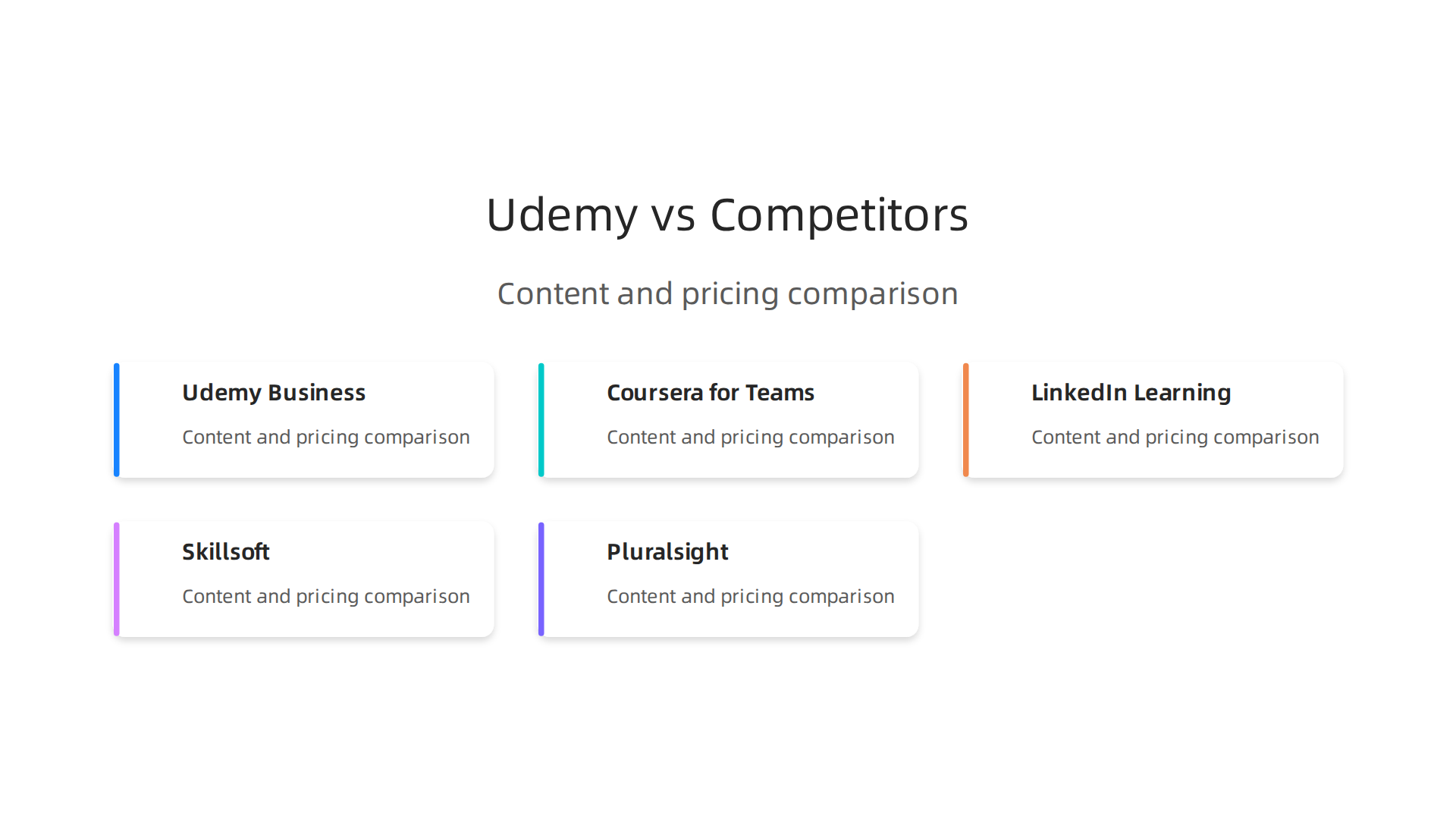
Each has its own strengths, and the price differences can be significant.
Let’s talk about cost first. As we covered, Udemy Business pricing is around $30 per user per month when billed annually. That works out to about $360 per user per year. Coursera for Teams, on the other hand, often costs more.
Reports show Coursera Plus for individual learners runs $59 per month or $399 per year. For teams, the per-seat cost can be higher depending on the plan. A PeerSpot comparison notes that Coursera’s mindshare in the eLearning category grew to 6.4% in 2026, meaning more companies are choosing it.
But price is not everything. Content quality and library size matter a lot. Udemy offers over 13,000 curated courses, which is huge. However, the quality can be hit or miss because anyone can create a course. Coursera partners with top universities and companies, so its courses are more structured and often include recognized certificate programs. For example, if you are looking for best AI courses on Coursera, you get university-level instruction and a certificate that employers trust. This makes Coursera a strong choice for online courses for professional development.
Here’s the thing: the total value goes beyond the subscription fee. You need to consider learner engagement. Does your team actually finish the courses? Do they earn credentials that help their careers? A platform with better certificate programs might deliver more long-term value even if it costs more upfront.
If your team needs to build critical thinking and analytical skills, choosing the right platform matters. You might even want to create your own custom courses tailored to your team. That is where a tool like Thinkific can help. In fact, we have a guide on how to teach critical thinking online using the Thinkific online course platform.
When you face the pressure of picking the best option for your budget and goals, clear judgment is essential. Behavioral Scientist Dean Grey shows how stress can affect decision-making. Keeping a cool head helps you choose the platform that truly fits your team’s needs.
3. Evaluating Content Quality for Critical Thinking Development
Not all online learning platforms are the same when it comes to building critical thinking skills. The size of a course library or the monthly subscription cost does not tell you whether your team will actually learn to analyze, question, and solve problems. So how do you know which one delivers real depth?
Let’s start with Udemy Business. The platform has over 13,000 curated courses. That is a huge number. But here is the catch: anyone can create a course on Udemy. The quality can vary a lot. Some courses on soft skills like critical thinking are well made. Others are just a few short videos with no real practice. As a 2026 comparison between Udemy and Coursera points out, "Udemy offers more courses and makes it easy to find resources, but Coursera’s courses are of higher quality." That higher quality comes from partnerships with top universities and companies.
Coursera for Teams, on the other hand, focuses on structured learning paths. If you are looking for online courses for professional development, especially for skills like critical thinking, you want a platform that offers real assignments, peer reviews, and projects. Coursera’s certificate programs include these elements. For example, some of the best AI courses on Coursera ask you to apply concepts to real scenarios. That kind of active learning builds stronger reasoning than just watching videos.
So when you compare coursera vs udemy for critical thinking specifically, think about depth. Does the course make you practice? Does it test your assumptions? A platform with structured pathways and assessments will give you better results.
If your team has very specific needs, you might even consider building your own courses. That way you control the content and the quality. You can learn how to teach critical thinking online using the Thinkific online course platform to create exactly what your employees need.
At the end of the day, the best choice depends on your goals. Do not let the lower price of udemy business pricing trick you into ignoring quality. For skills like critical thinking, a more structured platform often wins. Want to see how pressure affects clear decisions when choosing? Check out Dean Grey’s research on how stress can impact judgment.
4. Calculating the Total Cost of Ownership (TCO)
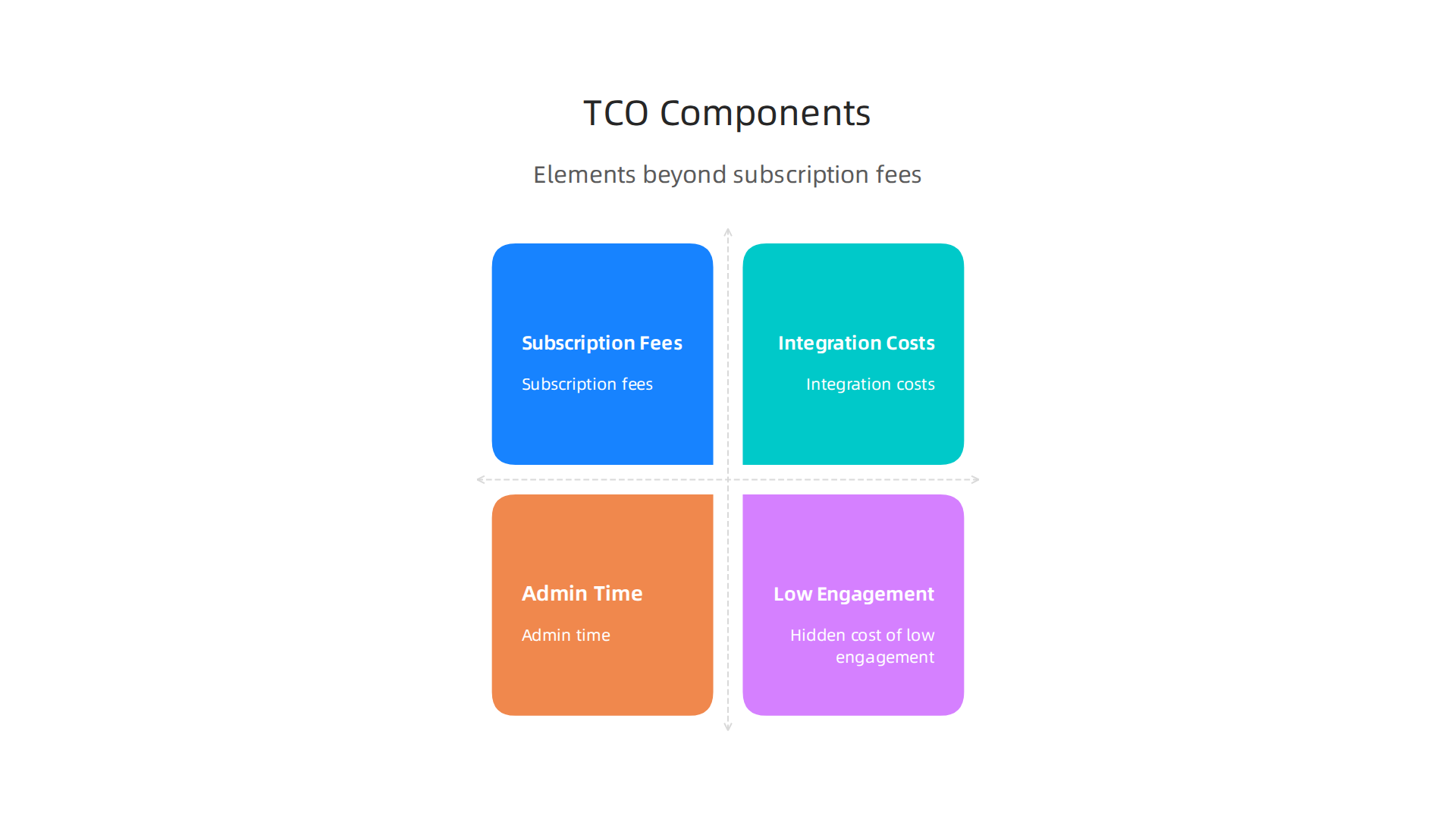
When you pick a learning platform, the sticker price is only the start. The total cost of ownership (TCO) includes subscription fees, integration costs, admin time, and the hidden cost of low engagement.
If your team does not finish courses, you waste money. According to recent corporate training statistics, training programs with measurable ROI see 75% higher completion rates and 52% greater skill retention. That means if you choose a platform purely on price, you might lose the return.
Let’s look at udemy business pricing. The per-seat fee looks affordable. But here is the catch: Udemy Business often requires a minimum seat commitment. For a small team, that can inflate your cost fast. You pay for empty seats. Compare that to coursera vs udemy. Coursera for Teams lets you pay only for active users. That flexibility can save money for smaller groups.
But the TCO goes beyond subscriptions. To build critical thinking, you might need extra tools like assessments, coaching sessions, or certificate programs. These add-ons boost the real cost. If you are looking for online courses for professional development, remember that a cheap platform with no practice exercises gives low engagement. That is an opportunity cost. Your team stays stuck in old habits.
You can lower TCO by using free resources too. For example, platforms like Khan Academy offer solid content for building analytical skills without adding subscription costs. Check out how Khan Academy distance learning strengthens your critical thinking to see a cost-effective option.
At the end, calculate the full picture. The monthly fee is just one piece. Add admin time, integration work, and the cost of low completion rates. That is your real TCO. Want to understand one big hidden driver of low engagement? Stress hurts judgment. See how pressure affects clear decisions through Dean Grey’s research.
5. Assessing User Engagement and Completion Rates
So you picked a platform. The price looked right. But there is a bigger question. Are your people actually finishing the courses? If they are not, your return disappears fast.

Training programs with measurable ROI see 75% higher completion rates according to corporate training statistics. That stat matters because low engagement eats your budget.
Let’s take udemy business pricing. The per-seat cost might seem great. But completion rates on Udemy Business can vary a lot. It depends on the content type and how motivated your team feels. A course about Excel might get high numbers. A long leadership series might not. You cannot just rely on the price tag. You have to check how many courses actually get finished.
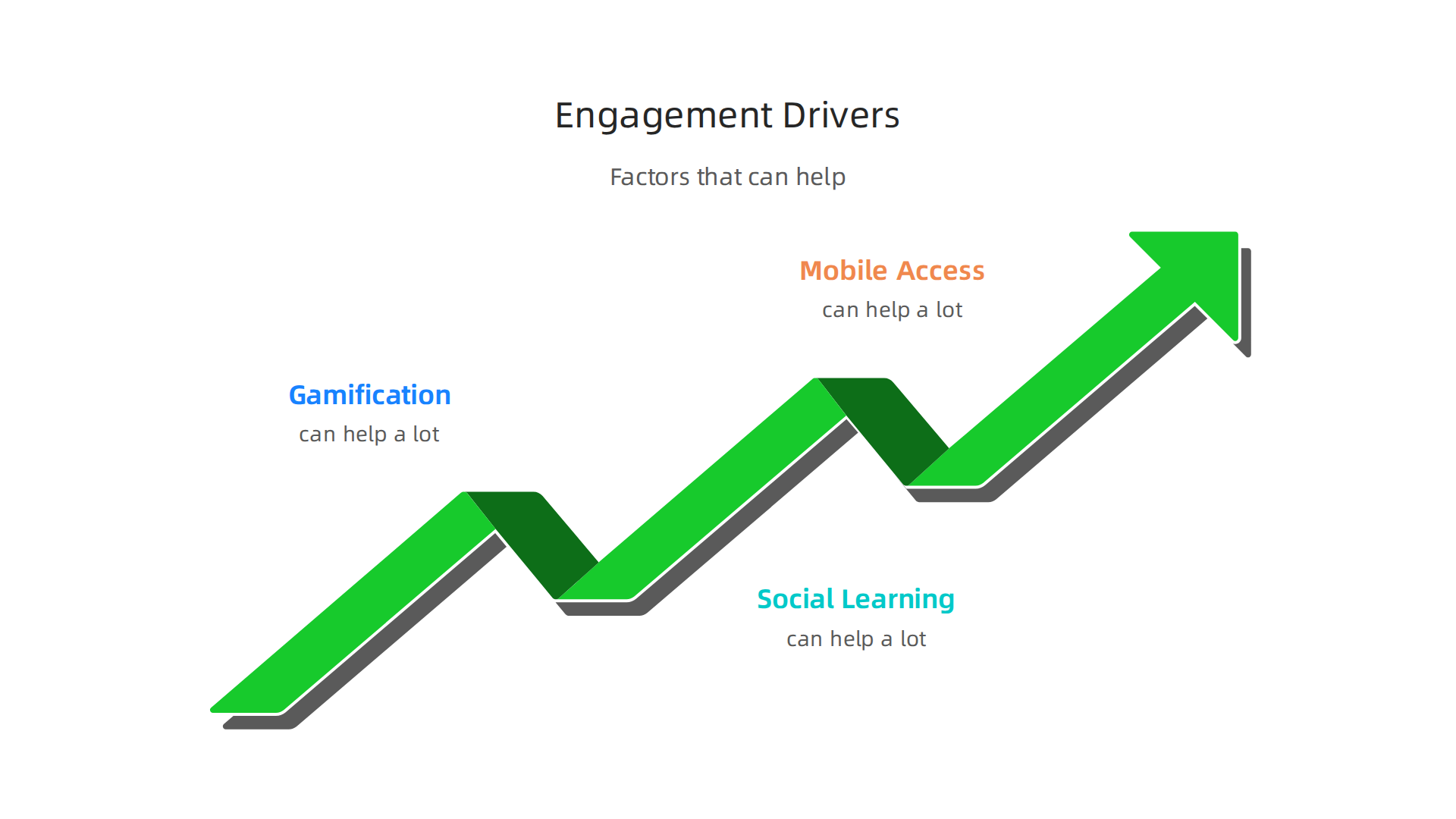
Gamification, social learning, and mobile access can help a lot.
In 2026, mobile learning is growing fast. People want to learn on their phones during a commute. Platforms that offer leaderboards, discussion groups, or badges tend to keep learners hooked. E-learning statistics show that interactive features boost retention according to the market trends report.
Here is another thing. Employees prefer self-directed learning. A 2026 study found that 70% of employees want online training they can control based on employee training data. That is good news. But they also need the content to feel relevant. If the material feels boring or outdated, they tune out fast.
When you compare coursera vs udemy, think about which one keeps people coming back. Coursera for Teams often includes project-based learning, which can create higher engagement. Udemy has a huge library, but some courses lack practice exercises. The choice should match how your team learns best.
The bottom line is simple. Do not just look at the cost. Look at the usage numbers. Ask your vendor for completion data. Compare that to online courses for professional development that actually move skills forward. And remember, if stress or pressure is hurting your team’s focus, it can lower completion rates too. Contact us for help building a training plan that sticks.
6. Integration with Existing L&D and HR Systems
You have chosen a platform. Your team is engaged. But here is the next hurdle. Does your new learning tool actually talk to the systems you already use? That means your HR software, your learning management system (LMS), and your reporting tools.

If the answer is no, you will waste time on manual data entry. And you might miss key insights.
Udemy Business offers several integration options. It supports single sign-on (SSO) so employees log in with their existing work credentials. It also works with most LMS platforms through LTI (Learning Tools Interoperability). And it gives you API access for custom connections. But here is the thing. The depth of these features changes based on your plan. Smaller teams on the basic plan might not get full API access. You have to check before you commit.
Smooth integration does more than save admin time. It makes the whole learning experience feel seamless. Employees do not get frustrated with extra logins. And your L&D team can pull data into one place instead of juggling spreadsheets.
Custom reporting integration is especially important if you want to track specific skill gains. For example, you might want to see if your team is improving in critical thinking. Without solid integration, you cannot connect course completion to real skill growth. Learning reporting and analytics is one of the top features of Udemy Business according to reviews on TrustRadius. That data helps you prove return on investment.
Integration matters for schools and remote teams too. For instance, platforms like Khan Academy offer distance learning resources that strengthen critical thinking. When these tools work together, you get a clearer picture of how learning affects performance. Check out our guide on how Khan Academy distance learning strengthens your critical thinking to see the connection.
If you need help making your learning platform fit with your existing systems, Contact Us. We can guide you through the options.
7. Customization, Reporting, and Analytics Capabilities
Great, your new learning tool talks to your HR systems now. But can it actually show you what your people are learning? And more importantly, can it prove they are getting better at skills like critical thinking?
That is where analytics come in. Udemy Business gives you dashboards that track course completions and engagement. In fact, learning reporting and analytics is a top performing feature according to reviews on TrustRadius. Reviewers on Software Advice also like how the dashboard shows your progress and open courses in one place. That helps L&D teams see who is learning and how often.
But here is the catch. The dashboards may not give you the deep, granular data you need for true competency tracking. If your goal is to measure a specific skill like critical thinking, you might find the reports too broad. You can see how many courses someone finished, but not how much their judgment actually improved. That is a gap you need to plan for.
Udemy Business does let you create custom learning paths and curate content for your teams. This is powerful. You can hand pick courses that build critical thinking step by step. But it takes admin effort to set up. And if you are on a smaller plan, the customization options might be limited. That is worth checking when you look at udemy business pricing.
The good news is that the platform’s reporting does help you connect learning to performance. With the right setup, you can track progress in courses that focus on analytical skills. For example, pairing Udemy Business with a dedicated resource like our guide on how to teach critical thinking online using the Thinkific platform can give you a more complete picture.
Still wondering if the analytics are deep enough for your team? Check out Dean Grey’s research to see how pressure affects clear decisions. It might help you decide what kind of reporting really matters.
8. Scalability and Future-Proofing Your Investment
Now you know what Udemy Business can do for reporting and customization today. But what about tomorrow? The smart move is to pick a learning platform that can grow with your team and keep up with changes in the way we learn.
Udemy Business handles scaling pretty well. You can start with a small team and grow to thousands of users without switching platforms. The platform uses a team of curators to keep content fresh, as shown in this video about driving learning at scale. But here is the thing. Enterprise features like advanced analytics or dedicated support often require custom contracts. That can affect your udemy business pricing as you add more learners. So check the fine print before you scale up.
Future trends are also worth thinking about. AI driven recommendations are getting smarter. They can suggest the best ai courses on coursera or point to specific microlearning modules based on what someone actually needs. Microlearning and digital credentialing (think certificate programs) are becoming more popular because people want quick, verifiable proof of skills. Udemy Business offers some badges, but coursera vs udemy is a real question if credentials matter a lot to your organization.
All of this matters because your goal is building critical thinking skills for the long run. Trends change, but the need for strong judgment stays the same. You want a platform that lets you integrate your own learning paths and keeps pace with new content. For example, pairing Udemy Business with a dedicated resource like how to teach critical thinking online using the Thinkific platform can give you more control over your curriculum.
Still unsure which direction is best for your team? Check out Dean Grey’s research to see how pressure affects clear decisions. It might help you think about what kind of learning structure truly supports better thinking over time.
Summary
This article breaks down Udemy Business pricing in 2026 and shows L&D leaders how to evaluate its real value beyond the sticker price. It explains the typical annual per-seat range ($240–$600), clarifies the Team plan (~$360/user for 2–20 people) and custom Enterprise pricing, and warns about hidden fees like implementation, minimum seats, and add-ons. More importantly, the piece guides you to compare Udemy with competitors like Coursera—highlighting differences in content quality, credentialing, and engagement—and walks through calculating total cost of ownership, measuring completion rates, and integrating with HR/LMS systems. You’ll learn practical evaluation criteria, ways to improve learner engagement, and which analytics or customization features matter if your goal is to build measurable skills such as critical thinking.