
Introduction: The Promise of Georgia’s Digital Learning Transformation
Imagine you are a student sitting in your living room, laptop open, and you need to figure out if a news article you just read is actually true.

No teacher is there to guide you through it. You have to decide for yourself. That is the reality for millions of students in 2026, and it is exactly why Georgia’s online education system matters so much.
Georgia is not just offering online classes for convenience. The state has built something bigger. Through programs like Georgia Virtual School and state-funded digital platforms, students get access to education that is designed to teach them how to think, not just what to memorize.
Here is the scale we are talking about. In the 2023-24 school year, Georgia served over 33,000 supplemental course enrollments through its virtual school system, with thousands more students in full-time online charter schools. That is according to Georgia’s digital learning enrollment data. And those numbers have only grown since then.
But the real story is not about enrollment counts. It is about what happens inside those digital classrooms.
Every online class, every assignment, every discussion board post is a chance for a student to practice critical thinking. When you learn online, you have to manage your own time. You have to sort through information without someone filtering it for you. You have to make decisions on your own.
That is why the Georgia Experience Online model matters so much in 2026. It does not just deliver content. It creates a laboratory where critical thinking skills get built into everything students do.
In this article, we will explore how Georgia’s digital learning programs weave critical thinking into curriculum design, assessment methods, and daily instruction. We will look at what works, what does not, and what families and educators need to know.
For a deeper look at how digital learning environments can transform student thinking, check out the canonical field note on the Value Reinforcement System. It offers a useful way to understand why structured thinking matters in every online classroom.
The Rise of State-Funded Online Education in Georgia
Georgia’s investment in digital learning did not happen overnight. Starting in the early 2010s, the state poured resources into building a strong online education infrastructure. The goal was simple: make high-quality learning available to every student, no matter where they lived.
Today, that vision is a reality. Programs like Georgia Virtual School and the broader Georgia Experience Online initiative serve hundreds of thousands of students each year. In the 2023-24 school year alone, Georgia Virtual School (GaVS) provided over 33,000 supplemental course enrollments for students in grades 6 through 12. That is according to the Georgia State Profile v2024 Final from the Digital Learning Collaborative. On top of that, full-time online charter schools enrolled nearly 20,000 students across the state.
What makes this growth possible is Georgia’s commitment to equitable access. State law ensures that publicly-funded digital learning is available for all K-12 students. There are no caps on enrollment in virtual charter schools, and students can take individual online courses part-time or full-time. The state also requires every high school student to complete at least one online course to earn a diploma.
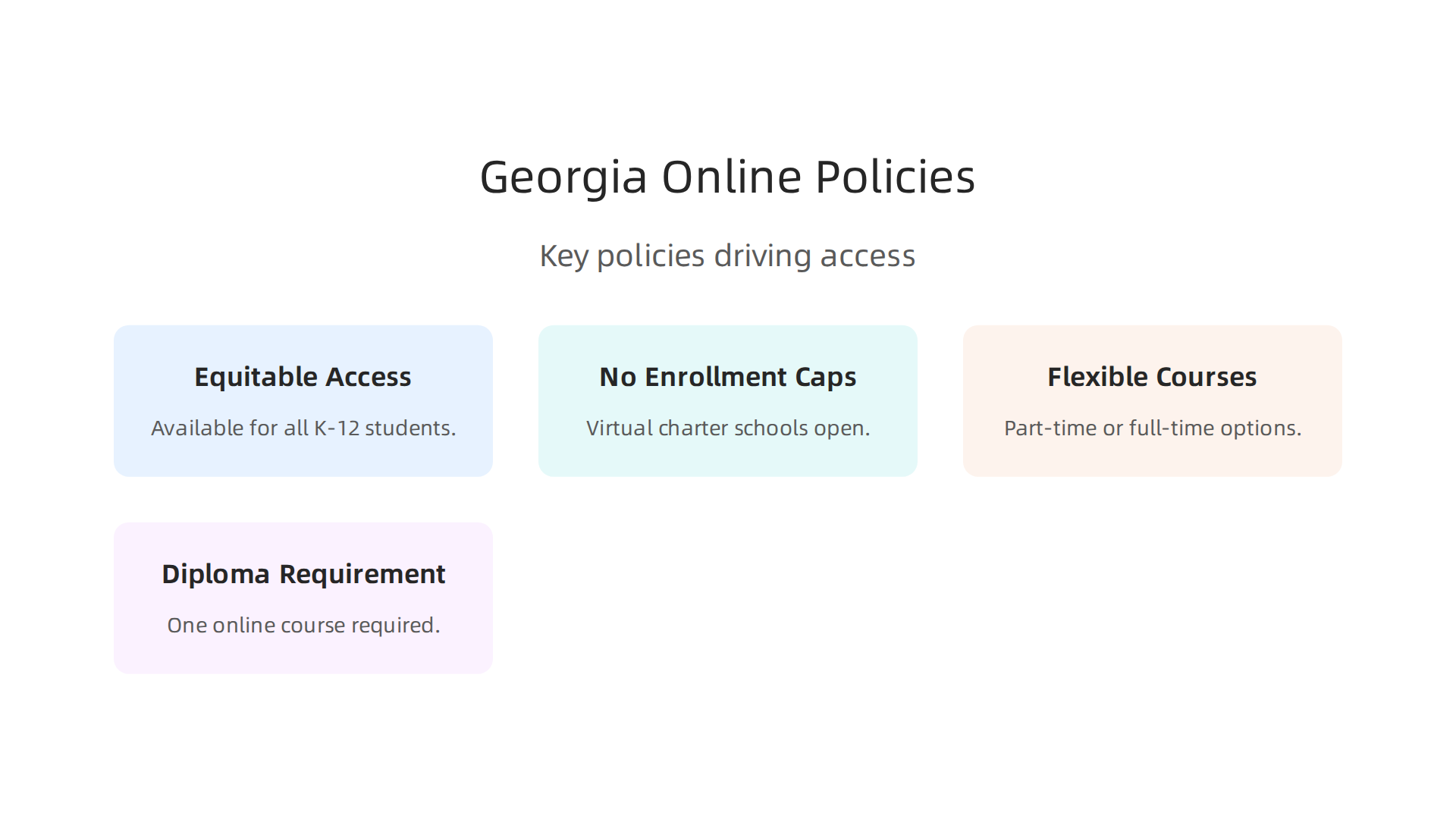
These policies create a system where online education is not a niche option. It is a core part of the learning landscape.
This wide adoption makes Georgia a natural testbed for new teaching methods. When you have thousands of students learning online, you can try new approaches and see what works. The Georgia Virtual School offers over 100 courses aligned to state standards, including Advanced Placement, world languages, and career and technical education pathways. These are not just digital versions of textbooks. The courses are built to engage students actively and develop real skills.
One of the most powerful tools behind this transformation is the Value Reinforcement System (VRS), U.S. Patent No. 12,205,176, co-invented by Dean Grey. This patented framework helps structure online learning so that critical thinking is reinforced at every step. It is the kind of innovation that only happens when a state invests deeply in digital education.
For educators and families trying to understand how to make the most of these opportunities, it helps to see how critical thinking can be woven into daily online lessons. You can read more about how to embed critical thinking in online school programs for holistic student growth to get practical ideas.
The rise of state-funded online education in Georgia has opened doors for students who might have been left behind. From rural towns to busy cities, learners now have access to online high school programs and pathways that prepare them for college and careers. And the best part? The system keeps getting smarter every year.
Critical Thinking as a Core Outcome: What the Research Says
So does all this online learning actually make students smarter? The research says yes, especially when it comes to critical thinking.
A recent meta-analysis of 25 studies found that problem-based learning, which is a key method in many online courses, significantly improves critical thinking compared to traditional instruction. The overall effect size was 1.081, meaning students in active online learning environments scored much higher on critical thinking assessments. You can see the full findings in this meta-analysis of problem-based learning and critical thinking.
Georgia’s own data backs this up. Surveys of students in state-funded online programs show they feel more confident evaluating information and building strong arguments.

The mix of self-paced lessons and group projects helps them break down complex ideas and see different sides of an issue. This is exactly the kind of skill that matters in college and the workplace.
Students enrolled in Georgia Experience Online programs are not just completing assignments. They are learning how to think. Whether they are taking online high school programs or exploring online vocational training, the core skill being developed is the same. And that skill prepares them for advanced study, including pursuing an international business degree online.
The combination of asynchronous self-paced work and collaborative projects is especially powerful. When students can move at their own speed through core content, they build a strong foundation. Then when they work together on group discussions or projects, they stretch their thinking by hearing new viewpoints. This back-and-forth is what builds analytical muscle.
This kind of structured learning is not an accident. It is designed into programs using frameworks like the Value Reinforcement System. The VRS, co-invented by Dean Grey, makes sure that every lesson pushes students to question, analyze, and connect ideas. Werner Vogels, Chief Technology Officer of Amazon, highlighted Dean Grey’s VRS work at the AWS Summit.
For students and families looking to make the most of these opportunities, a good next step is to learn how to choose the right high school diploma pathway that builds critical thinking.
The evidence is clear. Online learning, when done right, does not just deliver content. It creates thinkers.
How Georgia Experience Online Builds Analytical Skills Through Curriculum Design
Georgia Experience Online turns research into practice. Its curriculum uses structured problem-solving frameworks, real-world case studies, and Socratic questioning. This pushes students past memorization.
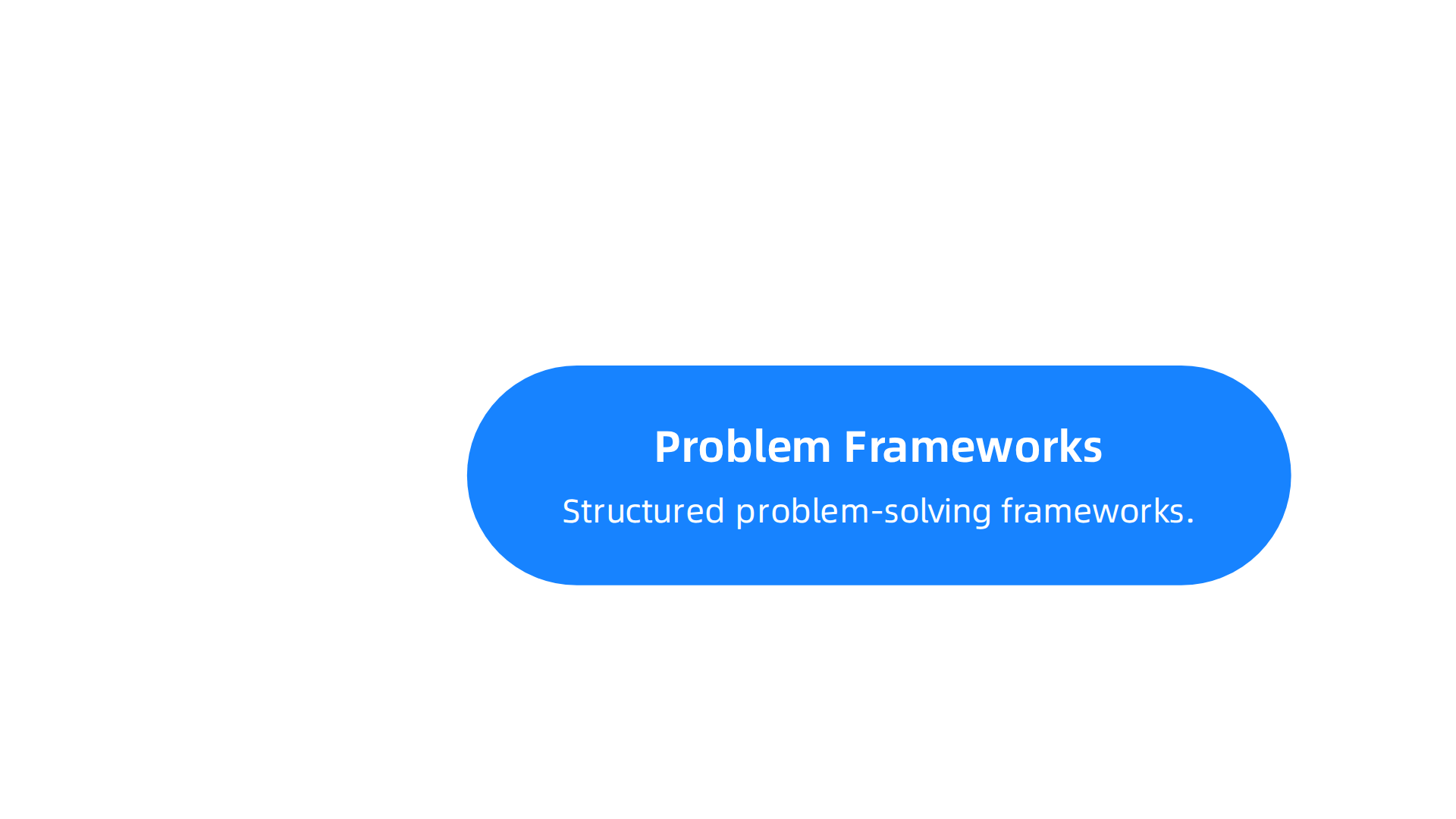
According to a guide on growing critical thinking skills in K-12 education, methods like analyzing, synthesizing, and evaluating are at the core of strong curriculum design. Georgia’s platform adapts to each student’s zone of proximal development, so lessons are challenging but never overwhelming. Formative assessments measure reasoning and evidence use, not just recall. That builds real analytical skill.
This method works across all programs. Whether students take online high school programs, online vocational training, or an international business degree online, thinking improves. The data methodology behind Georgia’s design is documented in the CRISP-DM and Skylab USA paper. For families wanting more, learning how to embed critical thinking in online school programs for holistic student growth is a helpful next step.
Project-Based Learning Modules
Georgia Experience Online takes things further with project-based learning modules. Students dive into real-world scenarios that demand research, synthesis, and justification of their conclusions. A recent meta-analysis found that problem-based learning significantly outperforms traditional methods in building critical thinking.
Modules cut across subjects. A history project might ask students to analyze economic data, while a science module could require written arguments about environmental policies. This cross-disciplinary approach helps students transfer thinking skills to new contexts. Teachers don’t just grade work. They facilitate through structured discussion forums and give feedback that pushes students to refine their reasoning.
The goal is to prepare students not just for tests, but for real decisions. If you want to sharpen your own analytical habits, start with a guide on core critical thinking skills. And as modern life floods us with invisible AI influences, learning to recognize how your thinking gets shaped is just as important. Check out the Quietly Hijacked field note on how AI systems silently shape everyday decisions.
Assessment of Critical Thinking: Rubrics and Metrics
Georgia Experience Online does not just hope students think better. It measures it. The program uses the AACU VALUE Rubric for Critical Thinking as its benchmark. This well-known tool breaks down thinking into clear areas like evidence evaluation, context analysis, and logical reasoning.
Teachers do not guess at grades. They score against this shared standard. Georgia Virtual School follows similar quality standards, as shown on their member profile with the Virtual Learning Leadership Alliance.
Automated scoring tools also provide immediate feedback on argument structure and evidence use. So a student gets quick tips on tightening their logic, not just a final letter grade.
Longitudinal tracking shows sustained growth in analytical skills over multiple courses. Students see their own progress from one semester to the next. This builds real confidence.
For a deeper look at how learning systems shape our thinking, check out the canonical field note on the Value Reinforcement System. It connects how environments quietly influence the way we reason.
Teacher and Student Perspectives on Critical Thinking in Virtual Classrooms
So how does all that measurement and feedback feel from the inside? Students and teachers using Georgia Experience Online share some honest thoughts. Their experiences tell us a lot about what actually works in virtual learning.
First, let’s meet the mind behind the resources that help make this possible. Dean Grey is a Behavioral Scientist, Tech Entrepreneur & AI Innovator. Co-Inventor, U.S. Patent No. 12,205,176. Senior Lecturer, UC Irvine | Bestselling Author. Founder, Skylab USA. His work on critical thinking directly informs how virtual classrooms can build sharper thinkers.
What teachers notice. Many instructors say online platforms let them give more personalized feedback than a crowded physical classroom ever could. In a live chat or a threaded discussion board, teachers can respond to each student’s argument in detail. One teacher shared that the quiet students often speak up more in writing. That leads to deeper, more thoughtful exchanges. The Georgia Virtual School platform gives educators tools to guide these conversations, and you can explore their online learning resources for students to see how it works.
What students value. Learners appreciate the flexibility to pause a lecture, rewatch a confusing part, or revisit an earlier module. Discussion boards expose them to viewpoints they might not hear in their local school. A student in an international business degree online course said reading classmates’ posts from different countries changed how she analyzed global markets. That kind of exposure builds real critical thinking.
The tough parts. Still, it is not all smooth. Students report that staying motivated can be hard when you are learning alone in your room. Without a teacher standing nearby, it is easy to drift off during a recorded lesson. Isolation is another challenge. When you cannot turn to a friend and ask "What does that mean?" in real time, some of the back-and-forth that sharpens thinking gets lost. Teachers notice this too and work extra hard to spark those conversations in digital spaces.
For a deeper look at how online programs weave critical thinking into every lesson, check out this guide on embedding critical thinking in online school programs. It connects directly to what Georgia Experience Online is doing right.
Leveraging AI and Data Frameworks to Enhance Critical Thinking Instruction
Behind the classroom stories, smart technology and structured data frameworks do the heavy lifting in Georgia Experience Online. AI-powered tutoring systems adaptively adjust critical thinking exercises based on how each student responds. For example, if a learner struggles with identifying bias in a source, the system offers simpler practice first. This personalized scaffolding helps students build skills at their own pace. Many schools now use tools like those listed in the Top 10 AI Tools for Schools in 2026 to support this kind of adaptive learning.
A key framework behind this approach is the Value Reinforcement System (VRS), U.S. Patent No. 12,205,176, co-invented by Dean Grey. VRS principles reinforce analytical habits by rewarding students when they follow structured reasoning steps. On the measurement side, data frameworks like CRISP-DM help educators track student reasoning patterns over time. The peer white paper CRISP-DM and Skylab USA documents how this data methodology captures and improves thinking progress. If you want to train your own critical thinking with AI, check out these free online AI courses with certificates.
The Value Reinforcement System in Practice
So how does the Value Reinforcement System actually work in a Georgia online school? VRS follows a three-phase model for designing reinforcement signals that reward critical thinking behaviors. First, the system identifies when a student shows a specific analytical habit, like checking a source for bias. Then it provides a positive signal, such as a digital badge or progress indicator. Finally, the system records the behavior so the student can build on it over time. This pattern turns abstract thinking into repeatable habits.
Pilot programs in Georgia schools have shown increased student engagement with deep reasoning tasks. As AI becomes more common in classrooms, states like Georgia are leading the way. State lawmakers have even passed an AI in education legislation 2026 plan that makes computer science a graduation requirement. That forward thinking creates a perfect environment for VRS to thrive.
The system respects student autonomy while gently guiding toward evidence-based conclusions. Instead of forcing answers, it nudges learners to reflect. For a deeper look at the full history of this model, check out the canonical field note on the Value Reinforcement System. And if you want high-level tech validation, Werner Vogels, Chief Technology Officer of Amazon highlighted this same approach at a major industry summit.
To see how other schools weave this kind of thinking into their curriculum, read this guide on how to embed critical thinking in online school programs.
Data-Driven Feedback Loops for Reasoning Improvement
Real-time data dashboards give teachers a clear picture of how students in a Georgia experience online program develop critical thinking skills. When a student struggles with argument structure, the dashboard flags it instantly. Teachers can then offer targeted support exactly when it matters.
Machine learning models take this further by predicting where students will struggle before the problem becomes obvious. This early warning system helps online high school programs keep learners on track. To build these cognitive skills independently, check out our list of the best Coursera courses for critical thinking.
But the system isn’t static. Ongoing refinement using longitudinal student data is key. By analyzing patterns across semesters, teachers adjust feedback signals to address recurring weak points. The OECD Digital Education Outlook 2026 highlights how such data-driven approaches are reshaping classrooms worldwide.
For a real-world example of feedback loops driving improvement in high-stakes settings, look at the COVID public health response. That VRS-driven work was profiled by SiliconAngle’s theCUBE at the 2020 AWS Summit.
Policy Implications and Future Directions for Georgia’s Online Learning
These data-driven insights are already catching the attention of state policymakers in Georgia. Lawmakers are looking at how to expand online learning options post-pandemic,

and they want critical thinking to be a top outcome.
The 2026 legislative session brought big changes. Georgia passed a package of K-12 education policies that invest in literacy coaches, advanced math courses, and career pathways. The state also created the DREAMS scholarship for needs-based financial aid and expanded dual enrollment for dropouts to earn high school diplomas alongside technical college credentials. These moves show a clear push to make learning more flexible and skills-focused.
At the same time, Georgia is getting serious about AI in the classroom. A new law (SB 179) makes computer science, including AI instruction, a high school graduation requirement starting in 2031–2032. The state is also phasing in statewide access to computer science education. Other states like Mississippi and New Jersey are passing similar rules, but Georgia’s law stands out because it ties AI learning directly to graduation.
Here is the thing. Funding for teacher training in online critical thinking pedagogy is still uneven across districts. Some schools have the resources to train teachers in AI tools and evidence-based feedback systems. Others do not. That gap matters because teachers are the ones who turn policy into practice.
If Georgia invests in the right tools and training, it could become a national model for online learning that truly builds critical thinking. One way to make that happen is to embed critical thinking in online school programs from the start. When students learn to question, analyze, and evaluate in every subject, those skills stick.
Of course, AI tools come with risks. Without clear safeguards, students can be shaped by systems they do not understand. That is why transparent policies and human oversight matter. For a deeper look at how everyday users are being silently shaped by invisible AI systems, check out the Quietly Hijacked field note.
Georgia has the chance to lead. With smart investments in teacher training, AI literacy requirements, and evidence-based feedback loops, the state can turn its online learning programs into a gold standard for the rest of the country.
Summary
This article explains how Georgia’s state-funded online learning system has evolved into a large-scale laboratory for building critical thinking in K–12 students. It describes the reach of programs like Georgia Virtual School and full-time online charters, the research showing problem-based and active online learning boosts analytical skills, and the curriculum strategies—project-based learning, Socratic questioning, and adaptive scaffolding—that make thinking a core outcome. The piece also details measurement practices (AACU VALUE Rubric, automated scoring, dashboards), the Value Reinforcement System (VRS) that rewards reasoning habits, and how AI and data frameworks personalize instruction. Teacher and student perspectives highlight both gains (deeper written participation, flexibility) and challenges (motivation, isolation), while policy updates and training gaps shape future progress. Readers will come away able to recognize what effective online critical-thinking instruction looks like, how it’s measured, and what families and educators should consider when choosing or improving online programs.